
How to Choose Wall Art for Your Home — A Practical Indian Buyer's Guide
To choose wall art for your home, follow six steps: pick the room, measure your wall, match a style, size the piece to 60–75% of the wall, decide between canvas and framed paper, and test the layout with a paper cutout before buying.
Most Indian wall-art purchases stall not because options are limited but because the decision feels personal, expensive and irreversible. A ₹4,999 canvas hangs for years; a 12'×24' wall offers exactly one good answer; and the difference between "this room finally feels finished" and "this looks like a placeholder" usually comes down to four or five small choices. This guide turns those choices into a sequence you can actually follow — sized, measured and tested — so the print you finally pick looks intentional on the wall, not improvised.
The framework below is the same one we use inside our free art consultancy service when customers send in photos of empty walls. It works for living rooms, bedrooms, offices and rental flats, and it works whether your budget is ₹1,899 or ₹15,999.
The 6-step shortcut
- Decide what the room is for — and what mood the art should add.
- Measure the empty wall and the furniture below it.
- Pick a style family that matches your existing decor.
- Size the art to 60–75% of the wall or 2/3 of the furniture below.
- Choose the format — canvas gallery wrap, framed paper, or a set of three.
- Tape a paper cutout on the wall for 24 hours before you buy.
Step 1: Start with the room and what it should do
Before you look at a single artwork, write one sentence about the room. Is the living room for entertaining, for movie nights, for visible Sunday calm? Is the bedroom a sleep sanctuary or a "we work here too" space? The answer shapes everything that follows because wall art has a job — to reinforce the mood you want from the room, not to fight it.
Bedrooms reward soft, lower-saturation pieces — botanicals, abstracts in dusk colours, single-figure portraits — that don't keep the eye busy at night. Living rooms can carry one bold, conversation-starting piece because the eye has more to wander to. Home offices benefit from focus-friendly art (geometric, line-led, minimal palette) that won't pull your attention during a video call. The same family of art behaves differently in each room, which is why "wall art for bedroom" search trends in India differ sharply from "wall art for living room" — Indian shoppers know intuitively that the room should drive the art, not the other way around.
If you're stuck on mood, pick one of three buckets: calm (florals, soft abstracts, landscapes), statement (bold abstracts, ethnic motifs, large-scale single pieces) or personal (pet portraits, family art, custom prints, motivational typography). Most homes settle into one dominant bucket per room.
Step 2: Measure before you shop — twice
Almost every Reddit thread about wall-art regret starts with "I bought it without measuring." Don't be that person. A measuring tape and five minutes will save you ₹3,000 of disappointment.
Measure three things and write them down:
- Wall width and wall height — the actual empty wall, not the room.
- Furniture width — the sofa, console, headboard or sideboard the art will sit above.
- Available vertical space — from the top of the furniture to the ceiling or moulding.
The wall art should occupy roughly 60–75% of the wall width for an empty wall, and two-thirds the width of the furniture when hung above a sofa or bed. If the sofa is 84 inches wide (a standard 3-seater), aim for art that is 56–63 inches across. That's typically a Set of 3 in M (16"×24" each) hung with 2-inch gaps, or a single XL canvas at 24"×36" centred above the sofa.
For exact size combinations and Indian-room examples, our wall art size guide breaks down which Rustic Charm size (S, M, L, XL) suits which wall length down to the inch.
Step 3: Pick the style family that matches your existing decor
The fastest way to ruin a beautiful canvas is to hang it in a room it doesn't speak to. Wall art is rarely the lead character in an Indian home — it has to harmonise with the sofa, the rug, the wood tones and the wall colour that already exist.
The simplest sorter is to look at three things in your room: the dominant wall colour, the dominant fabric tone (sofa or curtain) and the dominant wood tone (furniture or flooring). If two of those three are warm (cream, beige, terracotta, walnut, teak), you'll want art with warmth in it — earth-toned abstracts, boho wall art, florals in mustard or rust, or ethnic prints. If two are cool (grey, white, ash, slate, blue), reach for minimalist wall art or abstract wall art in cool palettes.
Beyond colour, choose a style language: minimalist for clean modern flats, floral for traditional or romantic interiors, abstract for design-forward homes, boho for layered eclectic spaces, Indian folk or Madhubani for culturally rooted decor, and motivational/typography for offices and study rooms. You can also explore curated picks on our abstract wall art, floral wall art and boho wall art collections.
Note on vocabulary — across Indian search, the words "wall painting" and "canvas painting" are used roughly 100× more than "wall print" or "canvas print", even though most premium home pieces sold today are in fact giclée-printed canvases, not hand-painted artwork. When we say "canvas painting" in this guide, we mean the same museum-grade printed canvas described in our materials section below.
Step 4: Size the art correctly — the rules that interior designers actually use
Once you know the wall and the style, the next decision is size. Get this wrong and even a beautiful piece looks lonely (too small) or overwhelming (too big). Three rules — used by professional stylists and consistently echoed in r/HomeDecorating discussions — will get you 90% of the way.
Rule 1: The 60–75% rule. The horizontal width of your wall art should be 60–75% of the empty wall it occupies. So a 10-foot (120-inch) wall takes art that is 72–90 inches wide — usually a Set of 3 in L (20"×30" each) hung with 2-inch gaps.
Rule 2: The two-thirds rule. Above a sofa, bed or sideboard, the art should be roughly two-thirds the width of the furniture. A 6-foot (72-inch) sofa wants 48 inches of art width. A 5-foot bed wants 40 inches.
Rule 3: The 57-inch centre rule. Hang the centre of the artwork at 57 inches (about 145 cm) from the floor. This is the gallery standard used because it's average human eye level. Above a sofa, ignore that rule and instead hang the art so its bottom edge is 6–10 inches above the sofa back — close enough to feel anchored, not floating.
For step-by-step sizing across living rooms, bedrooms and dining rooms, see our wall art size guide — it includes a chart of which Rustic Charm size matches which Indian-room dimension.
Step 5: Choose canvas or framed paper — the format decision
The single most confusing decision for first-time buyers is canvas-versus-framed. Both can look stunning. They suit different homes and different walls.
Canvas (gallery wrap or floating frame) is the contemporary choice. Our canvases are giclée-printed on 300 GSM acid-free cotton canvas using 12-colour giclée technology, then sealed with two layers of UV-protective satin clear coat and hand-stretched over a solid wooden base. The result is a clean, frameless or floating-frame look with no glass — modern, lightweight, and ideal for Indian homes where humidity and dust make glass cleaning a chore. Rustic Charm canvases come with a 100-year colour guarantee.
Framed paper prints are giclée-printed on matte archival paper, protected by 2mm UV-resistant acrylic glass, and set in a premium frame. They suit traditional or formal interiors — a study with wooden bookshelves, a foyer with classical mouldings, or a heritage flat with serif personality.
If you can't decide, default to canvas for living rooms, bedrooms and offices, and framed paper for studies, dining rooms with traditional wood, and entryways. For a deeper comparison — including durability, weight, and how each ages in Indian homes — read canvas prints vs framed prints.
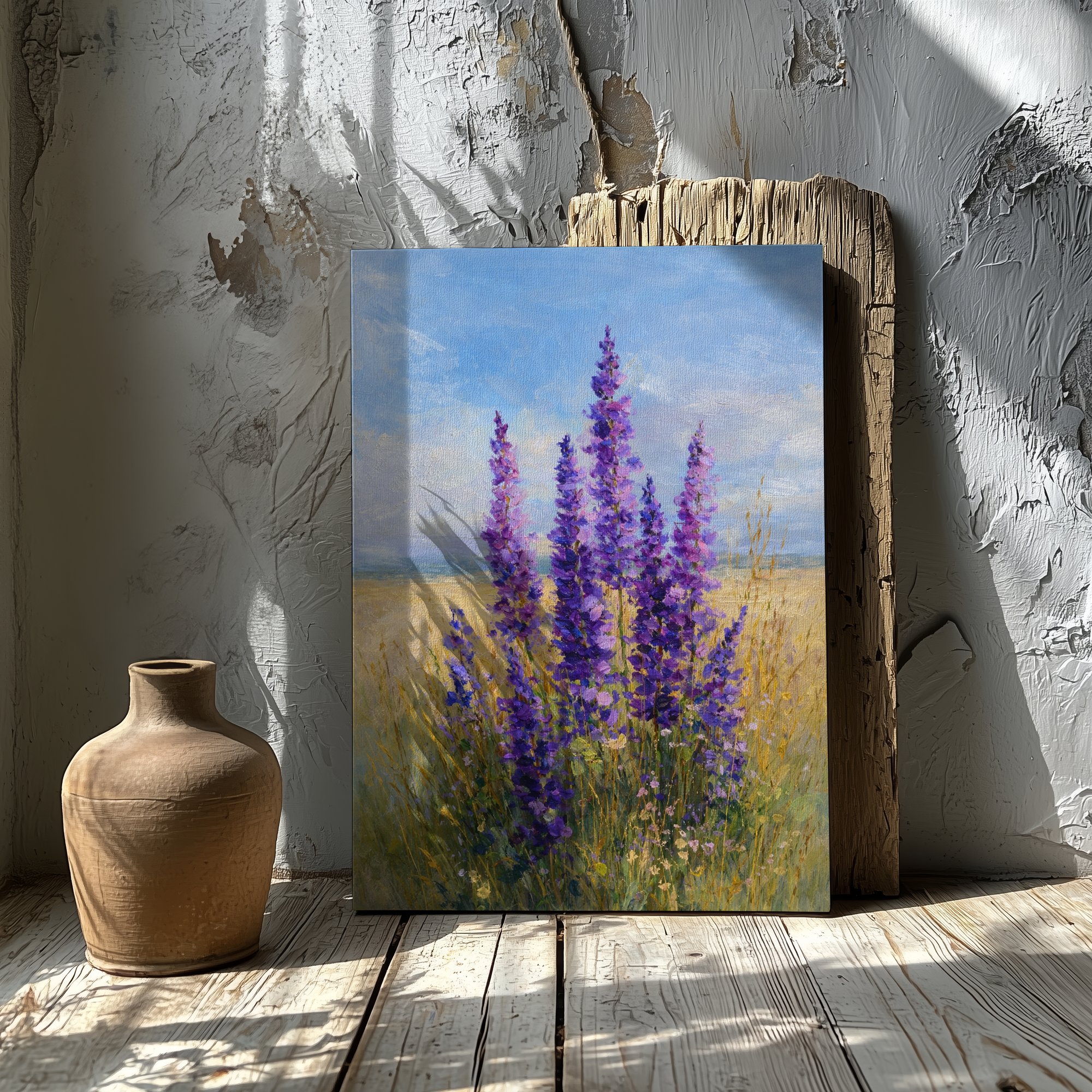
View Pink Peony Canvas on Rustic Charm → from ₹1,899
Step 6: Test the layout before you buy
This step is the one that turns guesswork into certainty, and almost nobody does it.
Cut a piece of newspaper, kraft paper or thin cardboard to the exact dimensions of the artwork you're considering — 16"×24" for a single M, or three rectangles for a set of 3. Tape it to the wall with painter's tape (not regular cellotape — it leaves marks on Indian emulsion paint). Live with it for at least 24 hours. Walk past it during the day, in evening lamp light and at night. Sit on the sofa and look up. Stand in the doorway. Take a phone photo from across the room.
You will know within a day whether the size is right. Most people discover one of three things: it should be larger, it should be hung lower, or the wall actually wants two pieces instead of one. Better to learn that with paper than with a printed canvas.
For a Set of 3, also test the gap spacing — 2 inches feels intimate, 4 inches feels gallery-like. Tape both options if you're unsure.
Common mistakes to avoid
- Hanging too high. The single most common Indian-home mistake. The bottom of art over a sofa should be 6–10 inches above the sofa back, not 18 inches above it.
- Buying a single piece for a wide wall. A 6-foot sofa under a 16"×24" canvas looks like a postage stamp. Either size up to L/XL or buy a Set of 3.
- Matching the art to the rug. Don't try to match exact colours — pick one shared colour and let the rest contrast.
- Ignoring lighting. A canvas under a south-facing Indian window will fade faster than one on an internal wall. Our UV coat extends life to 100 years, but direct harsh sun for hours daily still ages prints faster.
- Forgetting the rest of the room. Wall art is the last 10% of a finished room, not the first. If the room itself isn't styled, no canvas will rescue it.
Indian-home considerations most guides skip
Most online wall-art guides are written for American or European homes — high ceilings, neutral walls, single-purpose rooms. Indian homes are different. Here's what changes.
Wall colour. The standard Asian Paints "Royale" off-white that most Indian flats start with is slightly warm. Cool-toned greys, blues and silvers can look slightly off against it. Warm-toned art (creams, mustards, terracotta, sage) tends to harmonise more naturally.
Humidity. Coastal cities (Mumbai, Chennai, Kochi) and Bangalore monsoon stretches add moisture to walls. Canvas with UV-sealed surfaces handles this better than framed paper because there's no glass to fog and no paper exposed to humidity. If you're in a high-humidity flat, default to canvas.
Multipurpose rooms. Many Indian living rooms double as the dining room and TV room. Choose art that works for all three uses — softer mid-tone abstracts, large-scale florals, or a Set of 3 that visually anchors the seating area without overwhelming the dining table.
Vastu, briefly. Many Indian homeowners check vastu before buying. The general principles: north and east walls take soft, growth-oriented motifs (florals, sunrises, water); south and west take grounding motifs (earth tones, mountains, abundance); north-east avoids dark/heavy art; west welcomes seven-horse imagery, peacocks and metallic accents. None of this is a substitute for personal taste — but for buyers who care, it's worth aligning rather than fighting.
Featured pieces to start with
If you want a few specific Rustic Charm picks to anchor your decision, these three cover the common Indian living-room scenarios.
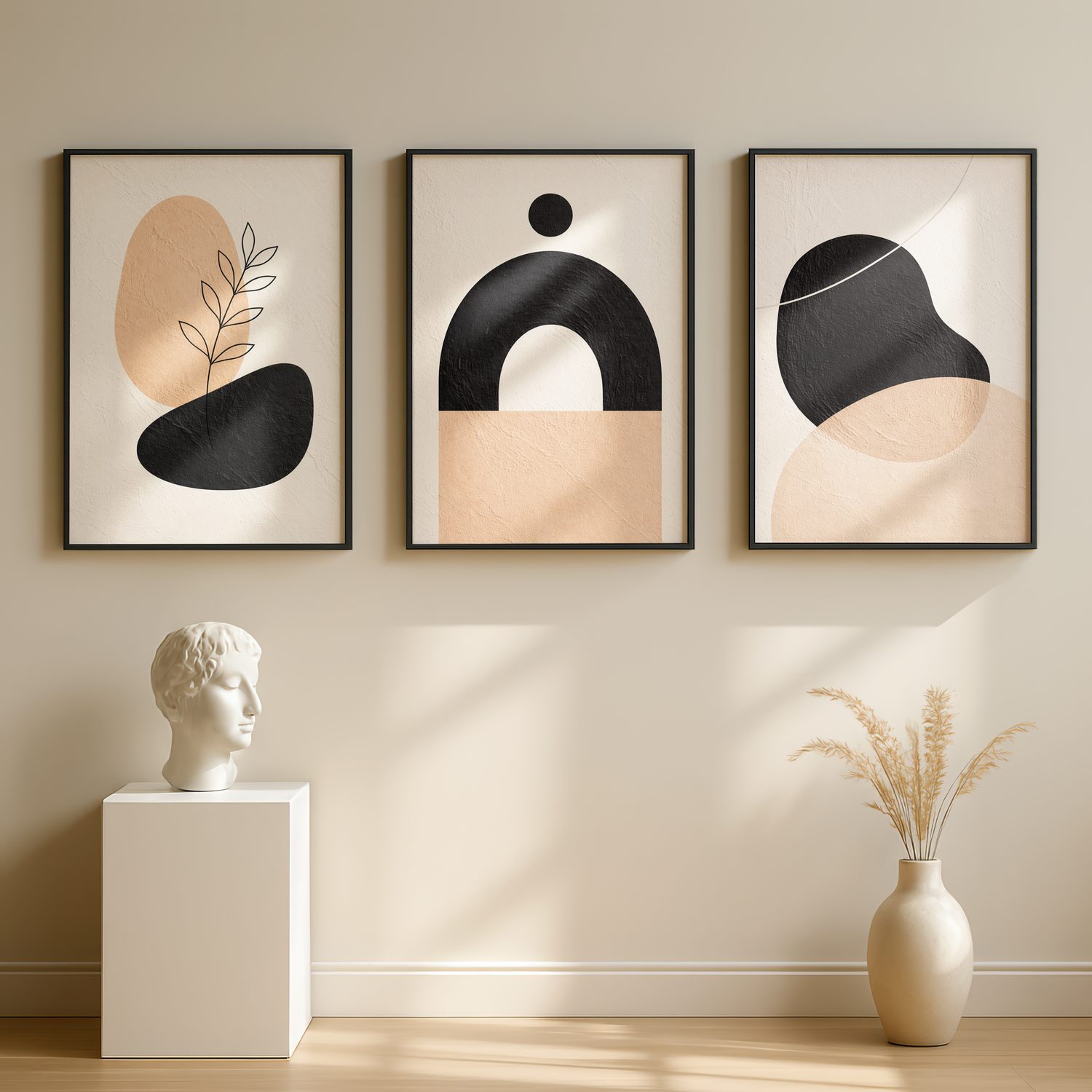
View Abstract Minimalist Set on Rustic Charm → from ₹4,999
A Scandinavian-leaning Set of 3 in muted neutrals — works above sofas in cool-toned living rooms (greys, whites, ash) and pairs cleanly with both contemporary and minimalist Indian decor. Choose this when you want presence without colour-loudness.
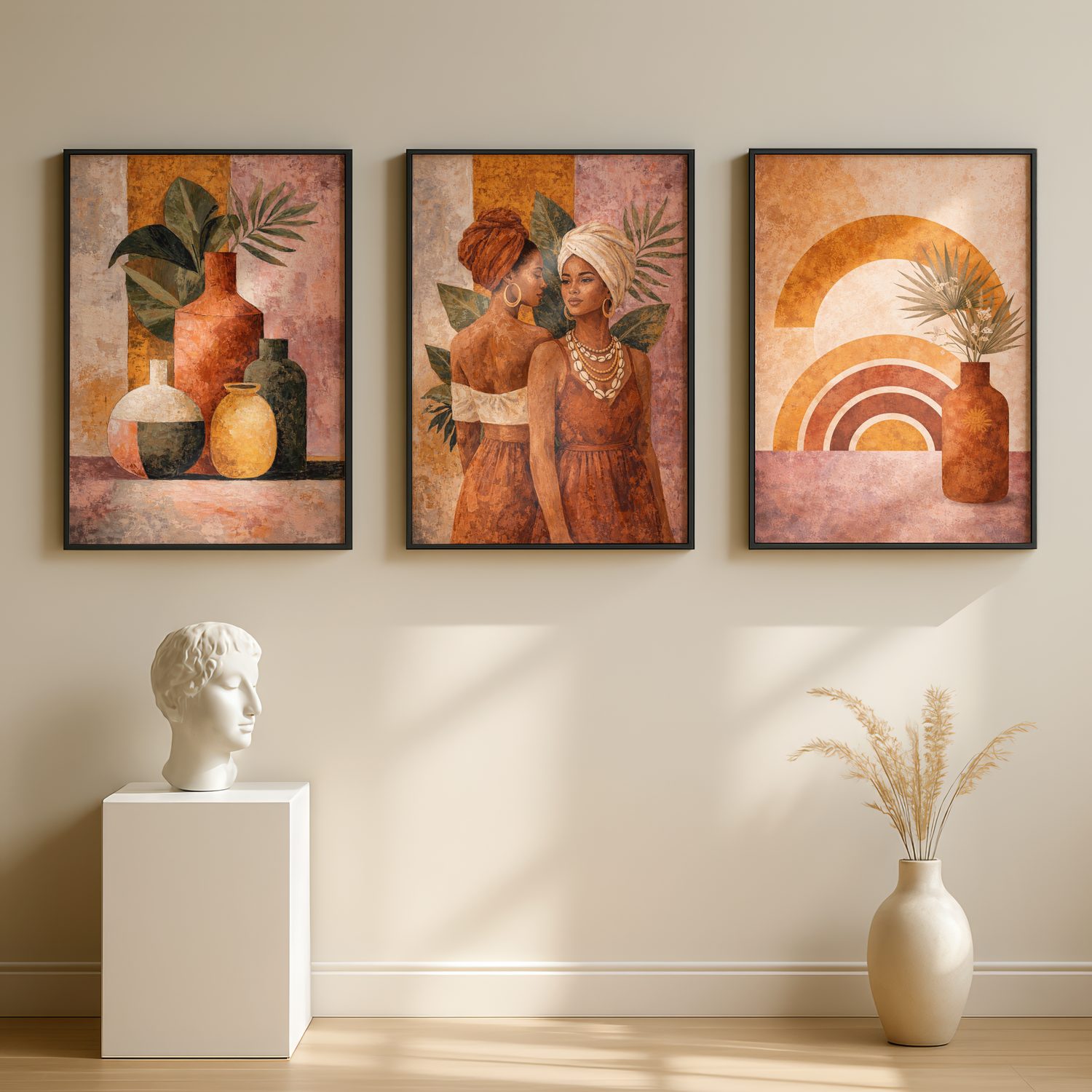
View Boho African Set on Rustic Charm → from ₹4,999
Earthy ochres, terracotta and ethnic figurative work — designed for warm-toned living rooms with teak, jute or warm-cream walls. The Set of 3 fills a 6–7 foot sofa beautifully without needing a single oversized piece.
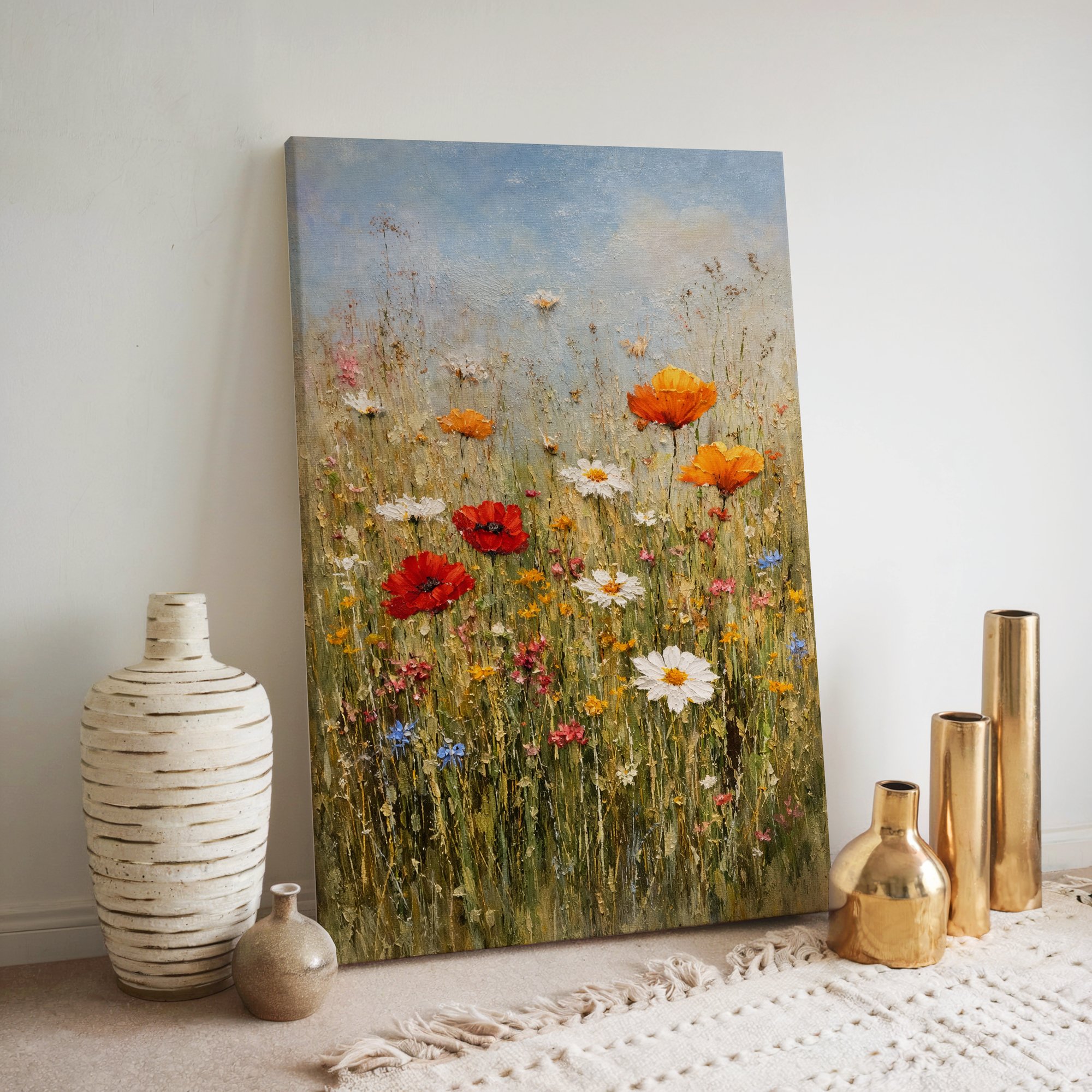
View Lavender Field Canvas on Rustic Charm → from ₹1,899
Soft, low-saturation florals built for bedrooms. The lavender palette calms the eye, which is exactly what a sleep room should do — and unlike vivid art, it won't compete with morning light.
Browse curated collections by style
Once you've narrowed down style and size, the easiest way to shop is by curated collection rather than scrolling all 18 products:
- Abstract Wall Art — bold modern statement pieces.
- Floral Wall Art — botanical, soft, romantic.
- Boho Wall Art — earthy, ethnic, layered.
- Minimalist Wall Art — clean lines, neutral palettes.
- Wall Art for Living Room — every style, sized for the main room.
Or, if you'd rather not pick alone, the Rustic Charm free art consultancy walks you through colour, size and style on WhatsApp at no cost — most queries get a personalised recommendation within a working day.
Related reading by room and decision
Most of these decisions get easier once you've read the room-specific guidance. If you've narrowed down the where but not the what:
- By room — living room, dining room, office and study, entryway and foyer, and rental homes.
- By decision — how to hang canvas art without damaging walls, canvas painting buying guide, and wall painting ideas for Indian homes.
- By aesthetic question — gallery wall ideas, wall art colour psychology, and — for housewarming and gift contexts — wall art as gifts.
Frequently Asked Questions
How big should wall art be above a sofa? About two-thirds the width of the sofa. A 6-foot (72-inch) sofa pairs best with art that is 48 inches wide — typically a Set of 3 in M (16"×24" each) with 2-inch gaps, or a single L canvas at 20"×30". Hang the bottom edge 6–10 inches above the sofa back.
How high should I hang wall art in an Indian home? The centre of the artwork should sit at 57 inches (about 145 cm) from the floor. That's gallery standard and matches average eye level. The exception is art above furniture — there, hang it 6–10 inches above the furniture back, not at 57 inches.
Should I buy one large piece or a Set of 3? A Set of 3 is more forgiving on wide walls and lets you scale exactly to the sofa width. A single large piece is more dramatic and easier to align — ideal for narrow walls or as a focal point. As a thumb rule, walls under 6 feet take a single L or XL; walls over 6 feet usually look better with a Set of 3.
Canvas or framed — which lasts longer in Indian humidity? Canvas, in most Indian homes. Our canvases are sealed with two layers of UV-protective satin clear coat with no glass cover, so humidity, dust and condensation are non-issues. Framed paper prints with acrylic glass also last well, but they're more sensitive to monsoon humidity in coastal cities.
What size suits a 10-foot living-room wall? About 72–90 inches of art width — that's the 60–75% rule applied. The cleanest answer is a Set of 3 in L (20"×30" each) hung with 2-inch gaps, which spans roughly 92 inches. For a softer presence, a single XL (24"×36") centred above a 6-foot sofa works too.
How do I match wall art to my sofa colour? Don't match exactly — match one colour. If your sofa is teal, find art that contains a touch of teal somewhere (a stripe, a leaf, a shadow), and let the rest of the palette contrast. Exact matches look catalogue-styled and a bit forced. Tonal echoes look intentional.
A final note
Choosing wall art well is less about taste and more about a sequence — measure, sort by mood, size correctly, test on the wall. Once you do those four things, the actual "which piece" decision becomes far smaller and less reversible-feeling. The art is the easy part. The framework is what most people skip.
If you'd like a second pair of eyes before you buy, our free art consultancy on WhatsApp (+91-7428296378) is genuinely free — share a photo of the wall and the room, and we'll send back two or three sized recommendations from our curated collections. Most decisions get easier once someone else does the measuring with you.