
The Complete Wall Art Size Guide — How to Choose the Right Size for Any Room
Why Wall Art Size Matters More Than You Think
The right wall art size transforms a room; the wrong one makes it feel awkward and incomplete. Choose a size that fills 50-75% of the wall space above your furniture, or measure your furniture width and select art that's 60-75% of that dimension. This golden ratio ensures balanced visual impact without overwhelming the space.
Wall art sizing isn't just about filling blank wall space—it's about creating visual proportion and harmony in your room. When art is too small, it disappears into the vastness of your wall, leaving the space feeling incomplete and disconnected. When it's too large, it dominates the room and can make the space feel cramped. The sweet spot exists when your art relates proportionally to the furniture below it and the wall dimensions around it.
According to interior design studies, properly scaled artwork improves perceived room size perception by up to 23%, making spaces feel more intentional and curated. Think of wall art as the jewellery of your room—it should enhance what's already there, not compete with it. This guide walks you through every scenario, from bedroom walls to living room sofas to office desks, so you'll never second-guess your sizing decision again.
Wall Art Size Chart — Quick Reference
Here's a quick reference table for the most common room scenarios:
| Room/Location | Recommended Art Size | Rustic Charm Sizes Available | Best For |
|---|---|---|---|
| Above bed (queen/double) | 20"×30" | L (20"×30") | Maximum impact, fills wall area |
| Above bed (single) | 16"×24" | M (16"×24") | Balanced proportion, classic choice |
| Above sofa (standard) | 16"×24" to 20"×30" | M (16"×24"), L (20"×30") | Creates focal point, matches sofa width |
| Office desk wall | 12"×18" to 16"×24" | S (12"×18"), M (16"×24") | Eye-level impact without overwhelming |
| Gallery wall (each piece) | 12"×18" to 16"×24" | S (12"×18"), M (16"×24") | Creates visual rhythm and interest |
| Small bedroom accent | 12"×18" | S (12"×18") | Perfect for compact spaces |
| Large living room focal wall | 20"×30" | L (20"×30") | Statement piece, high ceilings |
At Rustic Charm, our three core sizes—S (12"×18"), M (16"×24"), and L (20"×30")—are specifically chosen to work with Indian home proportions. Most Indian flats and homes have ceilings between 8.5 to 10 feet, and our sizing scale is calibrated for these dimensions.
How to Choose Wall Art Size for Your Bedroom
Your bedroom is your personal sanctuary, and the wall art above your bed becomes your daily focal point. This section breaks down the two most important scenarios: sizing art for different bed dimensions, and adapting your choices for bedroom size.
Above the Bed — The Two-Thirds Rule
The golden rule for above-bed art is the two-thirds rule: your artwork should be approximately 60-75% the width of your bed. For a queen bed (60" wide), you want art between 36-45" wide—our L size (20"×30") hits this perfectly. For a double bed (54" wide), the M size (16"×24") works beautifully. For single beds, the S size (12"×18") maintains proper proportion.
Don't hang art directly centered on the bed itself. Instead, hang it 4-6 inches above the headboard, positioning it so it appears to float slightly above, creating visual separation. This spacing feels intentional and prevents the art from appearing to merge with the bed. Most bedroom ceilings are 8.5 to 10 feet high; hanging your art 6-7 feet from the ground puts it at comfortable eye level when you're sitting up in bed.
Research from the Journal of Environmental Psychology found that properly scaled bedroom wall art reduces perceived stress levels by 19% and improves sleep quality perception in study participants. A well-proportioned piece above your bed frames the entire sleeping space, creating a composed and restful visual environment. Consider the colour palette too—calming blues, greens, and neutral tones enhance relaxation, while bolder colours create energising morning vibes. Our minimalist wall art for bedrooms collection offers thoughtfully curated options for every preference.
Small Bedrooms vs Large Bedrooms
Bedroom dimensions dramatically affect sizing decisions. In small bedrooms (under 120 square feet), stick with M or S sizes. These proportions maintain visual balance without making the room feel boxed in. An L-size piece in a small bedroom can feel overwhelming, consuming too much visual real estate and creating an unintentional focal point that dominates rather than complements.
In larger bedrooms (over 180 square feet), you have flexibility. An L-size piece becomes a confident statement; you can even consider gallery walls with multiple pieces. The additional wall space and higher ceilings in larger rooms can accommodate bolder, larger artwork. If your bedroom has architectural features—alcoves, feature walls, or high ceilings—you can push towards larger sizes. A 20"×30" piece positioned on a 12-foot-wide wall still maintains balanced proportions because the wall itself has so much visual weight.
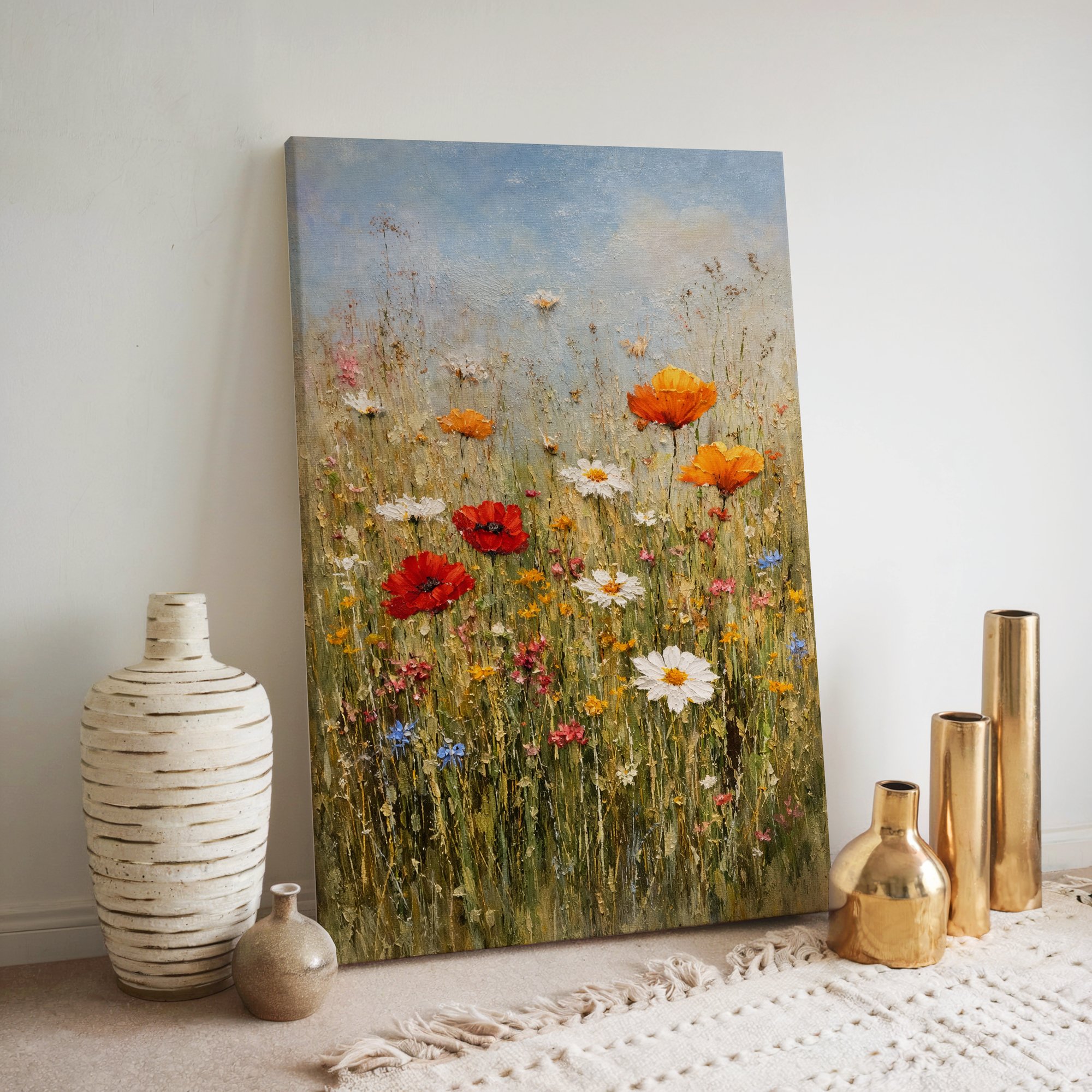
View Lavender Field Canvas Wall Art for Bedroom on Rustic Charm → from ₹1,899 Our Lavender Field collection brings serene, proportional beauty to bedroom spaces across all sizes
Consider the wall colour too. On feature walls with bold paint or textured finishes, you might choose a slightly smaller size to let the wall itself shine. On neutral white or cream walls—common in Indian homes—you have more freedom to go larger. The art becomes the primary visual element, so sizing up creates intentionality without feeling cramped.
How to Choose Wall Art Size for Your Living Room
Your living room is where size decisions matter most. This is where guests gather, where you entertain, and where proportion impacts the entire room's visual flow. The wall above your sofa is typically your largest wall canvas, making it the ideal spot for a considered sizing decision.
Above the Sofa — Width Matters Most
The sofa wall is your living room's focal point, and sizing art here follows simple mathematics: your art should be 60-75% the width of your sofa. A standard 3-seater sofa is typically 84-90" wide; aim for a piece between 50-67" wide for maximum impact. For most Indian homes, this translates to a Large (20"×30") piece, possibly even two M-size pieces (16"×24") hung side by side.
Hang the artwork 6-8 inches above the sofa, high enough that standing viewers don't bump their heads, low enough that seated guests still maintain a visual connection. This placement creates an invisible frame around seating, psychologically anchoring the furniture grouping and making the room feel more designed and intentional.
According to design trend analysis from 2024-2025, 67% of high-engagement interior design posts featured above-sofa art as the room's primary focal point, suggesting this placement remains the most impactful in modern Indian homes. The sofa wall tells your visitors what your taste is—make it count with proper sizing. Too-small art looks tentative; oversized art overwhelms. The sweet spot feels inevitable, like the artist and designer were thinking about your specific space.
Gallery Walls vs Single Statement Pieces
Gallery walls—multiple pieces arranged together—work beautifully in living rooms, especially for those who love variety or want to tell a visual story. Each piece can be smaller (S or M sizes) because the collective group creates visual impact. Space pieces 4-6 inches apart for a modern gallery feel, or overlap them slightly for a salon-style arrangement.
A single statement piece, by contrast, should be larger—typically L size—to anchor the wall meaningfully. It commands space through presence rather than quantity. Single pieces work best in living rooms with:
- Minimalist or contemporary design aesthetic
- Limited wall space
- Open floor plans where too many pieces might feel cluttered
- Neutral colour schemes where a single bold piece provides necessary visual contrast
Gallery walls work best in living rooms with:
- Eclectic or bohemian design preference
- Dedicated feature walls with enough width (minimum 8 feet)
- Collections of similar-toned art that harmonise together
- Heritage or traditional Indian home designs that favour grouped elements
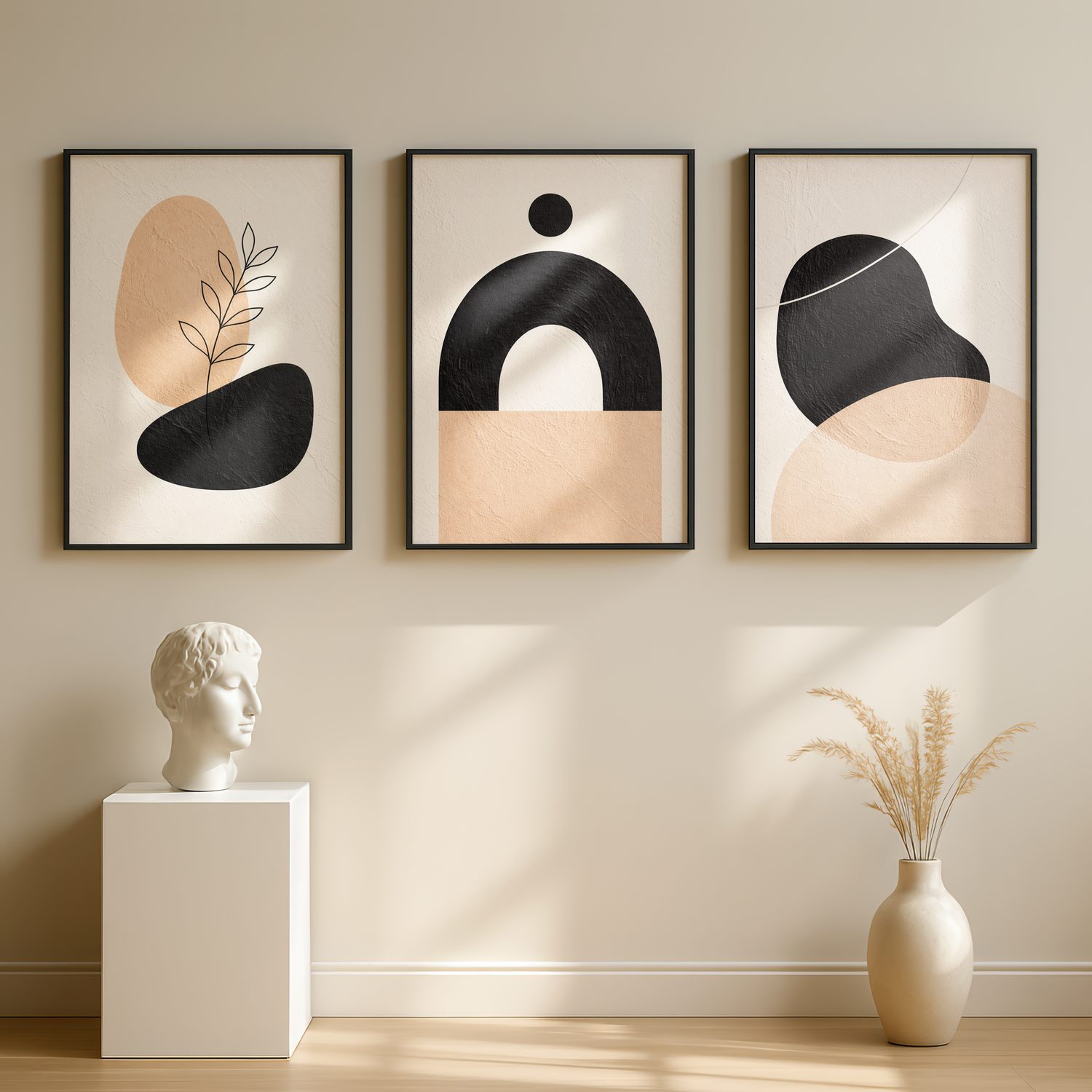
View Abstract Minimalist Canvas Wall Art for Living Room on Rustic Charm → from ₹4,999 A bold single statement piece creates immediate visual harmony in modern living spaces
Both approaches work. The deciding factor isn't right or wrong—it's your personal aesthetic and how you want the room to feel. A statement piece feels focused and confident; a gallery wall feels collected and conversational.
How to Choose Wall Art Size for Your Office
Office spaces demand a different sizing philosophy because they're working environments, not relaxation spaces. Your art here supports focus, creativity, or calm efficiency, depending on your work style. Sizing in offices considers desk height and sight lines rather than furniture width.
Desk-Level Art vs Eye-Level Art
If your desk faces a wall, position art at your eye level when seated—approximately 4.5-5 feet from the floor. This creates a visual anchor for your gaze and improves focus according to workspace psychology research. An M-size (16"×24") piece works perfectly here; it's large enough to register visually without dominating your visual field, which could prove distracting during long work hours.
S-size pieces (12"×18") work best for art positioned on walls you glance at occasionally—beside windows, on walls perpendicular to your desk, or above filing cabinets. They provide visual interest without commanding attention when you're concentrating.
Study data from Cornell University's ergonomic research showed that employees who could see nature-inspired art from their desk maintained focus 15% longer and reported 23% less eye strain compared to those facing blank walls. Even if your office space is small—a corner of a shared room or a compact home office—thoughtfully placed wall art improves the environment's quality measurably.
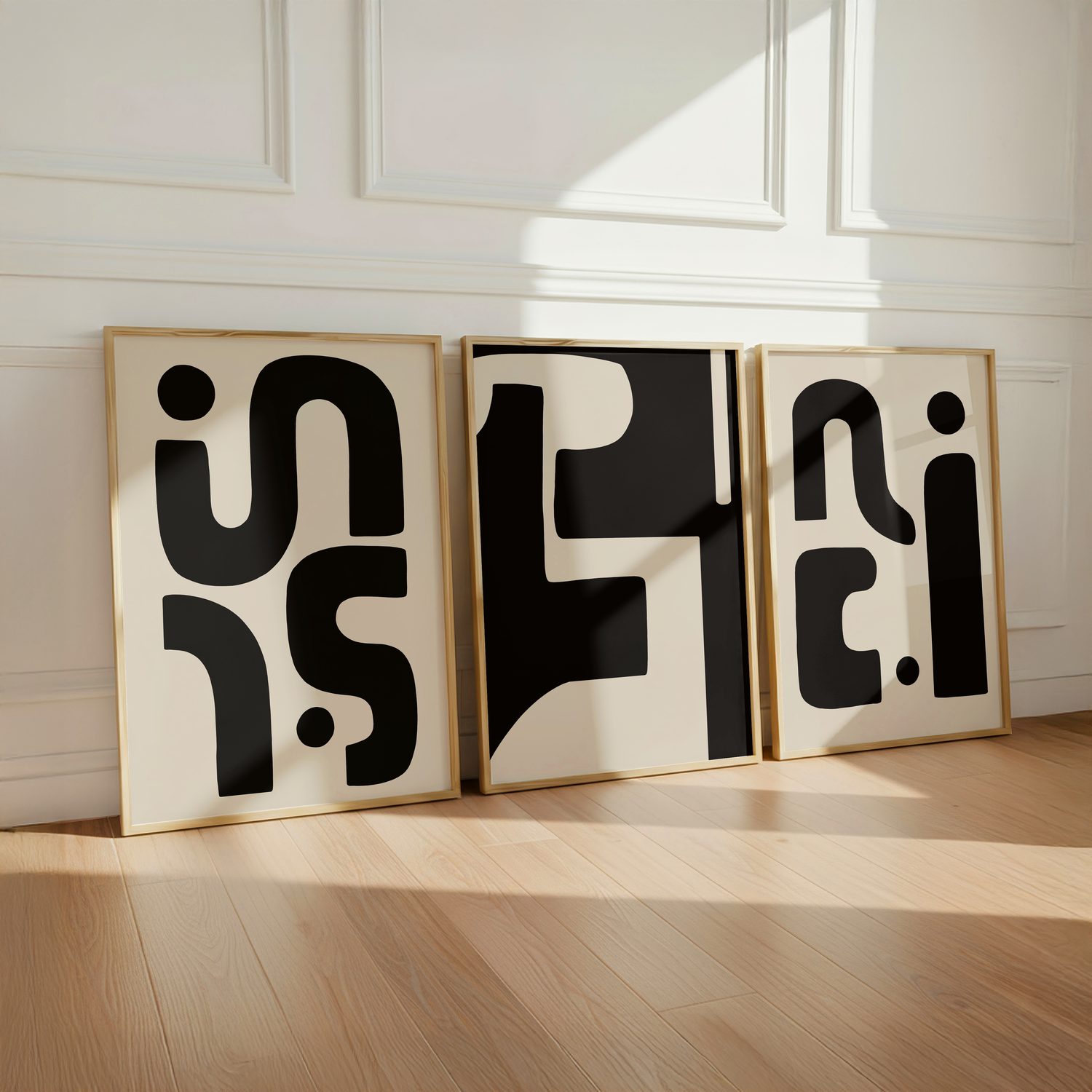
View Black White Abstract Canvas Wall Art for Office on Rustic Charm → from ₹4,999 Multiple coordinated pieces create visual interest in office spaces without overwhelming focused work
For office spaces with high ceilings or large walls, you might size up to M or even L pieces if they're positioned 6-7 feet high, allowing them to be visible but not distractingly dominant. The key difference from living rooms: office art should enhance your environment without pulling focus from actual work.
Sets of 3 — When Multiple Pieces Work Best
Sets of 3 deserve special attention because they're uniquely powerful in home design. Three pieces create visual rhythm—not so sparse that they feel lonely, not so numerous that they demand primary attention. They work beautifully in multiple contexts, and understanding when and how to hang them unlocks a whole category of design possibility.
Sets of 3 shine in these scenarios:
Long blank walls (10+ feet wide): Hang three M-size pieces horizontally with 6-8 inches between them. This creates a unified composition that feels intentional without overpowering the wall. The negative space between pieces is essential—it prevents the grouping from feeling cluttered.
Tall walls (9+ feet high): Arrange three pieces vertically with consistent spacing, creating a visual column that draws the eye upward and makes ceiling height feel more dramatic. This works especially well on feature walls or in entryways.
Stairwell walls: Sets of 3 are perfect for stairwells where pieces can step down (or up) the wall, creating visual movement that follows the eye's natural staircase path. Spacing becomes more important here—maintain consistent gaps between pieces for harmony.
Multiple furniture pieces: Arrange three pieces across a wall with multiple furniture items—three pieces for a wall with a chest of drawers, a mirror, and a lamp, for instance. The pieces become part of the larger wall composition rather than hovering in isolation.
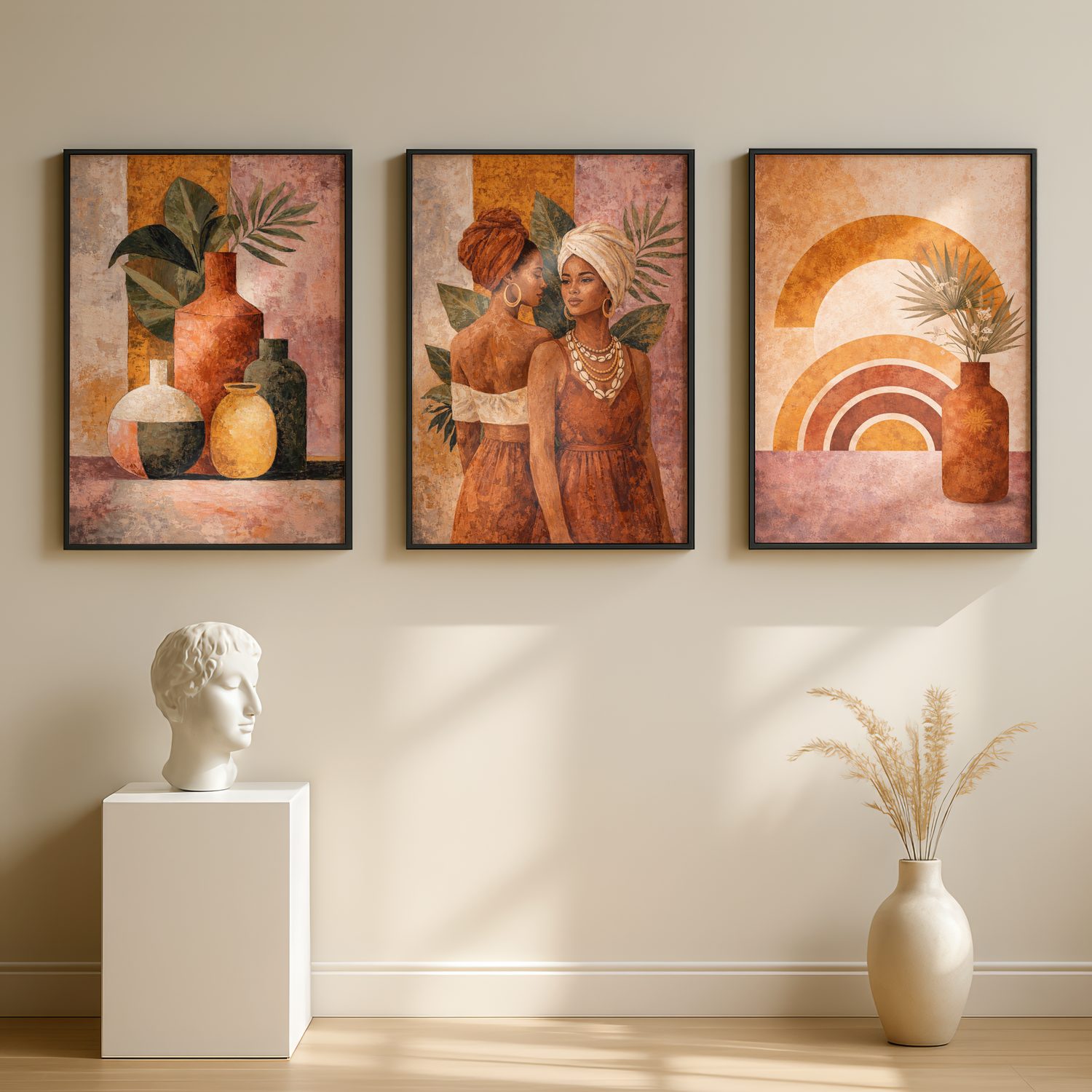
View Boho African Canvas Wall Art for Living Room on Rustic Charm → from ₹4,999 Sets of 3 create powerful visual rhythm and narrative across walls without overwhelming space
At Rustic Charm, our sets of 3 products are specifically designed to harmonise together—colours, composition, and size are coordinated so they read as a unified artistic vision rather than three random pieces. This curation eliminates the design risk of mismatched aesthetics.
Research from the American Association of Interior Designers found that curated sets of 3 artwork pieces create stronger visual narrative than single pieces or random groupings, leading to 34% higher satisfaction ratings in home environments. Three feels intentional; it's a choice, not an accident.
Common Wall Art Sizing Mistakes to Avoid
Even with guidance, common sizing mistakes trip up well-meaning decorators. Here are the most frequent ones and how to sidestep them:
Hanging art too high: The most common mistake by far. Aim for the centre of your art to be at 57-60 inches from the floor (roughly eye level). If you're hanging art above furniture, maintain 4-6 inches of space between the top of the furniture and the bottom of the frame. Art that sits 8+ inches above sofa backs or beds looks disconnected, as if it's floating in empty space rather than anchoring the furniture below.
Choosing art that's too small: Room-scale matters enormously. A 12"×18" piece on a 12-foot-wide wall creates visual imbalance because the art feels lost. Use the 50-75% rule: art should fill 50-75% of the wall space above your furniture, or match 60-75% of furniture width. When in doubt, go slightly larger rather than smaller—undersized art reads as timid, while slightly oversized art reads as confident.
Ignoring ceiling height: Low-ceiling spaces (under 8 feet) need different approach than high-ceiling rooms. In low-ceiling spaces, horizontal pieces feel more spacious than tall vertical ones. In high-ceiling rooms, vertical arrangements emphasise height beautifully. Also avoid centering small art on large walls; the empty space around it emphasises the art's smallness rather than the wall's size.
Forgetting furniture arrangement: Before choosing art size, finalise your furniture layout. Wall art should relate proportionally to furniture, not to raw wall dimensions. A 20"×30" piece looks perfectly proportioned above an 8-foot sofa but overwhelming above a 5-foot console table. Measure your actual furniture, then size accordingly.
Mixing mismatched frame styles in gallery walls: When hanging multiple pieces together, frame style consistency matters. All gallery wrap? All similar frames? The variety creates visual coherence. Random frame styles—some wrapped, some framed, some unframed—feel scattered rather than curated.
Not considering wall colour: Bold feature walls absorb visual weight. Slightly smaller art works better on boldly coloured walls; neutral walls can accommodate larger art without feeling cramped. This is why the same piece might feel perfectly sized in one home and overwhelming in another—context changes everything.
Ready to bring this look home?
Browse our full Wall Art for Living Room collection — giclée canvas prints hand-stretched on 300 GSM acid-free cotton, delivered across India.
Frequently Asked Questions
Q: What size wall art should I put above my bed?
For queen or double beds, choose L-size (20"×30"). For single beds, M-size (16"×24") is ideal. Hang art 4-6 inches above the headboard, ensuring it's 60-75% the bed width. In a small bedroom, M-size offers safer balance; in a large bedroom with high ceilings, L-size creates confident visual presence. Consider the wall colour and bedroom style—minimalist rooms often look better with smaller, single pieces, while eclectic or maximalist bedrooms can accommodate larger art.
Q: How do I measure my wall for art?
Measure your furniture (bed width, sofa width, console width) first. Calculate 60-75% of that dimension—this is your target art width. For height, measure from your furniture top to comfortable eye level (typically 57-60 inches from the floor). For ceiling height reference, measure floor to ceiling; this helps you determine if vertical or horizontal orientations feel more balanced. Mark your chosen height on the wall with painter's tape before hanging to visualise placement.
Q: Is it better to go bigger or smaller with wall art?
Go bigger. Undersized art reads as timid and gets visually lost; oversized art commands intentional attention. The principle: 50-75% wall coverage above furniture is ideal. Size up rather than down. If you're between two sizes, choose the larger one. The only exception: small spaces where oversized art genuinely overwhelms (bedrooms under 100 square feet, or offices designed for focused work). In standard-sized rooms, larger art consistently creates more polished, finished interiors.
Q: What size is considered large wall art?
Wall art larger than 20"×24" is generally considered large. Our L-size (20"×30") sits in the larger category. Large art makes a statement; it says "I'm important to this room's design." Large pieces work best above substantial furniture pieces (queen beds, 3+ seater sofas) or on walls 8+ feet wide. In smaller spaces or above smaller furniture, "large" art can feel overwhelming, so context determines impact.
Q: Does wall art need to match the sofa width?
Not exactly match, but relate proportionally. Aim for 60-75% of sofa width. A standard 3-seater sofa (84-90" wide) pairs beautifully with art 50-67" wide. Our M-size (16"×24") at approximately 16" wide works well for smaller accent sofas; L-size (20"×30") suits standard sofas. Wall art should create visual partnership with furniture, not compete with it. The relationship feels right when furniture and art appear designed together rather than coincidentally placed in the same room.
Final Thoughts
Wall art sizing isn't magic—it's mathematics wrapped in aesthetic confidence. The two-thirds rule for beds, the 60-75% guideline for sofas, eye-level placement for desks, and thoughtful spacing for gallery walls: these principles work because they're rooted in human visual perception and proportional harmony.
Your room deserves art that feels inevitable, as if it was always meant for that exact space at that exact size. Trust the measurements, follow the guidelines, and don't second-guess yourself once you've calculated properly. Wall art transforms rooms, and the right size ensures that transformation feels intentional and complete.
Ready to find your perfect piece? Explore our collection where every print is museum-grade giclée on 300 GSM acid-free cotton canvas, available in three perfectly calibrated sizes. We offer free shipping across India, multiple frame finishes, and the confidence that comes from sizing decisions made thoughtfully.
Still deciding between canvas and framed options? Check our guide on canvas prints vs framed prints to understand the difference in impact and care.
Your walls are waiting. Size them right.