
Canvas painting for your living room sits at the intersection of art, budget and everyday living — and for Indian homes, the good news is you don't need a ₹50,000 original to transform a wall. This guide walks you through what to buy, at what size, for which wall, and why.
Canvas painting or canvas print — what you're actually buying
There's a small vocabulary mix-up that costs Indian buyers a lot of time online. In India, "canvas painting" is the everyday term for what the art industry calls a giclée canvas print — an ultra-high-resolution reproduction of an original artwork, printed with archival pigment inks onto 300 GSM acid-free cotton canvas and hand-stretched on a wooden frame. It is not a hand-painted original; a hand-painted piece of comparable size starts at ₹50,000 and climbs sharply from there.
Here's why this distinction matters for your wallet and your wall:
A giclée canvas print delivers the same visual impact as an original — same texture, same colour saturation, same commanding presence — at D2C prices between ₹1,899 and ₹4,999. The museum-grade process (found in galleries from the Tate to NGMA) uses 8-to-12-ink pigment printing that resists fading for 100–200 years on archival canvas. Search-engine data from India tells the same story: "canvas painting" gets roughly 90,500 searches a month and "wall painting for home" another 8,100 — but the product being shopped for is almost always a print. Most serious Indian sellers, including us at Rustic Charm, use both terms so shoppers find us; the physical product is the same giclée canvas.
The short version: if you see "canvas painting" listed for ₹2,000–₹5,000 on any Indian D2C store, it is a giclée canvas print. Genuine hand-painted canvases in that price range are almost always poster-weight paintings on low-GSM cotton, which warp within a year in Indian humidity.
The five questions that decide the right canvas painting for your living room
1. How big should it be?
Sizing is where most Indian buyers go wrong. A painting that looks large on a product page often disappears on the wall it's meant to anchor. The design rule used by interior designers globally is the two-thirds rule: the art above your sofa should span roughly two-thirds of the sofa's width.
| Sofa width | Ideal canvas width | Format we'd recommend |
|---|---|---|
| 6 ft / 183 cm | 48 in / 122 cm | Single large canvas OR Set of 3 (3×16 in) |
| 7 ft / 213 cm | 56 in / 142 cm | Set of 3 (3×18 in) or single 60 in |
| 8 ft / 244 cm | 64 in / 163 cm | Set of 3 (3×22 in) |
| 9 ft / 274 cm | 72 in / 183 cm | Set of 3 (3×24 in) or Set of 5 |
If your living room has a 9–10 ft ceiling, add 4–6 inches to the canvas height; high ceilings visually shrink mid-sized art. For reference, a 24×36 inch single canvas reads as "statement-size" in a typical Indian drawing room; anything below 18×24 inches is decorative accent, not focal art.
2. What style fits an Indian living room?
Scroll any Indian interior design subreddit and you'll see the same tension play out every week: buyers want art that feels personal and rooted, not generic hotel-lobby abstract. The four styles that consistently land are:
Impressionist floral for light-filled, family-focused drawing rooms — soft colour fields, pretty without being twee, complements both modern and traditional furniture. Best pick if your sofa is grey, cream, or beige.
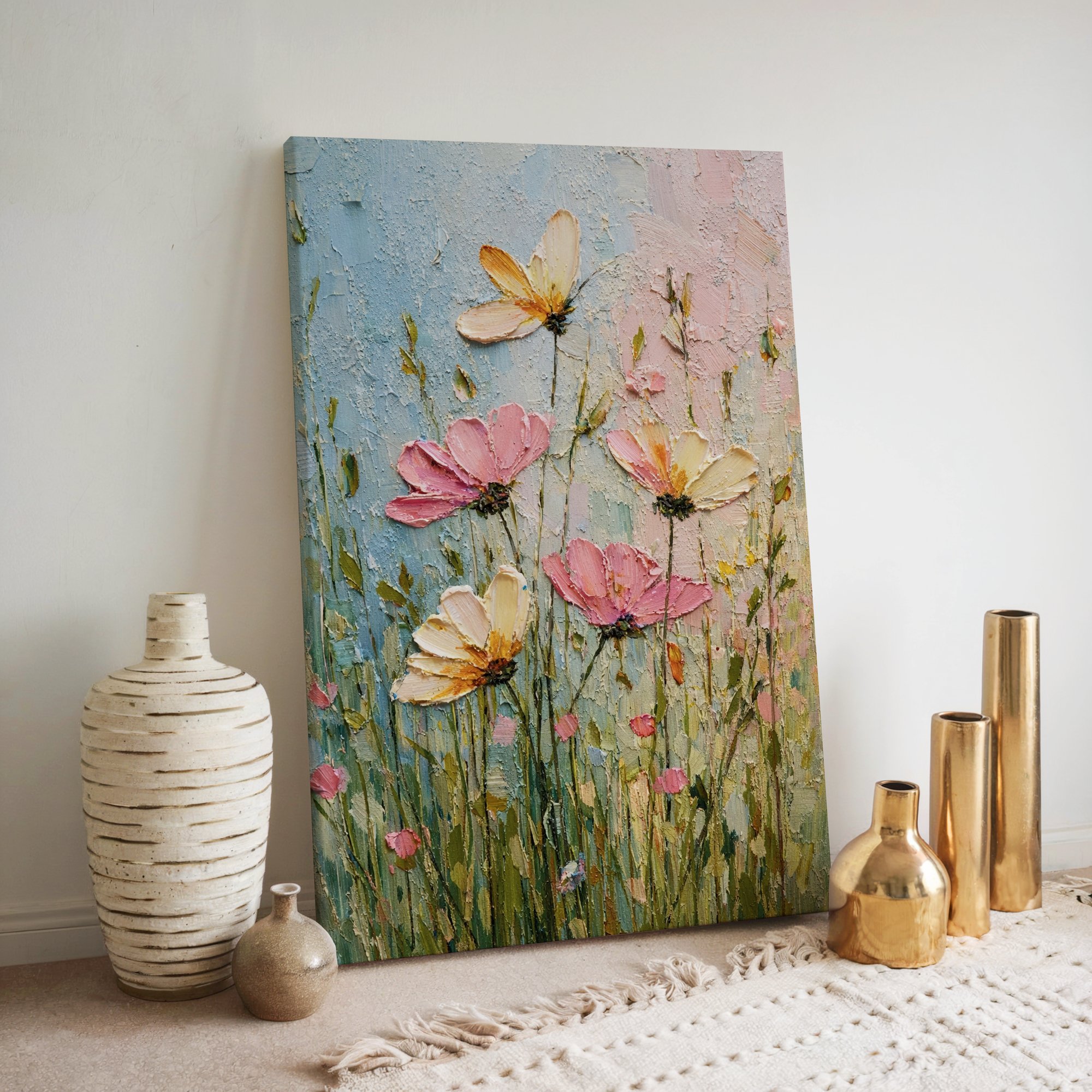
View Rose Garden Canvas on Rustic Charm → giclée print on 300 GSM cotton canvas
Boho-ethnic for homes with warm wood, terracotta, jute, or rattan — ethnic motifs and earthy palettes anchor the room's texture without competing with it. Works exceptionally well above a teak or mango-wood sofa.
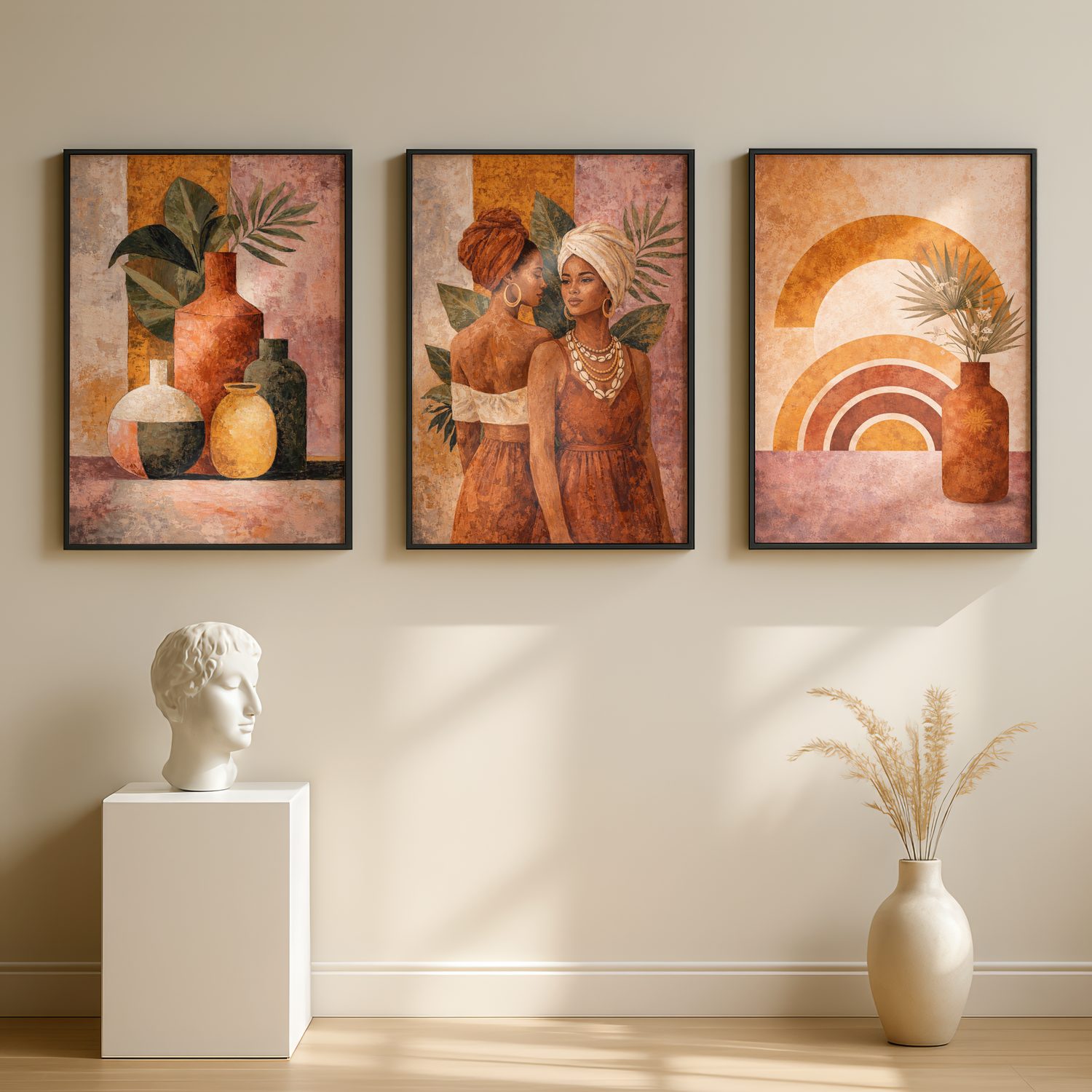
View Boho African Set of 3 on Rustic Charm → 3-piece set, gallery-ready
Minimalist Scandinavian for urban apartments with white walls, grey upholstery, or muted palettes. Calm, confident, never busy. If your living room already has colourful curtains or a patterned rug, a minimalist canvas painting is the only style that won't visually overload the room.
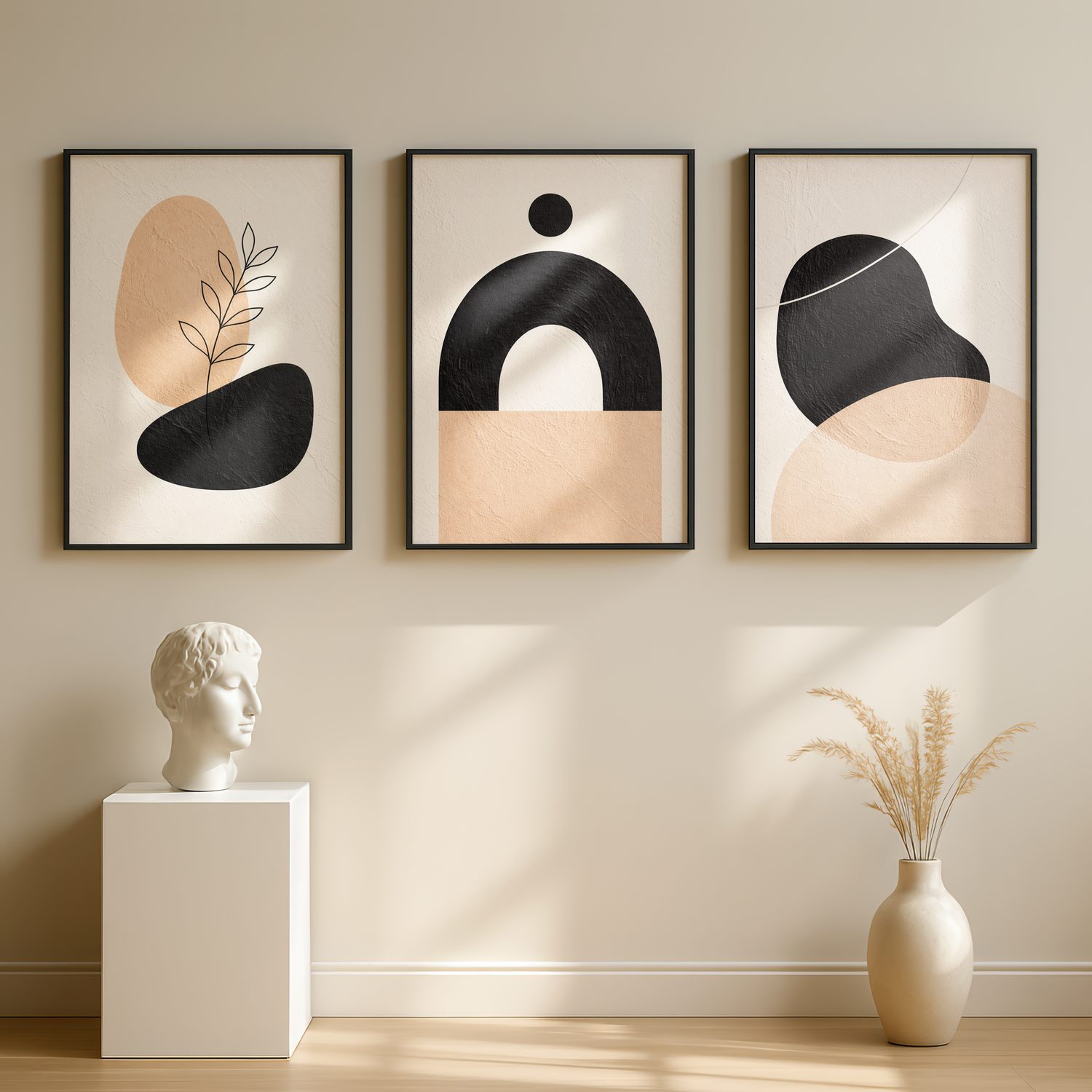
View Abstract Minimalist Set on Rustic Charm → modern Scandinavian aesthetic
Bold abstract expressionist for anyone whose living room needs an anchor — the biggest single conversion trigger we see in our reviews is "the abstract painting pulled the whole room together". If the wall is large, the sofa neutral, and the room feels half-finished, this is usually the fix.
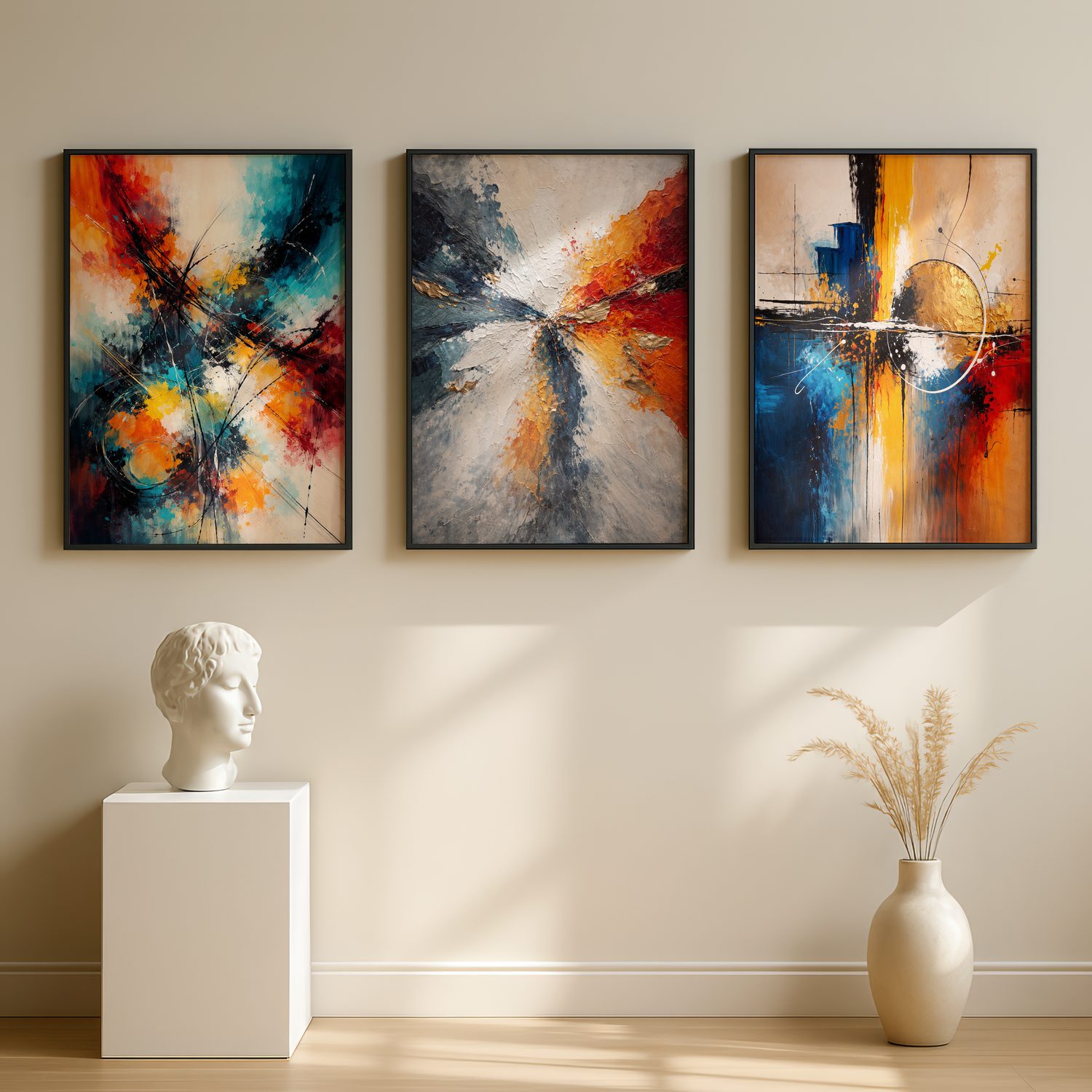
View Bold Abstract Set on Rustic Charm → vibrant 3-piece statement set
Meadow / wildflower for light, airy drawing rooms — particularly strong in Bengaluru and Pune apartments with large balconies. Reads as cheerful without feeling childish.
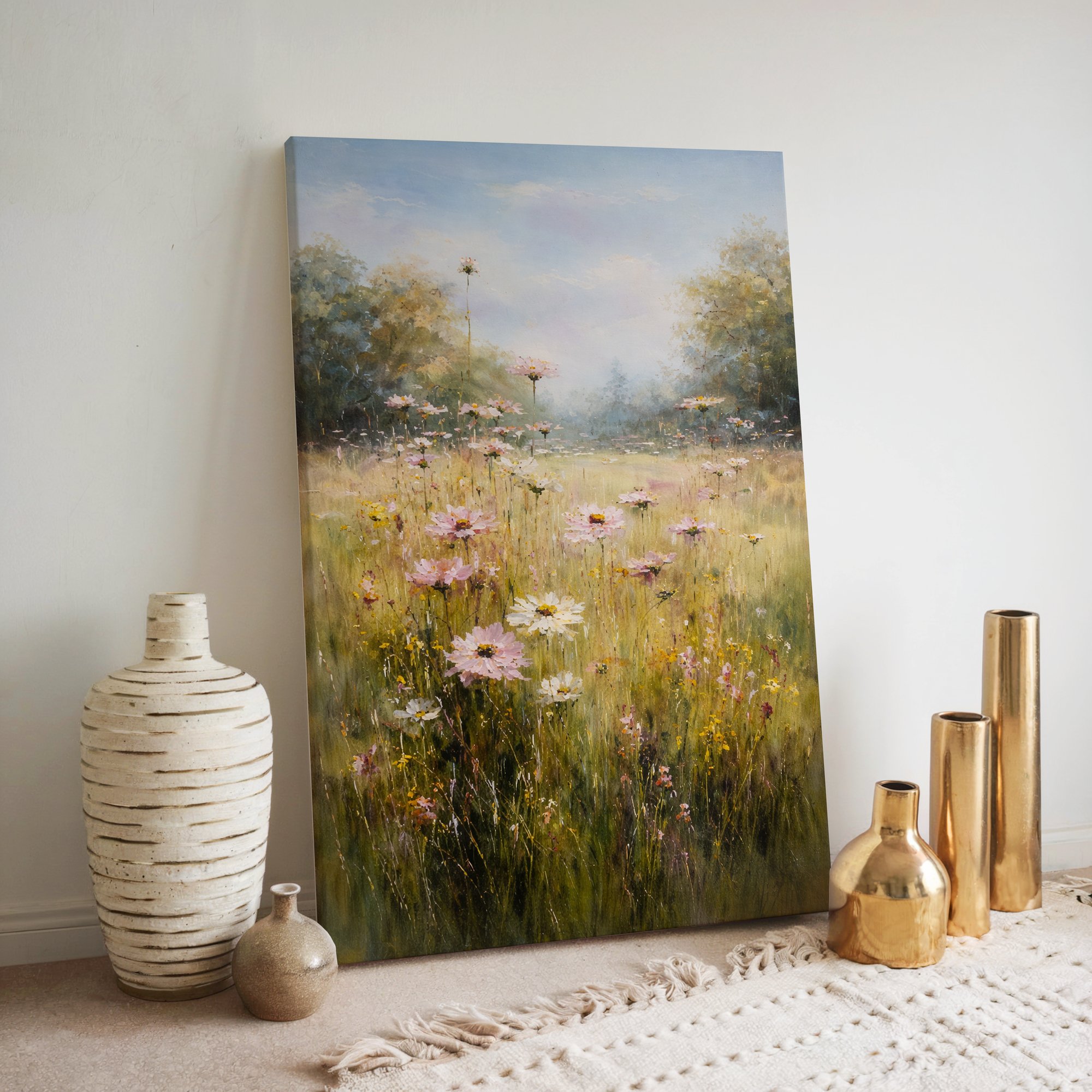
View Wildflower Meadow on Rustic Charm → colourful meadow print
3. Where exactly should it hang?
The centre of your canvas painting should sit 57 inches from the floor — this is the museum-standard eye-line used at the NGMA, the Tate, and virtually every serious gallery. In a living room with a sofa, the bottom edge of the art should sit 8–10 inches above the top of the sofa back, not touching it. Too close looks cluttered; too high visually disconnects the painting from the furniture.
If your sofa backs onto a full-height wall, resist the urge to centre the art on the wall — centre it on the sofa instead. The human eye reads furniture-grouped arrangements as intentional; wall-centred art above off-centre furniture reads as an afterthought.
4. What should you actually spend?
Based on r/AskIndia and r/IndianHomeDecor threads from the last 12 months, the most common living-room art budget in urban India sits between ₹3,000 and ₹10,000 for a statement piece. Here's the honest breakdown at each tier:
- Below ₹1,500: poster prints on thin paper or polyester, 3-month lifespan in Indian humidity. Skip.
- ₹1,900–₹3,000: entry-tier giclée canvas prints on genuine 300 GSM cotton — single panels or small sets. Good first-art-for-adults purchase.
- ₹3,000–₹5,000: proper statement canvases, including multi-panel sets of 3. This is the sweet spot for Indian living rooms and where Rustic Charm's curation concentrates.
- ₹5,000–₹15,000: limited-run giclée editions with hand-deckled edges, or original artwork from emerging Indian artists.
- Above ₹50,000: mid-career Indian artists (Jogen Chowdhury, Manu Parekh, Shuvaprasanna), mostly via auction houses and gallery commissions.
5. How do you spot a quality canvas painting online?
Five specification checks before you buy:
- Canvas weight: 300 GSM or higher, acid-free cotton. Anything below 260 GSM will sag within a year in Indian summer.
- Ink type: pigment-based (not dye-based). Pigments last decades; dyes fade within 18 months under direct sunlight.
- Frame depth: 1.25 inches (32 mm) or thicker for the stretcher bars. Thin bars warp, pulling the canvas off-true.
- Printing method: giclée or fine-art inkjet, not offset print. Ask the seller directly if the listing doesn't say.
- Return window: at least 7 days from delivery, with the seller paying reverse logistics. Small sellers who don't offer this usually know their product won't survive scrutiny.
Five mistakes Indian buyers keep making with canvas painting purchases
Mistake 1: Hanging art too high. The 57-inch eye-line rule exists for a reason — every inch above it visually shrinks both the art and the furniture below.
Mistake 2: Matching art exactly to a cushion colour. Complementary works; matched rarely does. If your sofa is beige-and-rust, pick art that has one of those tones, not both.
Mistake 3: Buying before measuring. A single 24×36 inch canvas looks huge on a product page and modest on a 9-foot wall. Measure the wall, mask out the canvas dimensions in newspaper, tape it up for 24 hours before buying.
Mistake 4: Ignoring the ceiling. Low ceilings want horizontal-format canvas; high ceilings want vertical or multi-panel sets of 3. Getting this backwards makes the room feel either cramped or cavernous.
Mistake 5: Trusting ₹499 canvases on marketplaces. They're usually photo-paper prints dry-mounted to foam board, labelled "canvas" because the image has a canvas-weave filter. They warp, peel and yellow in one monsoon.
Ready to bring this look home?
Browse our full Wall Art for Living Room collection — every giclée canvas print in the collection is hand-stretched on 300 GSM acid-free cotton, finished with a premium UV-resistant varnish, and delivered across India with free shipping on orders above ₹5,000.
Prefer to start with a single statement set? The Cottage Garden Canvas is the most-shared piece in our Instagram tag #MyRusticCharm — a safe first buy that pleases every aesthetic.
Frequently Asked Questions
What's the difference between a canvas painting and a canvas print?
In India, the two terms are used interchangeably in the under-₹10,000 market. Both refer to a giclée print — a high-resolution pigment-ink reproduction on 300 GSM cotton canvas, hand-stretched on a wooden frame. A true hand-painted canvas in the same size starts around ₹50,000. If the price is under ₹15,000, you are buying a canvas print regardless of what the listing calls it.
Will a canvas painting fade in Indian sunlight?
A good-quality giclée canvas print with pigment inks and UV-varnish protection is rated for 100–200 years of fade resistance indoors, away from direct sunlight. Direct afternoon sun through a window will shorten that lifespan — rotate or relocate the painting if the spot receives more than 3 hours of harsh direct light daily.
What size canvas painting looks best above a 3-seater sofa in an Indian living room?
For a standard 6–7 ft 3-seater, aim for a canvas that spans 48–56 inches — either a single large piece or a set of 3 measuring roughly 16–18 inches each. Hang it so the bottom edge sits 8–10 inches above the sofa back, with the centre of the arrangement at 57 inches from the floor.
Are canvas paintings better than framed posters?
Yes, for living-room use. Framed posters reflect light (making them hard to see from across the room), attract dust in the frame-glass gap, and cost nearly as much as a canvas print once you add a decent frame. Canvas prints have no glass, no glare, no reflections, and carry more texture and depth — all of which helps them work from any viewing angle in a room.
Can I wash or clean a canvas painting?
Gently, yes. Use a dry microfibre cloth every 2–3 months to dust the surface. For stubborn marks, a barely-damp cloth with plain water is safe on varnished giclée canvases. Never use glass cleaner, alcohol, or abrasive cleaners — they strip the UV varnish and damage the pigment layer.
What's the best canvas painting style for a small Indian apartment living room?
Minimalist or single-subject pieces work better than busy compositions in small rooms — they visually expand the space. A single 24×36 inch abstract or minimalist canvas anchors a small living room without crowding it. Avoid heavy ornate frames in small spaces; the canvas-only (frameless) look is cleaner and reads more modern.
Is a "set of 3" canvas painting worth the extra cost over a single canvas?
For walls wider than 6 ft, usually yes — sets of 3 cover more wall area and feel more designed than a single off-scale piece. For walls narrower than 5 ft, stick with a single statement canvas; a set-of-3 on a short wall looks crowded.