
A gallery wall is a curated group of artwork, photos, and objects arranged with intention — not randomness. The single rule that makes every layout work? Consistent spacing and a clear visual line, not matching frames.
What a Gallery Wall Actually Is (And Why It Works in Indian Homes)
A gallery wall is a cluster of two or more framed pieces hung together as one composition. The individual pieces can mix media — canvas prints, photography, illustration, textiles, even plates or woven art — but the grouping reads as a single design element. In Indian homes, gallery walls solve three very specific problems: large wall expanses above long sofas or behind dining tables, tall staircase walls that feel bare, and rental flats where a single large canvas feels too committal. A well-composed wall lets you layer in personality without repainting, drilling structural mounts, or splurging on one museum-scale piece.
According to Architectural Digest's 2024 design trends roundup, the "curated gallery wall" ranks among the top five most-searched home styling ideas for the second year running — precisely because it fits every budget bracket and every ceiling height. For Indian buyers specifically, the format suits the way we live: multi-generational homes, frequent guests, and rooms that often double as everything from home office to puja corner.
The Nine Layouts Every Gallery Wall Follows
Most gallery walls you admire online are built from one of nine layout blueprints. Pick the one that matches your wall shape and the mood you want.
1. The Grid — Equal-sized frames in a perfect 2×2, 2×3, 3×3 or 4×4 matrix. The calmest, most formal option. Works beautifully above dining tables and in entryways.
2. The Salon Hang — A dense, asymmetric cluster where frames of different sizes fill an imaginary rectangle. The namesake of 18th-century Parisian art salons. Reads as maximalist and collected over time.
3. The Centre-Line (or Axis) Hang — Frames of varying size arranged around a strong horizontal line running through their centres. Great for pieces of mixed dimensions that still need to feel orderly.
4. The Staircase Rising Line — Frames step up diagonally, following the pitch of your staircase. The anchor of every well-dressed Indian duplex.
5. The Horizontal Row — Two to five pieces in a single straight line. Low effort, high impact above a console, bed, or long sofa.
6. The Vertical Stack — Two or three pieces stacked vertically in a narrow column. Perfect for awkward slivers between windows or either side of a doorway.
7. The Two-and-One (or Triptych) — A large central piece flanked by two smaller ones, or a set-of-three canvas painting hung as a single unit. The Indian home's workhorse layout for TV walls and headboards.
8. The Shelf-Mounted Gallery — Frames propped on a picture ledge instead of drilled into the wall. The renter's best friend, and infinitely re-composable.
9. The Off-Kilter Cluster — A deliberately loose, irregular grouping that avoids any visible grid. Hardest to do well, but feels the most personal.
The Paper-Template Method — How Pros Plan Every Gallery Wall
Before you drill a single hole, cut kraft paper or old newspaper to the exact size of each frame and tape it onto the wall with painter's tape. Move the paper around until the composition feels right, then mark the hook position through the paper and hang. This one step, recommended across almost every r/interiordecorating thread on gallery walls, prevents the most common mistake — a lopsided arrangement you only notice after you've drilled six holes.
Use spirit-level apps on your phone (Bubble Level, iHandy Level) to check your horizontal line once the first piece is up. Every subsequent frame aligns to that first anchor.
The Spacing Rule That Separates Good Walls From Great Ones
Gallery walls fail for one of two reasons: frames too close (busy, claustrophobic) or too far apart (the infamous "hostage situation" described by Reddit users in r/DesignMyRoom). The professional rule is 5 to 10 centimetres (roughly 2 to 4 inches) between frames — consistent across the entire composition. For salon-style walls, lean tighter (5–7 cm). For minimalist rows, lean wider (8–10 cm). The eye reads uniform spacing as intention, even when the frames themselves differ.
Hang the centre of your entire composition at 145 to 150 cm (57 to 60 inches) from the floor — the standard museum eye-line. For seated areas like dining rooms and living rooms with low sofas, drop the centre to 137 cm (54 inches) so the art sits within the seated sightline rather than floating above it. If you're new to hanging canvas pieces, our complete guide on how to hang canvas art covers hooks, weights, and wall-type specifics.
Featured Canvas Sets for Instant Gallery Walls
If you're starting from zero, a pre-composed set of three is the quickest win. Each of these ships as a coordinated unit, so spacing and scale are already solved — you only need to handle the hang.
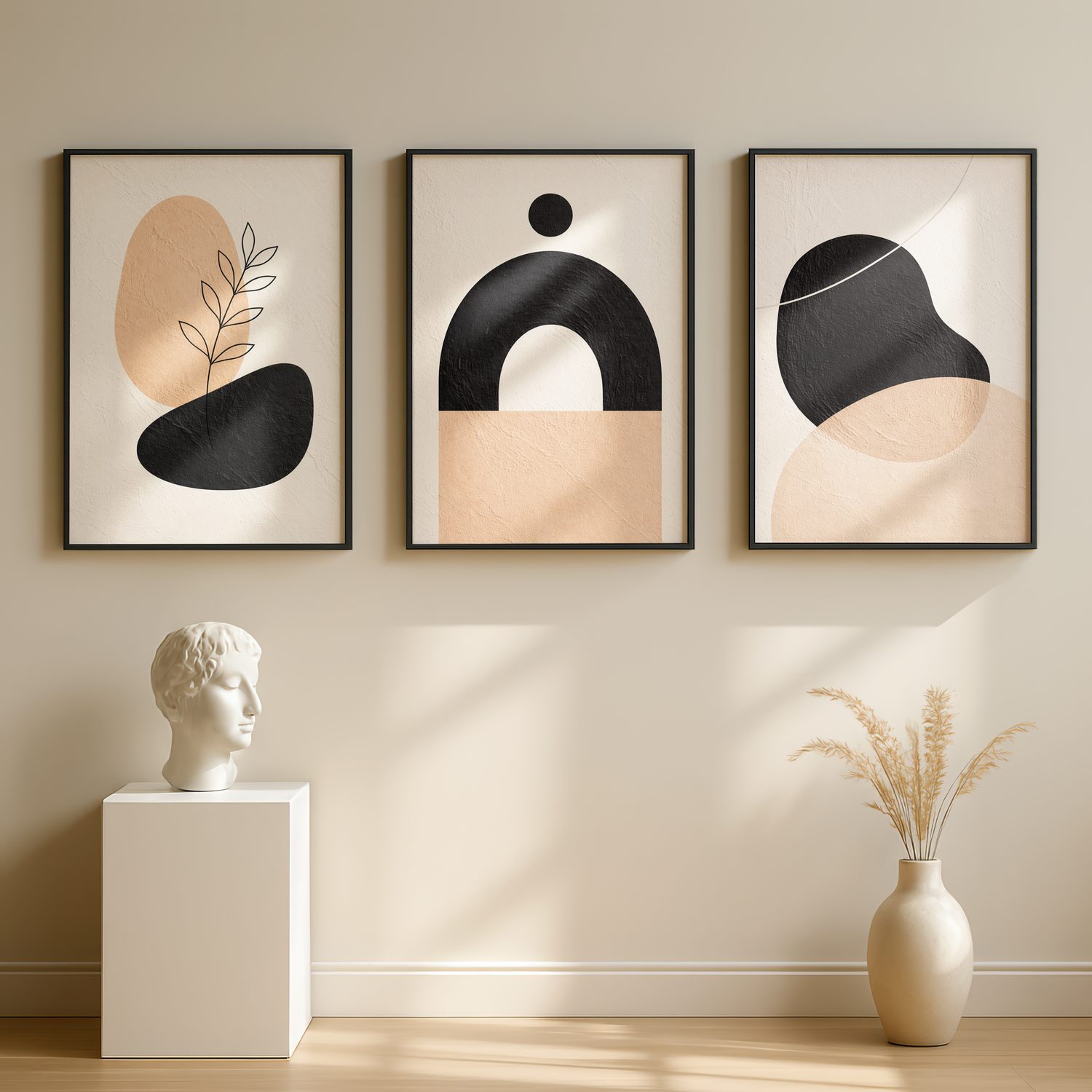
View Abstract Minimalist Set of 3 on Rustic Charm → from ₹4,999
Three muted, Scandinavian-inflected canvases that sit beautifully above a sofa or a console. Neutral palette means they pair with floral or folk-art singles if you want to build outward.
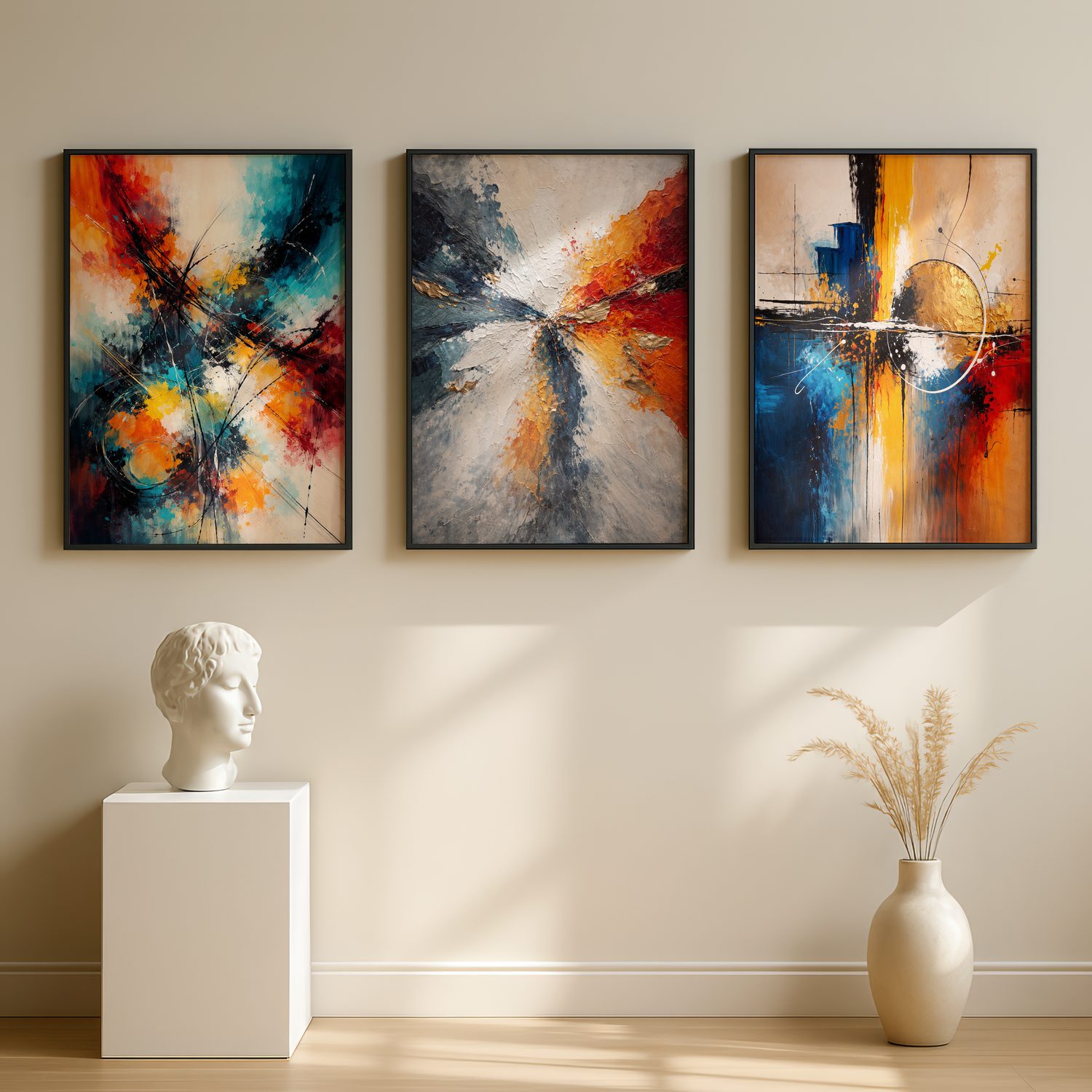
View Bold Abstract Expressionist Set of 3 on Rustic Charm → from ₹4,999
A high-saturation statement set — the right pick if you want the gallery wall to be the room's hero rather than a quiet backdrop. Anchors well in open-plan living-dining spaces.
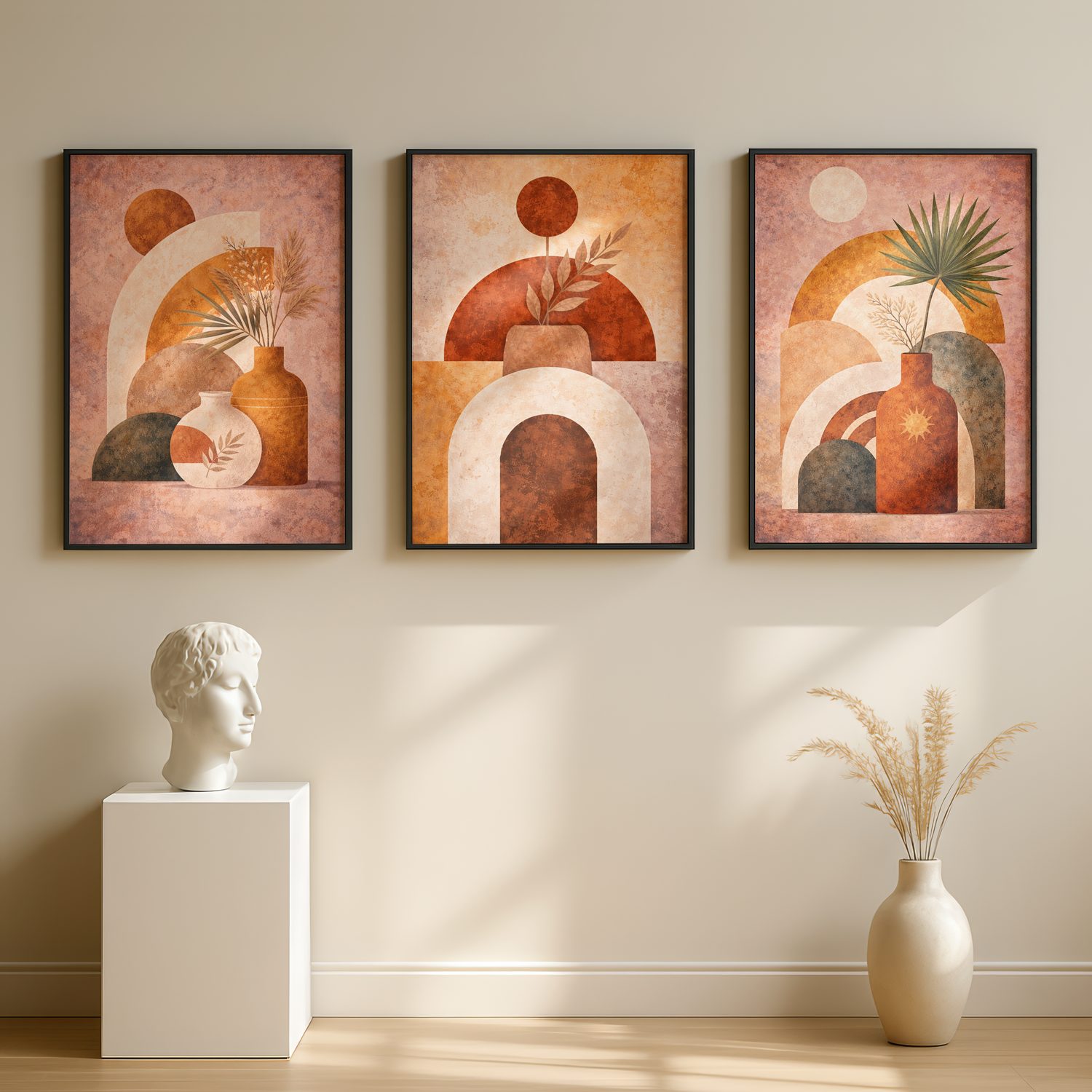
View Boho Arches Set of 3 on Rustic Charm → from ₹4,999
Warm terracotta-and-sand arches that work with jute, rattan, and brass — a natural fit for the earthy Indian boho aesthetic without tipping into cliché.
Mixing Singles Into Your Gallery — How To Avoid Looking Accidental
A set of three becomes a proper gallery wall when you break the set's symmetry with one or two carefully chosen singles. The art historian's term for this is unity through variety — the singles introduce contrast, but they echo the set's palette, line weight, or subject. Pair a muted set with a single bold portrait. Pair a busy set with a single calm botanical. Pair line-heavy work with one piece of soft texture.
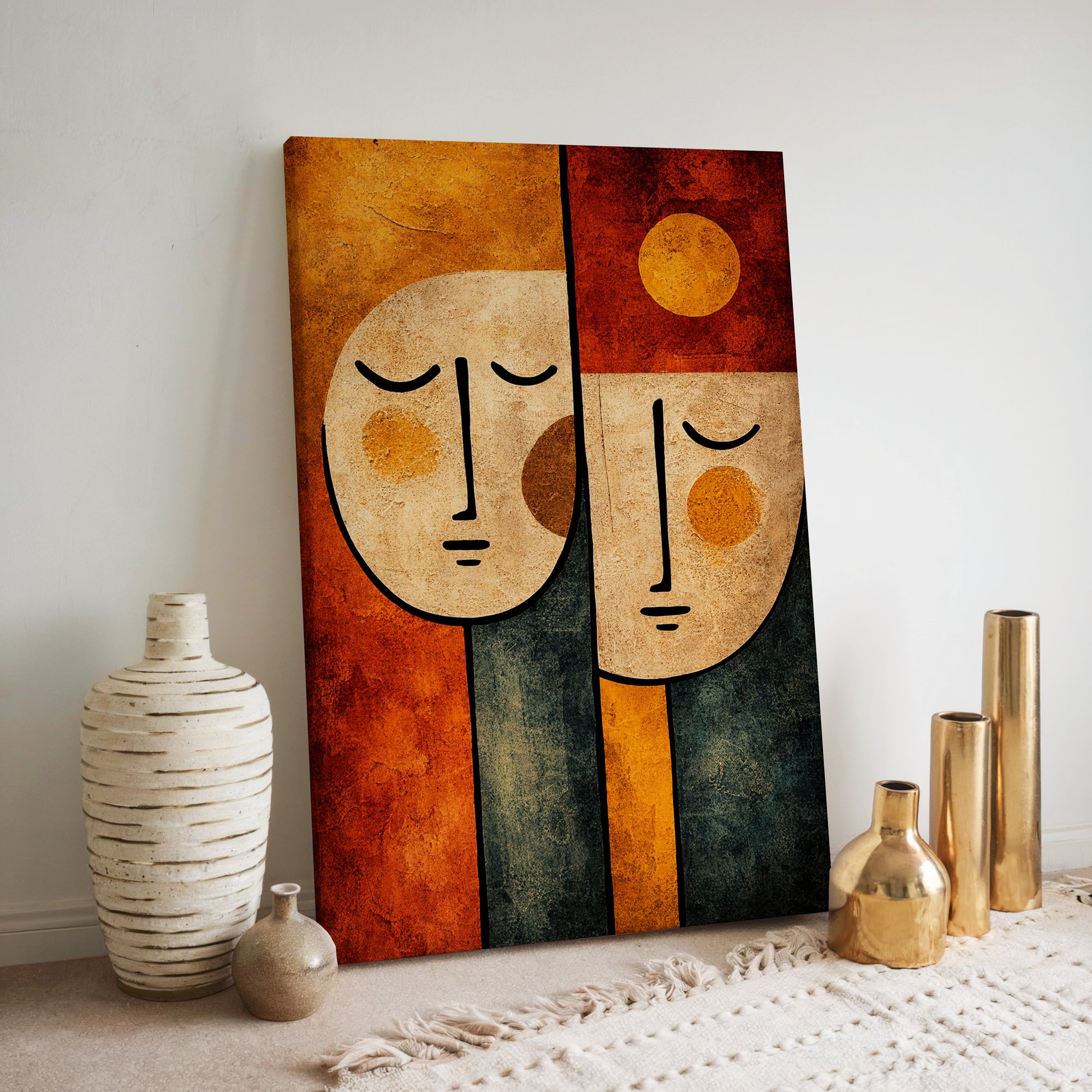
View Abstract Face Canvas on Rustic Charm → from ₹1,899
A single line-art portrait is the go-to "exception" piece for a neutral gallery wall — human forms draw the eye and add a personal, collected-over-time feel.
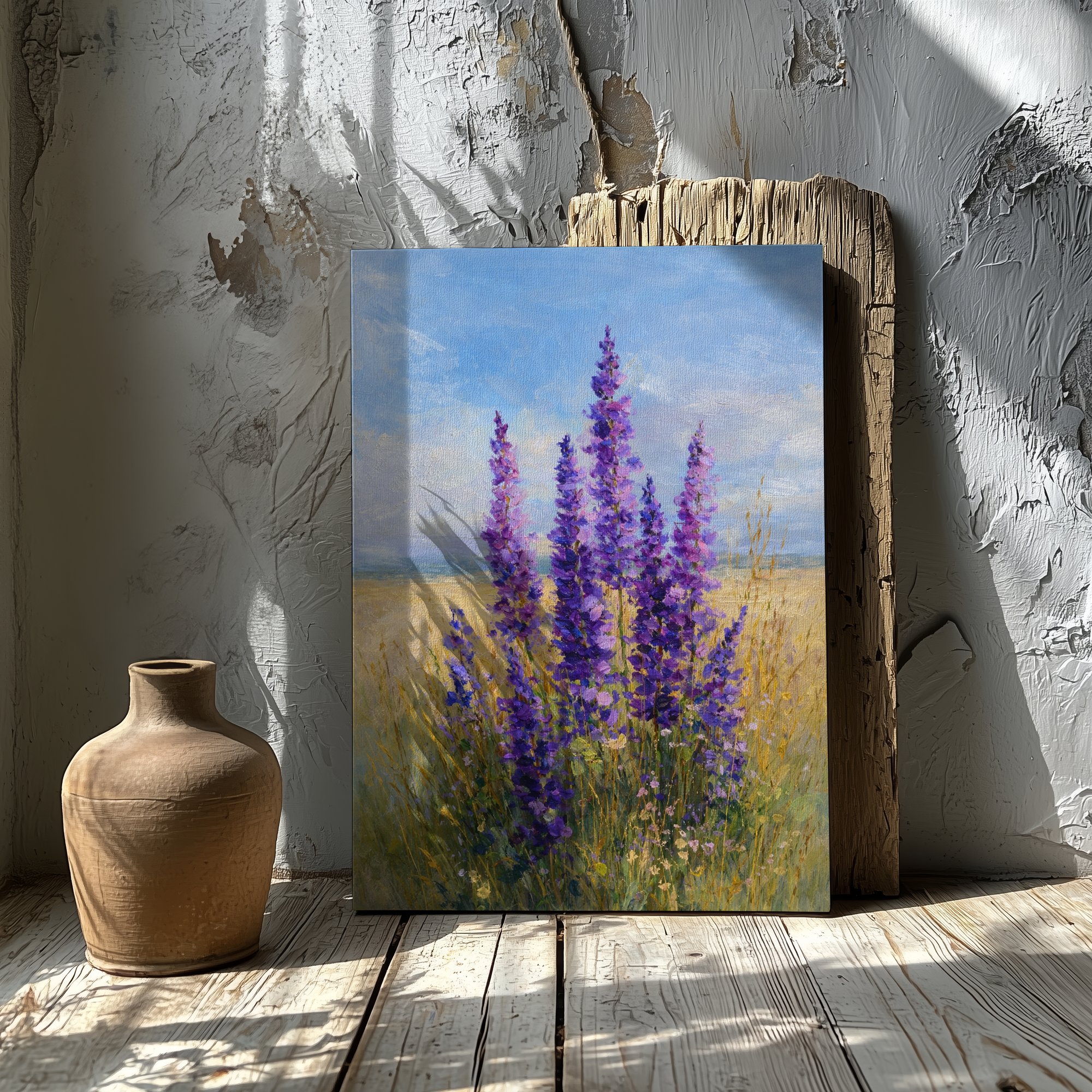
View Pink Peony Canvas on Rustic Charm → from ₹1,899
For warmer, more romantic schemes, a soft floral like this pink peony canvas painting breaks an abstract-heavy set with colour and subject variation.
In India, 'canvas painting' is the everyday term for what the art industry calls a giclée canvas print — an ultra-high-resolution reproduction of an original artwork, printed with archival inks onto 300 GSM cotton canvas, then hand-stretched on a wooden frame. Unlike a hand-painted original (which ranges ₹50,000+ for a comparable size), a giclée canvas print delivers the same visual impact at D2C prices, with superior longevity and consistency. Every Rustic Charm canvas is produced this way, which is why the colour and scale read identically whether you buy one piece or a three-piece set.
Gallery Wall Ideas By Room
Living room: Centre the composition above the sofa. The gallery wall should span roughly two-thirds of the sofa's width — not end-to-end, not a tiny cluster floating in the middle. A set of three plus one single hung below the set's centre (or two flanking singles above) covers most sofa lengths. For a deeper dive, our wall art for living room Indian home decor guide walks through dimensions and pairings.
Bedroom: Gallery walls above the headboard should stop about 15–20 cm short of the headboard's edges on either side — not hang past. Keep the composition calmer than you would in a living room; this is a sleep space. A two-wide horizontal row or a centred triptych outperforms a busy salon-style here. For styling cues, our minimalist wall art ideas for the bedroom guide covers restrained palettes that pair well with gallery layouts.
Staircase: Use the staircase-rising layout. Anchor the first frame at eye level on the lowest tread, then step each subsequent frame up by the same rise-and-run as the stair itself. Frame sizes can vary, but the rising line is sacred.
Home office or study: This is the one room where matching frames beat mixing. Uniform dark frames (black or dark brown) plus grid layout signals focus and professionalism — exactly what a video-call backdrop needs. Black-and-white sets are especially strong here.
Hallway: Narrow corridors benefit from long horizontal rows of small-to-medium frames, hung at 150 cm centre. Avoid large statement pieces that crowd the walkway. If you're still deciding on frame dimensions for a narrow wall, our wall art size guide explains the ratios that work best.
Frame Choices — Mix Confidently, Don't Match Nervously
The most common beginner mistake is buying a 12-pack of identical thin black frames from the nearest big-box store. It looks cheap because, visually, it is cheap — the eye reads it as "this person didn't make choices." Instead, pick two or three frame colours from a single warm or cool family and rotate them. Rustic Charm offers Gallery Wrap (no frame, just canvas edges), Black, Dark Brown, White, and Vintage Blue — three of these in rotation across a six-piece wall reads as curated, not accidental. Match the frame colour to the art's dominant tone, not to the other frames.
One more Reddit-confirmed pitfall: cheap glass frames cause glare that ruins every photograph you take of the wall. If the piece needs glazing, invest in matte or anti-reflective glass. Canvas prints avoid this problem entirely — no glass, no reflection — which is another reason set-of-three canvases anchor so many successful Indian gallery walls.
Layout Rules, Reconfirmed
A good gallery wall obeys three non-negotiable rules: uniform spacing, a clear centre line at 145–150 cm, and a considered frame palette. Break these and the wall will feel off even if you can't articulate why. Follow them, and even a mismatched set of ten pieces will read as intentional.
Ready to bring this look home?
Browse our full Abstract Wall Art collection and Canvas Wall Art Set of 3 collection — giclée canvas paintings hand-stretched on 300 GSM acid-free cotton, delivered pan-India with free shipping on orders above ₹5,000.
FAQ
Q: How many pieces make a gallery wall?
A gallery wall starts at three pieces and typically tops out at around twelve. Two pieces read as a pair, not a gallery. Beyond twelve, the eye loses its focal point unless you're working with a very large wall. For most Indian living rooms and bedrooms, five to seven pieces is the sweet spot.
Q: Should all the frames on a gallery wall match?
No. Matching frames flatten the composition and look catalogue-generic. Mix two or three frame colours within the same warm or cool family, matched to the art's dominant tones. A single material (all wood, or all metal) pulls the mix together.
Q: How much space should be between frames on a gallery wall?
Keep the gap between frames consistent across the entire wall — 5 to 10 cm (2 to 4 inches) works for almost every layout. Salon-style walls lean tighter (5–7 cm), minimalist rows lean wider (8–10 cm). Uniform spacing is the single most important visual rule.
Q: What height should I hang a gallery wall?
Hang the composition so its visual centre sits at 145–150 cm from the floor — standard museum eye-level. In rooms where you sit more than stand (dining rooms, TV lounges), drop to 137 cm so the art falls within the seated sightline.
Q: Can I make a gallery wall without drilling?
Yes. Use a picture ledge mounted with command strips, or hang individual canvas prints using heavy-duty adhesive hooks rated for 2–3 kg. Rustic Charm canvases are light enough for this approach. Picture ledges also let you rearrange the wall monthly — a renter's favourite.
Q: Do Indian homes suit gallery walls or single statement pieces?
Both, but gallery walls are the better starting point for most Indian flats and homes. Ceiling heights vary, rooms often double up in function, and a gallery wall scales to any wall size. A single statement piece demands a tall, uninterrupted wall — which is rarer in Indian apartment layouts. Start with a gallery wall, then graduate to statement pieces when the right wall exists.
Q: What's the difference between a canvas painting and a canvas print for a gallery wall?
In Indian shopping language the two terms are used interchangeably — both refer to giclée canvas prints, which are high-resolution reproductions printed with archival inks on 300 GSM cotton canvas. A hand-painted original costs ₹50,000 or more for the same size; a giclée canvas print delivers equivalent visual impact at D2C prices with far better colour consistency across a multi-piece set. For gallery walls specifically, giclée canvases win because every piece in the set matches perfectly.