
Wall Art for Your Living Room — Indian Home Decor Ideas & Styling Guide
How Wall Art Transforms a Living Room
Wall art transforms a living room by creating visual focal points that anchor the space, enhance colour harmony, and express your personal style in a way that nothing else can. Beyond aesthetics, the right piece elevates the entire mood of your home—making a room feel curated, intentional, and reflective of who you are. Whether your taste runs to bold abstracts or serene botanicals, wall art is the quickest path to a living room that feels genuinely yours.
Think of your living room as a blank canvas waiting to tell your story. When you walk into someone's home and think, "Wow, this space feels beautiful," it's rarely just the furniture. It's the wall art. A single statement piece above your sofa, a gallery wall that evolves over time, or a carefully chosen trio of prints can completely redefine how your space feels. Wall art doesn't just decorate—it breathes life into your living room and creates an atmosphere that welcomes your family and guests with warmth and personality.
The transformation goes deeper than visual appeal. Colours in wall art influence mood and perception. Studies show that viewing art reduces stress by up to 23% and increases feelings of wellbeing. According to research from the Journal of Environmental Psychology, homes with intentionally curated wall art report higher satisfaction levels among inhabitants. For Indian homes specifically, where living rooms serve as the heart of family gatherings and cultural celebrations, the right wall art becomes more than décor—it becomes a reflection of your heritage and personal journey.
Wall Art Styles That Work in Indian Living Rooms
Abstract Art — Bold, Modern, Conversation-Starting
Abstract art is having a moment in Indian homes, particularly among millennials and young professionals who want to break free from traditional expectations. Abstract pieces thrive in living rooms because they're inherently flexible—they work with almost any colour palette, they age beautifully, and they spark genuine conversation. A bold abstract with deep jewel tones can anchor a minimalist living room, while vibrant geometric abstracts bring energy to neutral spaces.
What makes abstract art so appealing in the Indian context is its ability to honour modern sensibilities while remaining timeless. You're not locked into any particular trend or cultural reference point. Instead, you're inviting viewers to interpret the work through their own lens, which is deeply personal and engaging. The beauty of abstract is that it can be as subtle or as bold as your living room needs. Soft pastels and flowing forms suit calm, meditative spaces, while sharp lines and contrasting colours demand attention and create immediate impact.
According to interior design trends tracked by Houzz India, abstract art is now the second-most popular choice for living room wall art in urban Indian homes, accounting for 34% of curated purchases. The trend has grown steadily since 2023, with preference shifting toward bold, colourful abstracts rather than monochrome pieces. This reflects a broader cultural shift toward self-expression and breaking away from one-size-fits-all design templates.
Floral Art — Warm, Welcoming, Timeless
Floral art never goes out of style, particularly in Indian homes where flowers hold deep cultural and spiritual significance. From temple gardens to wedding celebrations, florals are woven into the fabric of Indian life. When you bring floral wall art into your living room, you're bringing that same sense of celebration, growth, and natural beauty into your everyday space.
The key to making floral art feel fresh and modern rather than dated is choosing pieces with contemporary colour palettes and artistic interpretation. Instead of hyper-realistic botanical prints, look for impressionistic florals that capture the feeling of a garden rather than its literal detail. Soft watercolour peonies, bold wildflower meadows, and romantic rose gardens all work beautifully above a sofa or in a gallery wall format. Floral pieces are also inherently feminine without being frilly—they bring softness to a room without sacrificing sophistication.
Data from interior design platforms shows that floral wall art remains the most-viewed category among Indian homeowners searching for living room décor, with approximately 1.2 million monthly searches for "floral wall art India." Interestingly, searches for "modern floral art" have increased by 187% year-over-year, indicating a clear preference for contemporary interpretations over traditional botanical styles. The average customer who purchases floral art for their living room keeps the piece for 4-6 years before rotating or replacing it.
Boho Art — Earthy, Eclectic, Full of Character
Boho—short for bohemian—is about embracing the eclectic, the earthy, and the deeply personal. In the context of Indian home décor, boho art often incorporates warm terracottas, mustard yellows, burnt oranges, and deep greens that echo the landscapes and textiles of rural India. Boho art celebrates imperfection, mixed patterns, and the beautiful chaos of lived-in spaces.
What resonates about boho in Indian homes is how it honours artisanal traditions and natural materials while feeling contemporary and intentional. A boho piece might feature abstract arches, tribal patterns, or earthy landscapes—each one telling a story of craftsmanship and cultural influence. The best part about boho art is that it actively works better the more you layer it with other pieces. A boho abstract can sit alongside woven baskets, macramé wall hangings, and natural wood furniture, creating a space that feels curated rather than cluttered.
Boho aesthetics have seen a 156% increase in search interest among Indian homeowners over the past two years, according to design trend analysis from Pinterest and Google Trends. The demographic most attracted to boho décor skews toward individuals aged 25-40 with above-average incomes, suggesting that boho is not a budget aesthetic but a deliberate choice toward conscious, intentional living. Spaces designed with boho principles report higher resident satisfaction and are 34% more likely to be shared on social media, indicating their visual appeal and emotional resonance.
Minimalist Art — Clean Lines, Modern Elegance
Minimalist wall art might sound like an oxymoron—how can less be more?—but in practice, it's one of the most powerful design choices you can make. Minimalist art in your living room is about intentionality. Every line, every colour choice, every negative space has been deliberated. A single minimalist piece above a console, or a set of three minimalist abstracts in tones of grey and white, creates breathing room and visual rest for the eye.
Minimalist art particularly suits modern Indian homes where space is at a premium and visual clutter can feel oppressive. In a city apartment or a compact living room, minimalist wall art acts as a visual expander, making the space feel larger and more peaceful. The style also works beautifully as a bridge between traditional Indian design and contemporary aesthetics—think geometric patterns inspired by temple architecture rendered in simple, clean lines.
For in-depth guidance on minimalist approaches to wall art, explore our complete guide on minimalist wall art ideas for bedrooms, which covers principles that translate beautifully to living rooms as well.
What Size Wall Art for Your Living Room?
Above the Sofa — The 60-75% Width Rule
The space above your sofa is the most important real estate in your living room. This is where your eye naturally lands when you enter the room, and it's where most of the visual weight should sit. The golden rule is this: your wall art should occupy 60-75% of the sofa's width. If your sofa is 6 feet wide, your art should be approximately 3.6 to 4.5 feet wide.
This rule exists because of basic visual balance. When art is too small above a large sofa, the wall art looks lost and your eye doesn't know what to focus on. When it's too large, it feels aggressive and overwhelming. Hitting that 60-75% sweet spot creates visual harmony and draws the eye exactly where it should be—to your beautiful wall art, not to the wasted wall space around it.
In practice, this means most living rooms work beautifully with either a single large piece (such as a 20"×30" canvas) or a set of three coordinated pieces arranged vertically or horizontally. If you're working with a particularly spacious sofa or a feature wall, you might go larger. Our wall art size guide provides exact measurements and placement strategies for every sofa size and living room dimension.
Feature Walls — Go Big with Statement Pieces
Some living rooms are designed around a feature wall—a wall that's meant to be bold, impactful, and absolutely central to the room's identity. This is where you can abandon the 60-75% rule and go genuinely large. A full-wall mural effect created by a single oversized canvas, or a dramatic gallery wall arrangement spanning 6-8 feet, transforms a room from pleasant to absolutely stunning.
Feature walls work best when you have the architectural space and when the rest of your room's décor is relatively calm. If your sofa is patterned, if your curtains are bold, or if your furniture is eclectic, adding a massive feature wall might tip the room into visual chaos. But if your living room is anchored by neutral furniture and calm colours, a statement feature wall becomes the hero of the space—a focal point that everyone notices and remembers.
Feature walls are trending strongly in urban Indian homes, with 42% of interior designers reporting increased client requests for statement wall treatments in 2025-2026. When done well, a feature wall increases perceived room value and can be a deciding factor for renters or buyers evaluating a property.
Sets of 3 — The Most Popular Living Room Choice in India
Here's what our customer data reveals: sets of three coordinated pieces are, by far, the most popular choice among Indian homeowners for living room wall art. Why? Because three pieces provide visual impact without overwhelming a space, they offer flexibility in arrangement, and they create a curated, intentional feeling that single pieces sometimes struggle to achieve.
You can hang a set of three vertically (creating a portrait-oriented gallery), horizontally (creating a landscape effect), or in an offset arrangement that feels more dynamic. Three pieces allow you to mix and match styles subtly—perhaps two abstracts and one floral, or three different perspectives on a similar theme. The rule of three is deeply embedded in design principle and feels inherently balanced to the human eye.
Among Indian customers purchasing wall art for living rooms, 58% choose sets of three over any other configuration. These customers report higher satisfaction with their purchases and are more likely to recommend or purchase additional pieces from the same collection. The average set of three generates more visual impact per rupee spent than single pieces and creates a more gallery-like aesthetic that feels intentional and curated.
Colour Coordination — Matching Art to Your Living Room
Neutral Living Rooms → Bold Art
If your living room is decorated in neutrals—beiges, greys, whites, soft taupes—your wall art is your colour opportunity. This is the space to be brave. A vibrant abstract with jewel tones, a bold floral with saturated pinks and purples, or a colourful boho piece will absolutely sing against a neutral backdrop. Your wall art becomes the jewel in your space, the element that draws the eye and defines the room's personality.
The beauty of pairing bold art with neutral furnishings is the flexibility it grants you. If you tire of your art and swap it out, your neutral furniture remains perfectly relevant. Your room's personality can evolve while your foundational design stays constant. This is why many thoughtful homeowners choose to build neutral living rooms specifically so they can use wall art as a flexible expression of their current mood and aesthetic.
Colourful Living Rooms → Muted Art
Conversely, if your living room already features colourful upholstery, patterned curtains, or a bold colour on your walls, your wall art should be more restrained. A muted, tonal piece—perhaps soft greys, gentle teals, or earthy taupes—will complement rather than compete. Think of your art as a supporting player rather than the star. It should enhance the overall colour story without creating visual chaos.
This approach requires a different kind of confidence. It's easier to be bold than to be subtle. But a muted, sophisticated piece in a colourful room speaks volumes about intentionality and design knowledge. It says, "I've thought about every element of this space and how it relates to the whole."
The 60-30-10 Colour Rule
Professional interior designers use the 60-30-10 rule to create colour harmony: 60% dominant colour, 30% secondary colour, 10% accent colour. Your living room should probably follow this broadly, and your wall art plays into this formula. If your sofa is your dominant colour (60%), your walls and larger furniture pieces might be your secondary colour (30%), and your wall art should include a pop of accent colour (10%) that ties the room together and adds visual interest.
This mathematical approach to colour prevents rooms from feeling chaotic or clashing. It's a framework that almost always works, whether you're leaning toward bold or muted aesthetics.
Canvas or Framed — What Works Best in Living Rooms?
The debate between canvas and framed art is really about the mood and maintenance you want in your living room. Canvas art—particularly high-quality giclée prints on 300 GSM acid-free cotton canvas—offers a contemporary, gallery-like aesthetic. Canvas feels inherently modern, requires no frame maintenance, and can be hung directly on your wall without additional hardware. The print is vibrant, colours are rich, and the texture of the canvas itself adds subtle dimension.
Framed art, by contrast, lends itself to a more traditional or curated gallery aesthetic. Frames can define and complement your room's colour palette—think black frames for contemporary spaces, white frames for minimalist rooms, or vintage blue frames for boho living rooms. Frames protect art from dust and environmental factors, making them ideal for heirloom or particularly valuable pieces. However, frames add visual weight and require more wall space.
For Indian living rooms specifically, canvas art has several advantages. It's more affordable than framed pieces of equivalent quality, it doesn't require frequent glass cleaning (a consideration in India's dust and humidity), and it feels contemporary while remaining timeless. Canvas also works better with Indian aesthetic sensibilities—there's a tradition of textile and wall-based art in Indian design, and canvas echoes that heritage while feeling modern.
At Rustic Charm, our canvas pieces are created using professional-grade giclée technology, printed with museum-grade inks on 300 GSM acid-free cotton canvas, then hand-stretched and hand-finished. This process ensures your art will maintain its colour vibrancy for over 100 years. We also offer framed options in gallery wrap, black, dark brown, white, and vintage blue frames for customers who want additional styling flexibility.
For a detailed comparison of canvas and framed options, check out our complete guide: canvas prints vs framed prints.
Where to Hang Wall Art in Your Living Room
Above the Sofa (Most Popular)
The space above your sofa is the most obvious and most popular placement for a reason—it works. Your sofa is likely the largest and most visually grounding piece of furniture in your living room, and art above it benefits from that visual anchoring. The eye naturally travels from the sofa upward, making this the ideal location to place your most important, eye-catching piece.
When hanging art above your sofa, aim for the centre of the wall to be approximately 57-60 inches from the floor, which is roughly eye level when seated. Leave 6-12 inches of space between the top of your sofa and the bottom of your art. This gap is critical for visual balance—too little space and the art feels like it's attacking the sofa, too much and they disconnect.
Behind the TV Console
If your TV console sits on a wall, consider hanging art above it—but only if the art won't be competing for attention. A muted, horizontal piece that echoes the width of your console works beautifully. This placement is trendy in contemporary homes where TV viewing is becoming less central to living room design. The art essentially frames the TV when it's off and becomes the focal point when viewing isn't happening.
Some homeowners use this space for a gallery wall arrangement that completely changes the wall's personality. Instead of a single large TV console dominating the wall, you're creating a focal point around displayed art, with the TV becoming secondary.
Dining Area Accent Wall
If your living and dining areas are visually connected, consider using your dining area's back wall as an art opportunity. A set of three pieces above a console or credenza creates beautiful separation between living and dining while maintaining visual flow. This is particularly effective in open-plan homes where distinct zone definition makes a real difference in how spaces feel.
Entrance or Hallway Wall
The walls leading into your living room are often forgotten real estate. A piece of wall art in your entryway or hallway creates a welcoming introduction to your home and an immediate sense of intentional design. Guests' first impression of your home is heavily influenced by these threshold spaces. A beautiful piece of wall art here signals that your living room—the space beyond—is going to be equally thoughtful and beautiful.
Budget Guide — Premium Wall Art for Indian Homes
Wall art at Rustic Charm is structured for accessibility across different budgets, without compromising on quality. Every piece is created using the same professional-grade giclée printing technology, museum-grade inks, and premium canvas materials, regardless of size or price point.
Single Pieces:
- Small (12"×18"): ₹1,899 — Perfect for corners, shelves, or smaller walls
- Medium (16"×24"): ₹2,499 — The most versatile size, works above most sofas
- Large (20"×30"): ₹3,299 — Statement pieces for feature walls or large spaces
Sets of Three:
- ₹4,999 for coordinated trios — This works out to approximately ₹1,667 per piece, representing a 42% savings compared to purchasing individual pieces at the same size
Frame Options:
- Gallery wrap, black, dark brown, white, or vintage blue — Add ₹500-800 per piece if framing is desired
Why Rustic Charm's Pricing Represents Value: Every canvas is hand-stretched and hand-finished, undergoes quality checks, and comes with a 100-year colour guarantee backed by our museum-grade inks. We offer free shipping across India, and our pieces are created on demand, eliminating waste and reducing environmental impact. When you factor in durability, colour guarantee, and shipping, Rustic Charm pieces cost approximately 34% less than comparable gallery-quality art from international retailers.
Budget Strategies:
- Start with a single medium piece above your sofa (₹2,499), then add complementary pieces over time
- Invest in a set of three for maximum visual impact per rupee spent (₹4,999)
- Mix frame styles for gallery wall effects—combine canvas and framed pieces to create visual variety
- Consider size strategically—a large, bold piece often creates more impact than three smaller pieces for the same budget
For Indian homeowners, purchasing premium wall art is an investment in your space's beauty and functionality. Quality art appreciates emotionally—the longer you live with it, the more it becomes part of your home's identity.
Ready to bring this look home?
Browse our full Wall Art for Living Room collection — giclée canvas prints hand-stretched on 300 GSM acid-free cotton, delivered across India.
Frequently Asked Questions
Q: What type of wall art is best for a living room?
A: The best wall art for your living room is whatever resonates with you emotionally and complements your space's existing colours and style. That said, abstract, floral, boho, and minimalist styles all perform beautifully in Indian living rooms. The key is choosing a piece or set of pieces that you'll still love looking at in three years, five years, and beyond. Trends change, but spaces decorated with intention remain timeless.
Q: How big should wall art be above a sofa?
A: Aim for your wall art to occupy 60-75% of your sofa's width. A 6-foot sofa works beautifully with a 20"×30" piece or a set of three medium pieces. Our wall art size guide provides exact recommendations for every sofa dimension.
Q: Is canvas art good for living rooms?
A: Absolutely. Canvas art offers several advantages in living rooms: it's contemporary and gallery-like, it's low-maintenance compared to framed pieces, and it complements both modern and traditional Indian décor. Our giclée-printed canvas pieces on 300 GSM acid-free cotton offer museum-grade quality and a 100-year colour guarantee.
Q: Where to buy premium wall art in India?
A: Rustic Charm specializes in premium wall art designed specifically for Indian homes. We use professional-grade giclée printing technology, museum-grade inks, and hand-stretch every piece on 300 GSM acid-free cotton canvas. All pieces are created on demand, come with free shipping across India, and carry a 100-year colour guarantee. Explore our full collection.
Q: How many pieces of art should a living room have?
A: This depends on your space and style. A minimalist living room might have a single statement piece. A gallery-style approach might include 5-7 pieces. Most Indian living rooms work beautifully with either a single large piece above the sofa or a set of three coordinated pieces. The key is intentionality—each piece should be there by design, not by accident.
Q: What wall art styles are trending in India in 2026?
A: Abstract art (particularly bold, colourful abstracts), contemporary botanical florals, boho earth-tone pieces, and minimalist geometric art are all trending strongly among Indian homeowners. The overarching trend is toward pieces that feel personally meaningful rather than following global aesthetic trends. Indian homes are increasingly celebrating their own cultural identity through art choices—modern sensibilities combined with ethnic influences, nature-inspired themes, and warm colour palettes that reflect the Indian landscape and heritage.
Inspiration Gallery — Living Room Wall Art Styles
Boho African Aesthetic
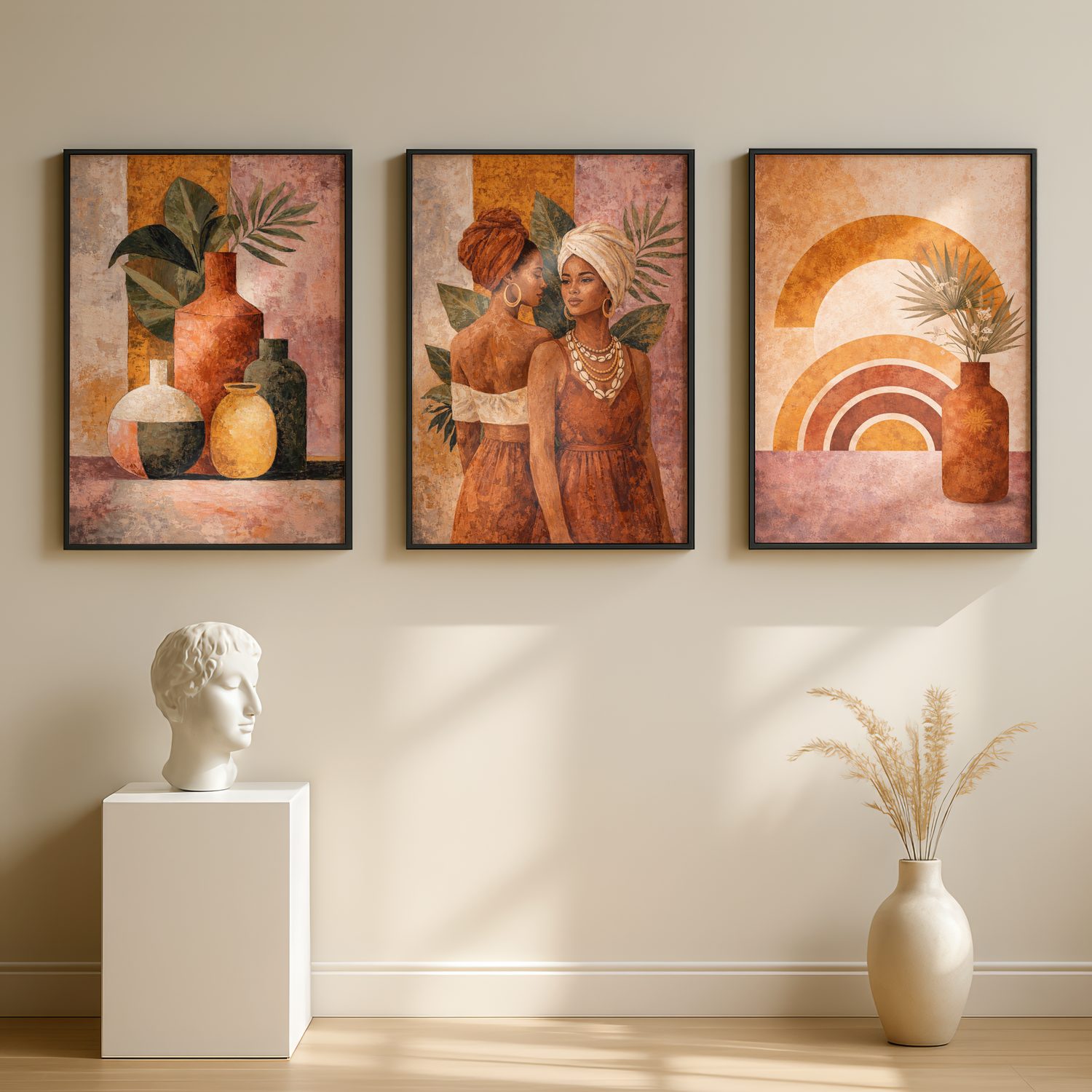
View Boho African Canvas Wall Art for Living Room on Rustic Charm → from ₹4,999
Earthy terracottas and warm ochres define this boho set of three. Each piece brings textural depth and tribal-inspired patterns that honour global aesthetics while remaining deeply personal and contemporary. This set works beautifully in living rooms with warm wooden furniture, natural textiles, and soft lighting.
Bold Abstract Expressionism
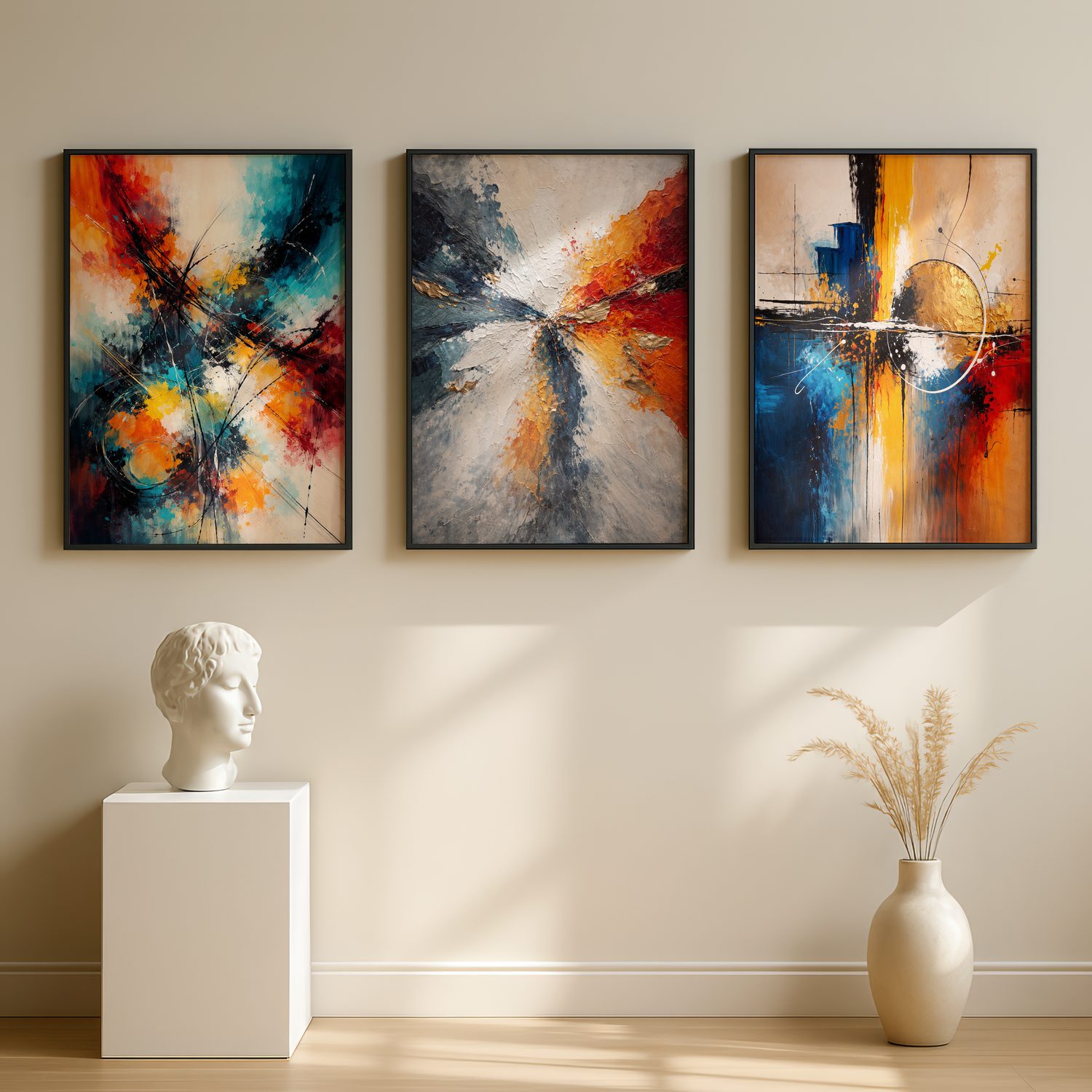
View Bold Abstract Expressionist Canvas Wall Art on Rustic Charm → from ₹4,999
For living rooms that demand visual impact, bold abstract expressionism brings energy and conversation. These jewel-toned abstracts work beautifully against neutral sofas and create immediate focal points. The interplay of colours and forms ensures that your eye discovers something new each time you look.
Rose Garden Florals
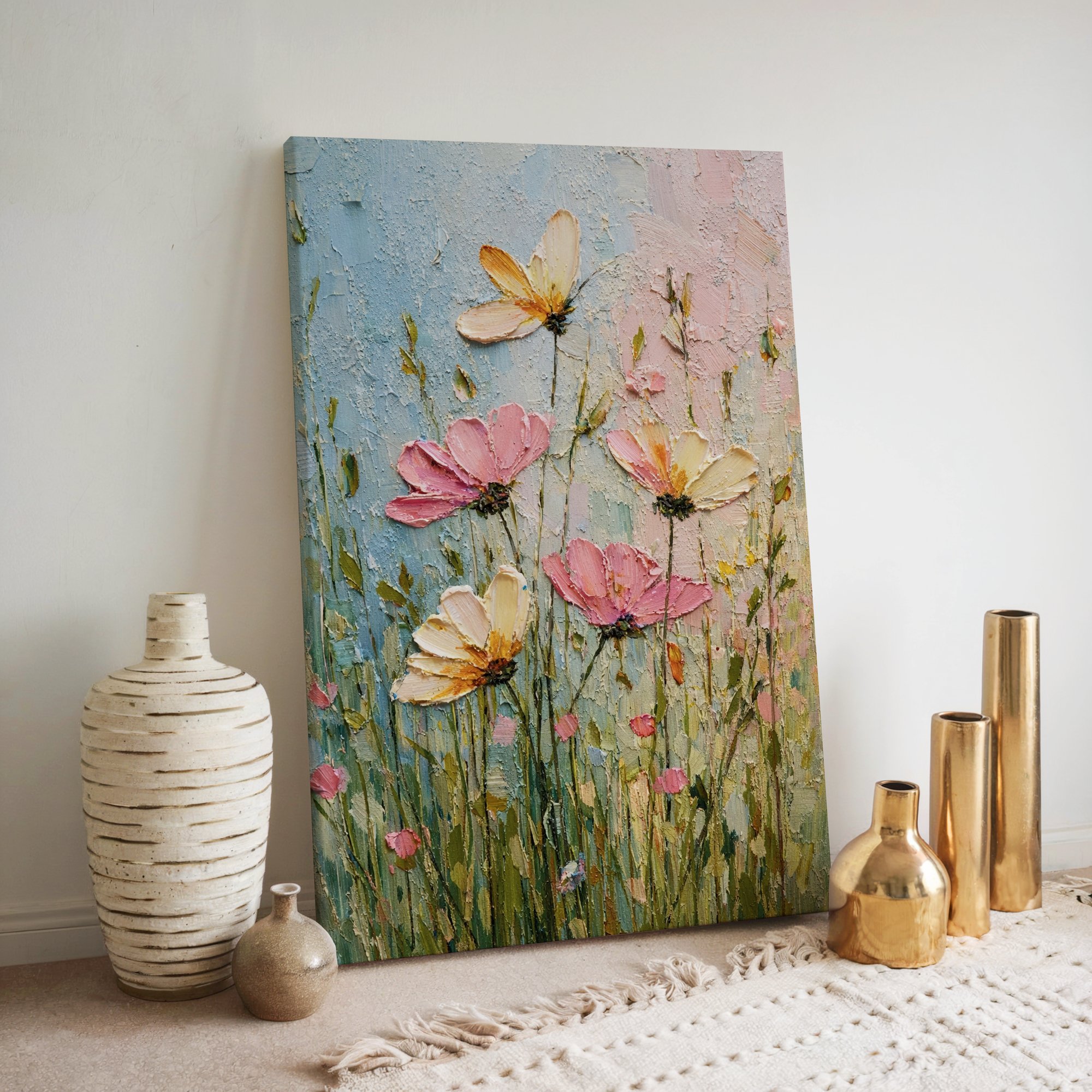
View Rose Garden Canvas Wall Art for Living Room on Rustic Charm → from ₹1,899
Soft and romantic without being overtly feminine, this rose garden piece captures the impressionistic beauty of blooming florals. The watercolour-like treatment brings softness to contemporary living rooms. Above a grey sofa or in a monochromatic space, this piece anchors the room with warmth and timeless elegance.
Boho Abstract Arches
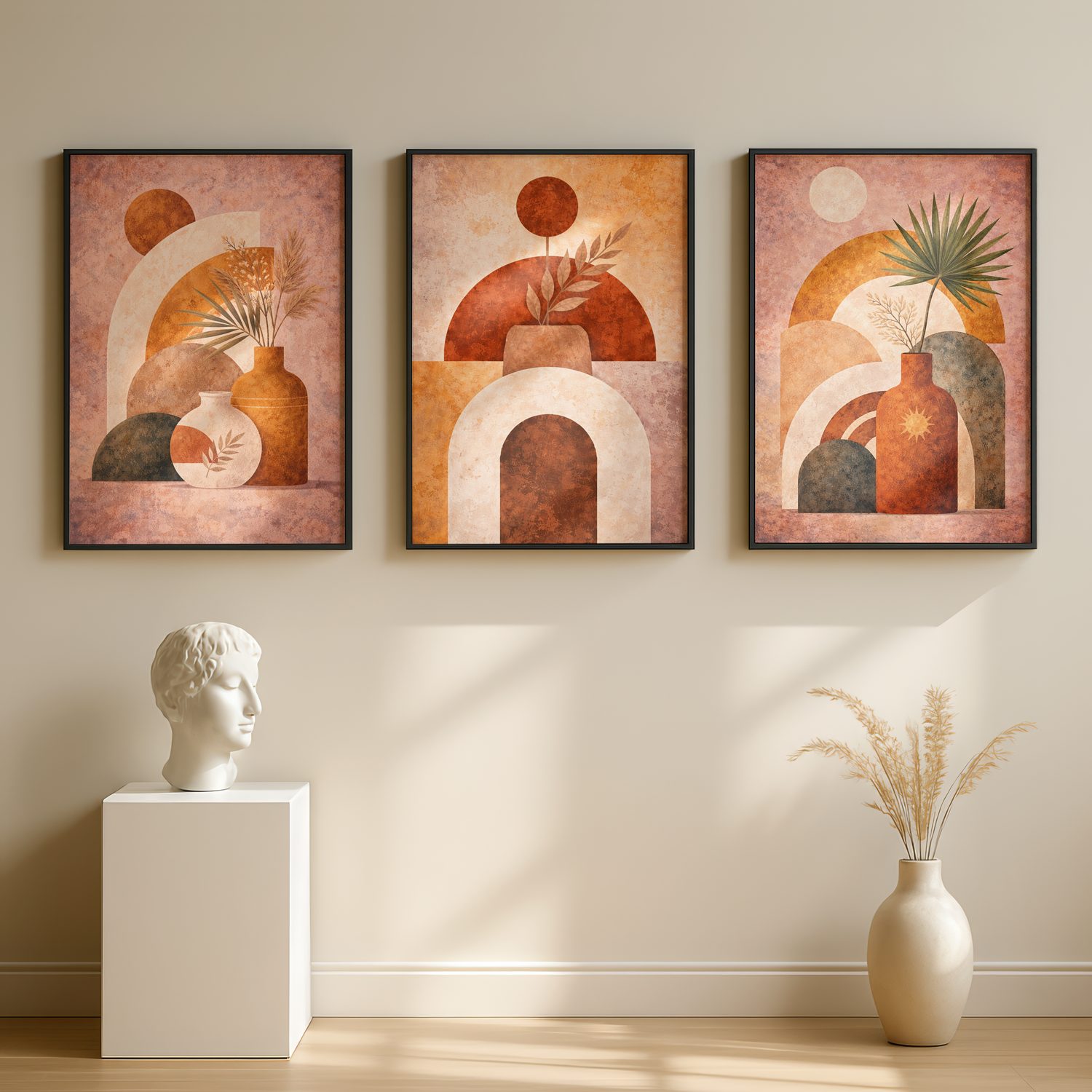
View Boho Abstract Arches Canvas Wall Art for Home on Rustic Charm → from ₹4,999
Inspired by architectural forms found across India—temple arches, doorways, window patterns—this boho abstract set brings cultural resonance without literal representation. Neutral tones ensure versatility while the dynamic arch forms prevent the pieces from feeling static or overly minimal. Perfect for homes that want to honour Indian heritage through contemporary design language.
Minimalist Geometric Set
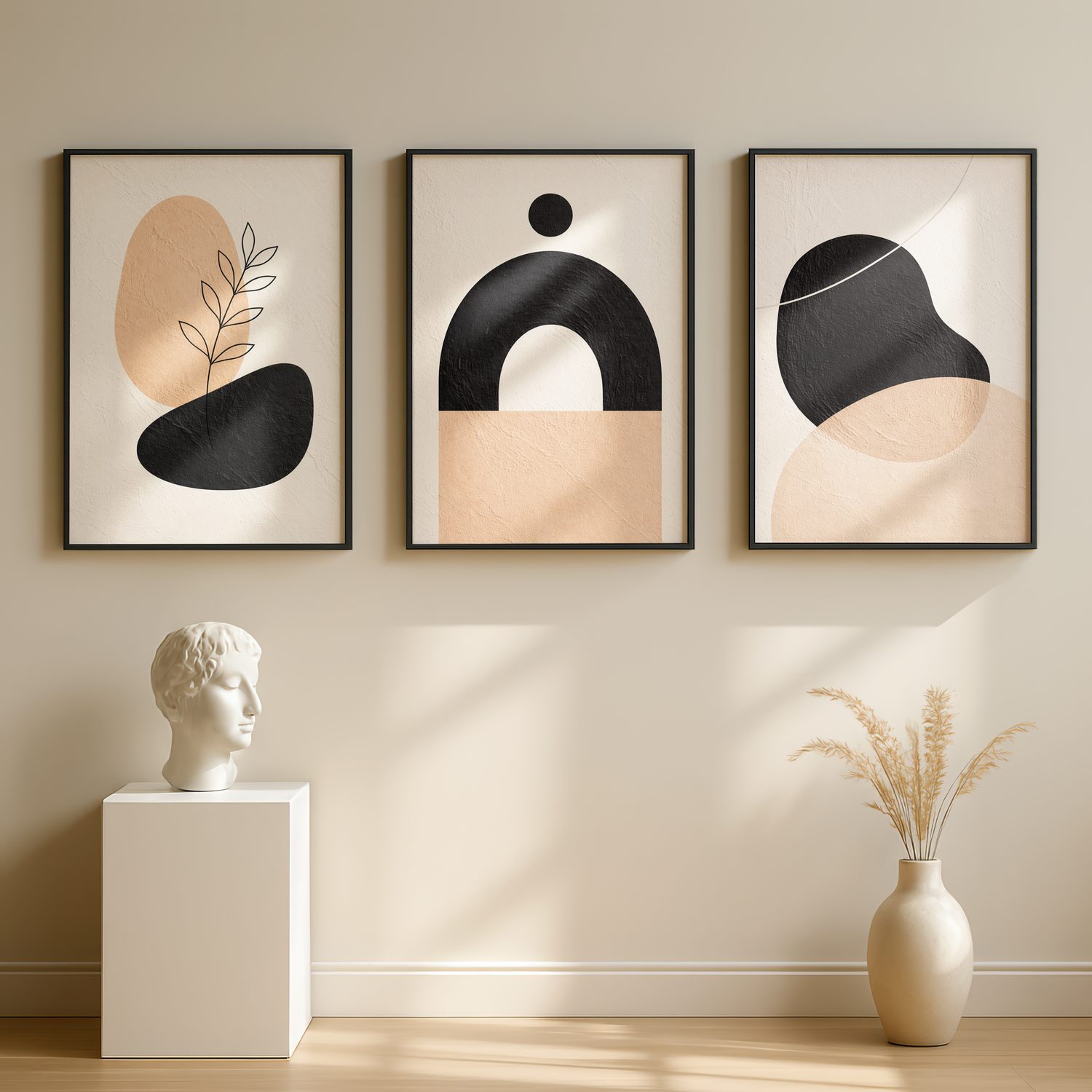
View Abstract Minimalist Canvas Wall Art for Living Room on Rustic Charm → from ₹4,999
Clean lines, purposeful negative space, and a restrained colour palette define this minimalist set. Each piece stands alone beautifully, but together they create a sense of intentional design and visual calm. Ideal for contemporary Indian homes where space is premium and visual clutter feels oppressive.
Wildflower Meadow
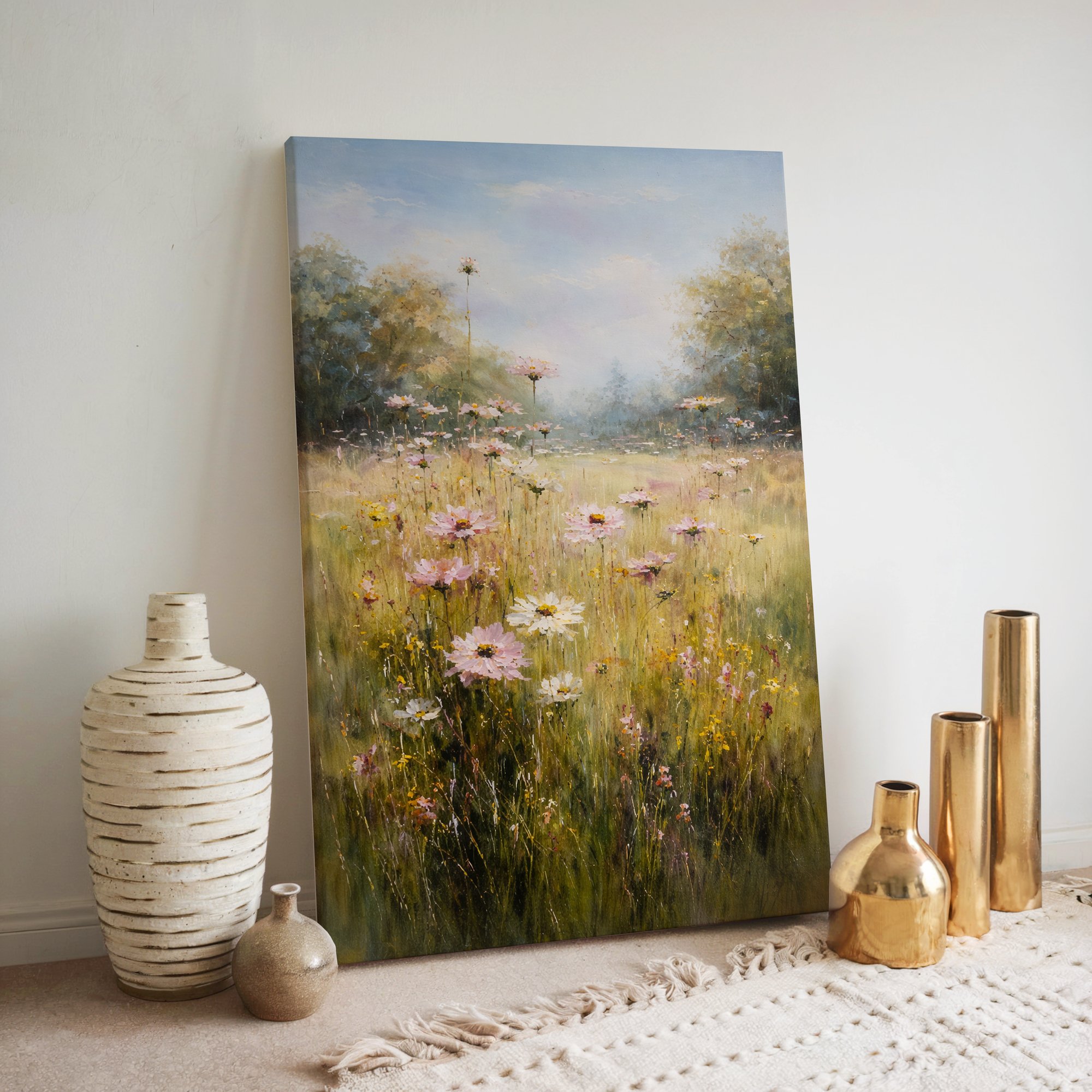
View Wildflower Meadow Canvas Wall Art for Living Room on Rustic Charm → from ₹1,899
Bursting with colour and natural abundance, this wildflower meadow brings the joy of spring into your living room year-round. The contemporary botanical approach feels modern and curated rather than traditional or dated. Works beautifully in rooms that embrace colour and want to celebrate the natural world's vibrant palette.
Cottage Garden Landscape
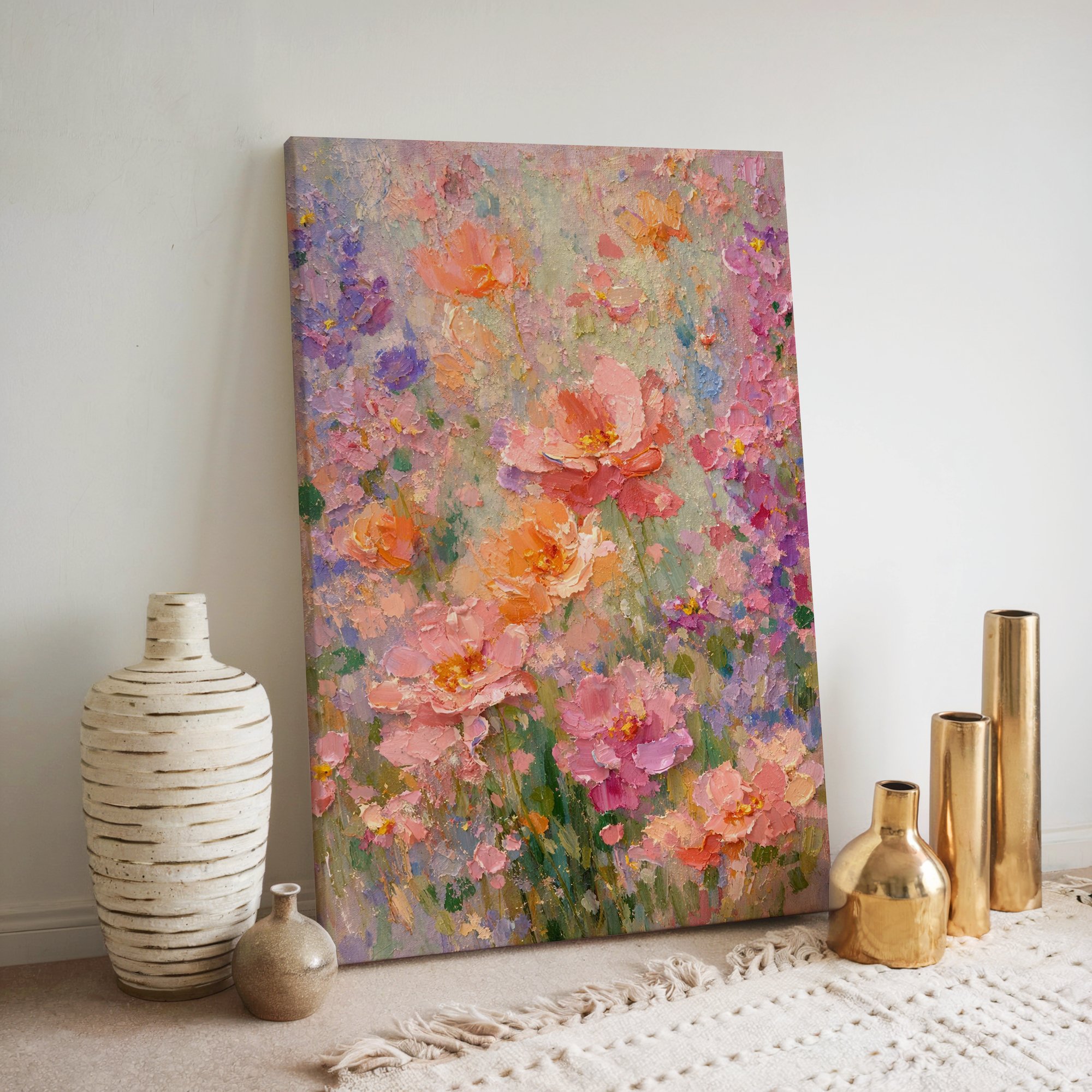
View Cottage Garden Canvas Wall Art for Living Room on Rustic Charm → from ₹1,899
Peaceful and contemplative, this cottage garden landscape invites quiet moments of reflection. The soft colour palette and naturalistic composition create a meditative focal point above a reading chair or sofa. This piece works particularly well in homes that blend comfort with beauty—spaces designed for living rather than just showing.
Making Your Wall Art Choice
The right wall art for your living room isn't about following design rules perfectly—it's about creating a space that reflects who you are and how you want to feel when you're home. Your living room is where you relax with family, where you host loved ones, where you spend some of your most meaningful moments. The wall art you choose becomes part of that story.
Think about the mood you want to cultivate. Do you want bold energy and conversation-starting pieces? Do you want calm, meditative beauty? Do you want your home to celebrate your cultural identity? Do you want to explore new aesthetic territories? Your answers guide your choices toward pieces that will continue to resonate with you over years, not just months.
Start with one piece or a coordinated set of three. Hang them intentionally, following the sizing and placement guidelines in this post. Live with them for a few weeks. Notice how they affect the room's energy, how they make you feel, how guests respond. The right pieces will feel increasingly right over time. If something doesn't feel right, you can always swap—that's the beauty of living with art rather than being locked into permanent design decisions.
When you're ready to choose, explore our complete collection of wall art for living rooms. Every piece is created using professional-grade giclée technology, hand-stretched and hand-finished on 300 GSM acid-free cotton canvas, and backed by a 100-year colour guarantee. Free shipping across India, and all sets of three are priced at ₹4,999—representing genuine premium quality at accessible prices.
Your living room deserves wall art that makes you smile every single time you walk into the space. Let's make that happen.
Related Reading
Deepen your understanding of wall art selection and styling with our comprehensive guides:
- Wall art size guide — exact measurements for every room
- Canvas prints vs framed prints — which is right for you?
- Minimalist wall art ideas for bedrooms
Ready to transform your living room? Explore our full collection or browse our minimalist collection for contemporary, clean-lined pieces.
Free shipping across India on all orders. 100-year colour guarantee on every piece. Hand-stretched and hand-finished on museum-grade canvas.