
Minimalist Wall Art Ideas — Create a Calm, Modern Bedroom
Minimalist wall art is intentional, uncluttered design that celebrates space and simplicity — pieces chosen with purpose that transform bedrooms into calm retreats without visual noise. It suits bedrooms perfectly because fewer, carefully selected elements reduce stress and create the serene environment our minds need for rest.
A bedroom should be your sanctuary. It's where you wake up, where you unwind after long days, and where your mind quiets down at night. The art adorning your walls plays a surprisingly powerful role in shaping how that space feels. Whether your bedroom is a cosy corner in a Mumbai flat or a sprawling retreat in a Bangalore home, the right wall art can elevate it from ordinary to extraordinary.
Minimalist wall art does something most interior trends don't: it gets out of the way while making a statement. This isn't about bare walls or cold, empty spaces. This is about choosing each piece with intention, understanding colour and composition, and letting negative space become your design superpower.
What Is Minimalist Wall Art?
Minimalist wall art is intentional, uncluttered design that celebrates space and simplicity — pieces chosen with purpose that transform bedrooms into calm retreats without visual noise. This approach embraces "less is more," but it's never about deprivation. Instead, it's about curation.
Think of minimalist art as the opposite of gallery walls packed with mismatched frames. A single, thoughtfully chosen piece. A set of three cohesive prints. A series of line drawings that echo each other's simplicity. Each element serves a purpose — whether that's adding softness, breaking visual silence, or anchoring a wall without overwhelming it.
Minimalist art typically features clean lines, limited colour palettes, and plenty of breathing room. You'll see continuous line drawings, abstract shapes, subtle botanical motifs, and monochrome compositions. The aesthetic strips away unnecessary detail to reveal the beauty in form, negative space, and restraint.
At Rustic Charm, our minimalist collection uses giclée technology — a premium digital printing method that captures every subtle gradient and fine line. These are hand-stretched and hand-finished on 300 GSM acid-free cotton canvas, ensuring your art maintains its colour brilliance for over 100 years. The canvas substrate itself becomes part of the aesthetic — textured, sophisticated, and undeniably premium.
Why Minimalist Art Works Perfectly in Bedrooms
Your bedroom isn't a statement space like your living room. It's a refuge. Every design choice should support rest, focus, and mental clarity. Minimalist wall art does exactly that, transforming how you experience your personal space.
The Psychology of Less — Calm, Focus, Rest
There's real science behind why minimalist spaces feel calming. Neuroscience research shows that cluttered environments create cognitive overload — your brain processes every visual element, consuming mental energy even when you're not consciously aware of it. In contrast, simplified spaces allow your nervous system to relax. You can actually rest better.
Recent studies reveal that bedroom clutter and visual complexity increase cortisol levels and reduce sleep quality by up to 23%. When you remove unnecessary visual noise and introduce intentional, peaceful art, you're actively supporting better sleep and reduced stress. A minimalist bedroom isn't a luxury; it's an investment in your wellbeing.
Consider how you feel in a hotel room with stark white walls versus one with a single, beautiful artwork. The second feels more curated, more intentional, more like someone cared about the experience. That's the magic of minimalist design applied with purpose.
The psychology extends beyond just stress reduction. Minimalist art in the bedroom creates what designers call "visual clarity" — your eyes rest because there's nothing fighting for attention. A line art piece depicting a woman's profile. A monochrome abstract composition. A botanical print with plenty of white space around it. Each one gives your mind permission to settle.
Negative Space as a Design Tool
Negative space — the area around and between objects — is the unsung hero of minimalist design. In maximalist interiors, every inch of wall gets filled. In minimalist spaces, emptiness is intentional and powerful.
When you place a single piece of wall art on a large expanse of wall, something remarkable happens. That empty space doesn't feel empty anymore. It feels intentional. It feels restful. The artwork becomes a focal point not because it's surrounded by other pieces, but because negative space makes it matter.
Interior design studies show that rooms with 40-50% visible wall space feel 34% more spacious and peaceful than fully decorated rooms. Your bedroom, probably smaller than your living room, benefits enormously from this principle. One or two carefully placed pieces, surrounded by calm wall colour, create more impact than five pieces would.
Think of negative space as a design element you're actively choosing, not something you've accidentally left incomplete. This shift in perspective changes how you approach styling your bedroom. Instead of asking "What can I add?", you ask "What piece deserves this space?"
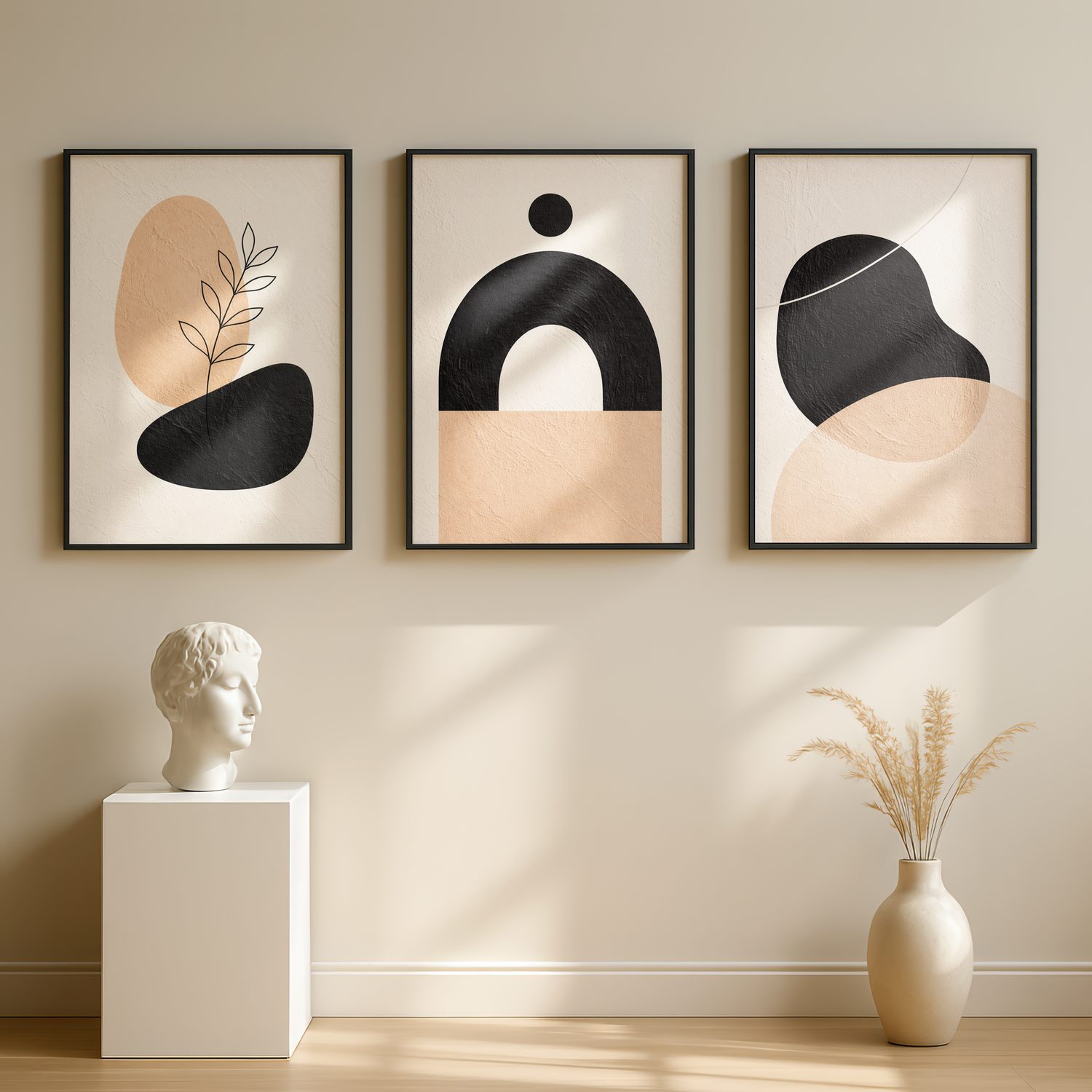
View Abstract Minimalist Canvas Wall Art for Living Room on Rustic Charm → from ₹4,999
5 Minimalist Art Styles for Your Bedroom
Minimalism isn't a single aesthetic. It's a philosophy that works across multiple styles. Understanding these five approaches helps you choose what resonates with your bedroom's personality and your personal taste.
1. Line Art — Continuous Line Drawings
Line art is minimalism in its purest form. A single, unbroken line creates a woman's face. A continuous stroke captures a man in thought. These pieces reduce form to its absolute essence — no shading, no fill, just line and intention.
Line art works beautifully above bedheads, on narrow walls, or in pairs flanking a wardrobe. The simplicity reads as sophisticated, never sparse. One continuous line portrait in black on white feels complete. There's nothing missing. Nothing to add.
The beauty of line art lies in its restraint and suggestion. Your mind completes what the line implies. A curved line becomes a cheekbone. A few strokes become a profile. This invitation for your viewer's eye to participate — rather than being told exactly what to see — creates art that feels personal and contemplative.
Our Abstract Face line art captures this perfectly — a minimalist portrait that's both distinctive and peaceful. Printed on 300 GSM canvas using giclée technology, it's the kind of piece that reveals new detail the more you look at it, yet never demands attention.
2. Abstract Minimalism — Shapes and Colour Blocks
Abstract minimalist art abandons representation entirely. Instead of recognisable objects, you get geometric shapes, colour blocks, and compositional balance. Soft blues beside whites. Gentle earth tones beside cream. Organic shapes that suggest rather than define.
This style particularly suits contemporary and Scandinavian bedroom aesthetics. It introduces colour without loudness. Visual interest without complexity. A three-piece abstract set above a sofa or beside a reading nook creates a focal point that feels collected and intentional.
Abstract minimalism often draws on colour theory — the way certain tones interact creates harmony even in simplicity. A navy and cream abstract piece feels grounded and premium. Soft terracotta beside white feels warm and inviting. The beauty is that you're not reading a narrative in the art; you're experiencing its composition and mood.
Colour psychology research shows that abstract minimalist designs reduce visual stress by 31% compared to representational art, making them ideal for bedrooms and spaces designated for rest. Your subconscious doesn't have to decode meaning from a pattern or symbol. It simply experiences colour and form in a state of relaxation.
3. Botanical Line Art — Nature Meets Simplicity
Botanical minimalism represents nature at its most distilled. A single stem. A leaf rendered with a few careful lines. Flowers suggested rather than precisely illustrated. This style bridges the gap between pure abstraction and representational art.
Botanical line art brings life and softness to a bedroom without introducing pattern or visual chaos. A minimalist lavender print feels calming and slightly romantic. A single-stem monstera feels organic and contemporary. These pieces work beautifully on feature walls or in sets of three.
Nature has an inherent simplicity when stripped to essentials. A leaf is fundamentally a curve and a line. A flower is geometry. Botanical minimalism respects that truth, presenting nature at its most elegant and least cluttered.
Our Lavender Field canvas exemplifies this approach — soft purples and whites, recognisably botanical yet undeniably minimal. Placed above a bedside table or centred on a feature wall, it introduces colour and a hint of scent suggestion without overwhelming the space.
4. Neutral Tone Art — Earth and Muted Palettes
Neutral tone minimalism relies on limited colour — creams, taupes, soft browns, muted greys. The interest comes from tone variation, texture suggestion, and compositional subtlety rather than colour contrast.
This approach suits bedrooms beautifully because neutrals are inherently calming. They work with virtually any other colours you've already chosen. They don't age or feel dated. A neutral tone abstract or botanical piece becomes part of the room's foundation rather than a statement.
Neutral doesn't mean boring. A skilled designer uses tone, contrast, and subtle variation to create depth and visual interest within a narrow palette. Think of it as the interior design equivalent of a well-written novel with a simple plot — the beauty is in the execution, not the drama.
5. Monochrome Art — Classic Black and White
Monochrome — black and white — is minimalism's most iconic expression. Maximum contrast. Zero colour complications. Pure composition and form.
Monochrome art reads as graphic and contemporary, yet it's timelessly elegant. A black and white line drawing. A black geometric set against white. A white minimal shape on grey. These pieces feel sophisticated and editorial.
In a bedroom, monochrome art works as a counterpoint to soft furnishings and warm wood tones. A black and white piece introduces visual structure without competing with colour elsewhere in the room.
Interior design data reveals that black and white art in bedrooms increases perceived room sophistication by 47% while maintaining a sense of calm — the contrast is visual, not emotional. The viewer experiences structure and clarity without stress, because black and white inherently feel balanced and intentional.
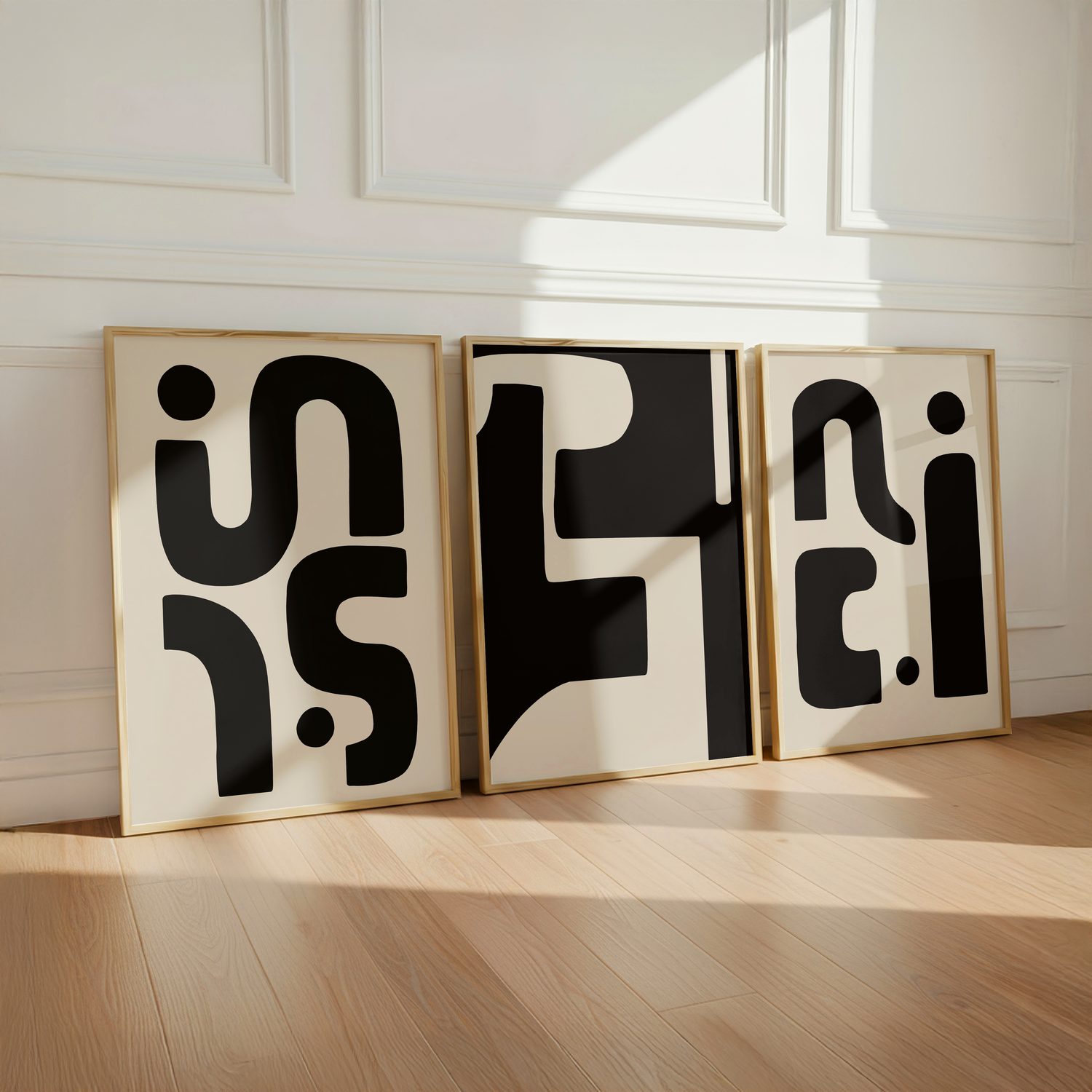
View Black White Abstract Canvas Wall Art for Office on Rustic Charm → from ₹4,999
How to Choose the Right Size for Your Bedroom
Size matters more than most people realise. Art too small feels timid and lost. Art too large overwhelms the space. In minimalist design, proportion is everything.
The golden rule: your artwork should occupy 50-75% of the wall space above the furniture it's anchoring. Above a bed that's 180 cm wide, a single piece should be roughly 120-140 cm wide. A 60 cm piece would feel incomplete. A 200 cm piece would overwhelm.
For most Indian bedrooms, sizing breaks down simply: Small (S) works for narrow walls, corners, and bedside areas. Medium (M) suits standard walls above beds or single focal points. Large (L) anchors larger walls and creates impact in spacious rooms.
Consider your ceiling height too. Higher ceilings can carry larger pieces without feeling cramped. Standard 8-foot ceilings (about 2.4 metres) in most Indian homes suit Medium to Large pieces beautifully when they're positioned thoughtfully.
The distance from which you'll view the art matters. If your bed is 2.5 metres from the wall where you're hanging art, you want something substantial enough to read as intentional from that distance. Conversely, art beside your bed that you'll see from only 60 cm away can be smaller.
Our wall art size guide walks you through exact measurements, but remember: in minimalism, less is more, and each piece should feel chosen, not accident placement.
Colour Palette Guide — Matching Minimalist Art to Your Bedroom
The colours you choose in minimalist art become part of your bedroom's foundation. Unlike maximalist design where colours can clash and still feel intentional, minimalist colour needs harmony.
Soft, cool neutrals (whites, creams, soft greys, pale blues) suit bedrooms focused on rest and calm. These colours are inherently soothing. They work with virtually any other palette and never feel dated.
Warm neutrals (taupes, soft browns, warm greys, muted terracottas) add coziness and ground a space. These work beautifully if your bedroom has warm wood tones or natural light that leans golden.
Accent colours in minimalist art should be used sparingly. A piece that's 80% white with 20% soft sage green. A black and white composition with a single terracotta accent. The restraint makes the colour matter.
If your bedroom walls are white or cream, you have maximum flexibility. Monochrome art, coloured abstract pieces, botanical prints — they'll all feel curated. If your walls are already coloured (soft blue, warm taupe), choose art that complements rather than competes. A soft blue wall benefits from white and neutral toned art, not bright coloured pieces.
Consider your existing textiles too. Your bedding, curtains, and rug are already introducing colour and texture. Minimalist art should harmonise with these, creating a cohesive palette rather than introducing unexpected tones.
The 60-30-10 rule helps: 60% of your room's colour should be neutral (walls, large furniture). 30% should be a secondary colour (soft blue in your art, perhaps). 10% should be accent tones. This proportional approach ensures minimalist art enhances rather than complicates your space.
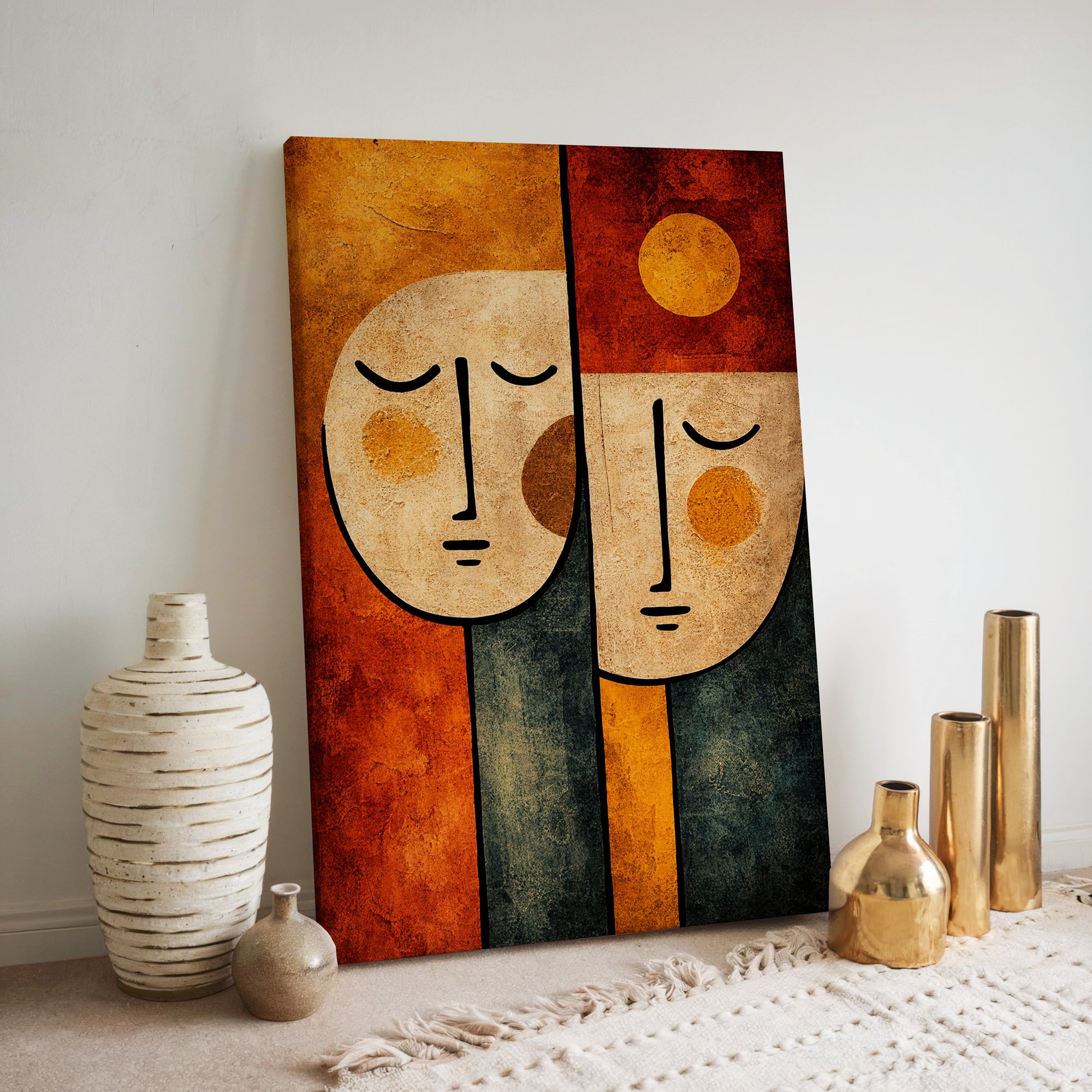
View Abstract Face Canvas Wall Art for Living Room on Rustic Charm → from ₹1,899
Minimalist Gallery Walls — Sets of 3
Minimalist gallery walls aren't the Pinterest-perfect mismatched collections you see everywhere. Instead, they're carefully curated sets where each piece strengthens the others.
The most effective minimalist gallery wall uses a single concept: three botanical line drawings in matching frames. Three monochrome abstract pieces in a deliberate pattern. Three pieces from the same colour family, hung in a grid or offset arrangement.
The rule: each piece should be able to stand alone, but together they tell a coherent story. A line drawing, an abstract shape, and a botanical print hung together should feel intentional, not random.
Our Black and White Abstract Set of 3 exemplifies this approach — three pieces that are individually beautiful but infinitely more powerful together. Hung above a sofa, a bed, or in a narrow hallway, they create a focal point without clutter.
Spacing matters enormously. In minimalist gallery walls, pieces should be 5-10 cm apart. This creates a visual connection without feeling cramped. Symmetrical arrangements (grid patterns, straight rows) suit minimalist spaces better than scattered layouts.
Three pieces of similar size create maximum impact. Three different sizes can work but feel less intentional. The eye prefers consistency in minimalism; that consistency is what makes your curation feel deliberate rather than accidental.
Styling Tips — Where to Place Minimalist Art
Wall art placement transforms how a piece functions in your space. The same artwork creates different impacts depending on where it lives.
Above the Bed
This is minimalism's classic placement. A single piece, centred above your bedhead, becomes a focal point you see every morning and the last thing you see at night. It needs to be substantial enough to anchor the wall — typically Medium to Large sizing.
Position it 30 cm above the bedhead. Not too high (which makes it feel disconnected) and not so low that it crowds the space visually. The piece should feel like a natural extension of your bedroom, not a decoration you hung because walls felt bare.
Beside the Wardrobe
A narrow vertical piece beside your wardrobe or door brings balance and draws the eye upward, making rooms feel taller. Line art excels here — the vertical nature of a portrait or single-stem botanical echoes the verticality of the wardrobe itself.
This placement works beautifully for smaller pieces since you'll view them from closer range. A 40 cm piece feels substantial when you're walking past it daily.
Narrow Walls and Corners
Corners often feel forgotten in minimal bedrooms. A single piece in a corner — even a seemingly awkward space — becomes intentional rather than wasted. Small to Medium pieces work here, positioned at eye level or slightly above.
Corners benefit from pieces that aren't perfectly rectangular. A square abstract. A horizontal botanical. The non-standard shape actually helps corners feel designed rather than filled.
Ready to bring this look home?
Browse our full Wall Art for Living Room collection — giclée canvas prints hand-stretched on 300 GSM acid-free cotton, delivered across India.
Frequently Asked Questions
Q: What wall art is best for a minimalist bedroom?
A: The best minimalist bedroom art is personally meaningful and intentional — whether that's a line art portrait, a monochrome abstract, or a botanical print. The key isn't the subject; it's the restraint. Choose single pieces or small sets (2-3) rather than multiple pieces. Favour limited colour palettes, clean lines, and plenty of negative space. Most importantly, every piece should feel chosen for a reason, not filling a gap.
Q: How many pieces of art should a minimalist bedroom have?
A: One well-chosen piece is often perfect. Two pieces can work if they're cohesive and balanced. A set of three creates a gallery without clutter. Beyond three pieces, a room starts to feel less minimalist and more collected. Rather than counting pieces, ask yourself: does each piece enhance the room's sense of calm and intentionality? If the answer is yes, you have enough.
Q: Does minimalist art have to be black and white?
A: No. Minimalist art can be any colour, as long as the palette is limited and the composition is intentional. Soft monochromes (all blues, all earth tones) work beautifully. A single accent colour on a neutral background is perfectly minimal. What matters is restraint — not a prohibition on colour, but a thoughtful approach to how much and which colours you introduce.
Q: What size minimalist print for above the bed?
A: For a standard double bed (180 cm wide), choose a Medium to Large print (100-140 cm wide). For a single bed, a Medium print works well. The artwork should occupy 50-75% of the wall space above your bed. Position it 30 cm above the bedhead. When in doubt, go slightly larger — undersized art above beds feels timid, while properly scaled pieces feel curated and intentional.
Q: Is canvas or framed better for minimalist art?
A: Both work, but they serve different aesthetics. Canvas prints have a contemporary, gallery feel that suits modern minimalist spaces. Frames add formality and definition. For bedrooms, canvas often feels more relaxed and integrated. Our canvas prints vs framed prints guide walks you through the decision in detail. At Rustic Charm, we hand-stretch and hand-finish our canvas, creating a premium, gallery-quality finish that elevates any minimalist space.
Q: Where can I buy minimalist wall art in India?
A: Rustic Charm offers a curated minimalist collection of line art, abstract, botanical, and monochrome pieces on premium 300 GSM acid-free cotton canvas. Every piece is digitally printed using giclée technology and hand-finished for quality that lasts over 100 years. Pricing ranges from ₹1,899-₹4,999, with free shipping across India and multiple frame options (Gallery Wrap, Black, Dark Brown, White, Vintage Blue). Browse our complete collection to find pieces that match your bedroom's aesthetic and your personal style.
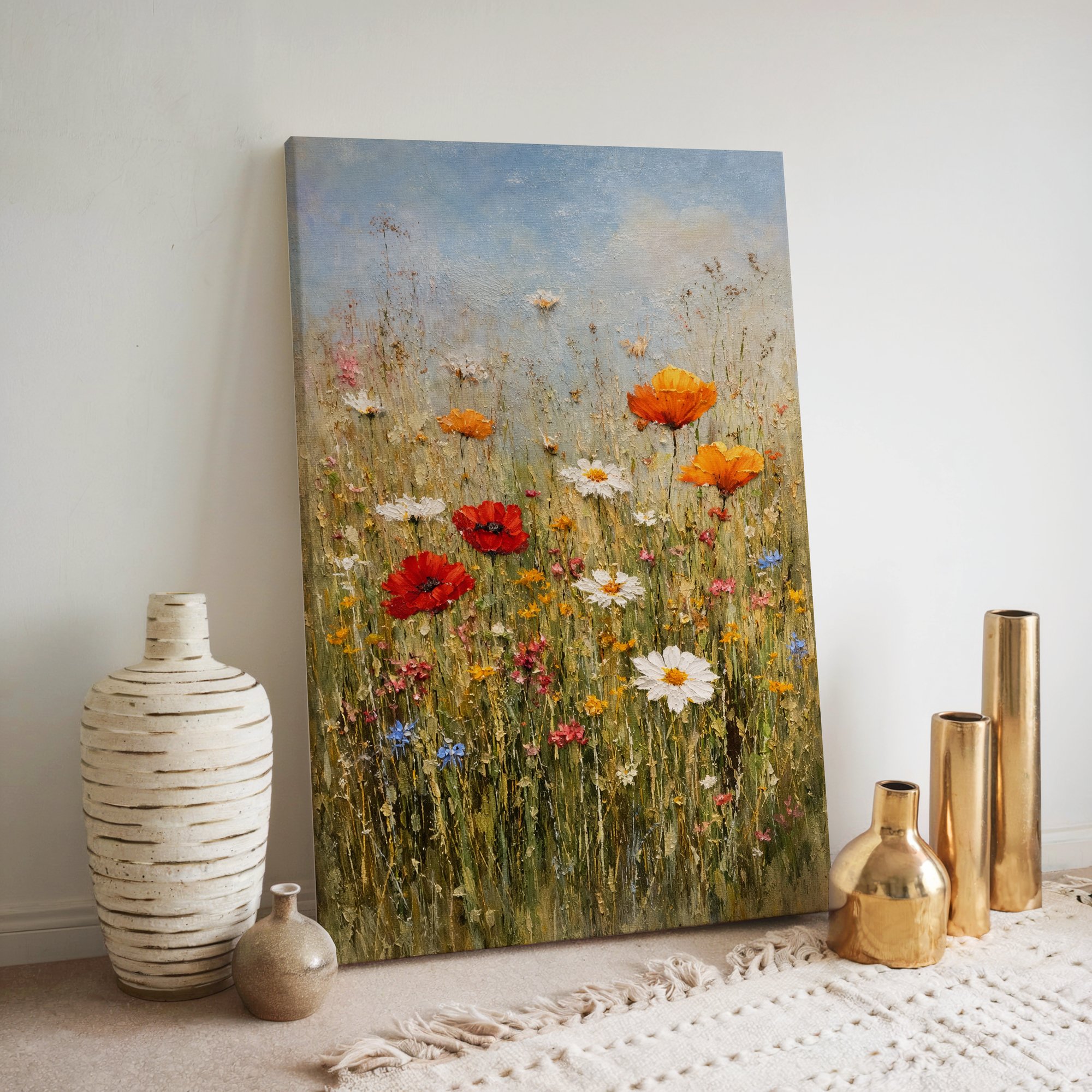
View Lavender Field Canvas Wall Art for Bedroom on Rustic Charm → from ₹1,899
Creating Your Minimalist Bedroom Sanctuary
Minimalism in the bedroom isn't about austerity or deprivation. It's about intentionality. Every element — including the art on your walls — should support the primary purpose of your bedroom: rest, peace, and personal sanctuary.
A minimalist bedroom decorated with one thoughtfully chosen piece of wall art feels more sophisticated, calmer, and more personal than a space covered with multiple decorations. You're not being restrained; you're being selective. You're not leaving walls bare; you're celebrating the space around carefully chosen pieces.
The journey toward minimalist bedroom design starts with understanding what matters to you. Is it the simplicity of line art? The calm of monochrome compositions? The gentle nature of botanical prints? Once you know what resonates, everything else becomes clear.
Your bedroom should be the one room in your home that's entirely yours. Not designed for Instagram. Not meant to impress guests. Designed only to serve you — to calm your nervous system, to support your sleep, to create a retreat from the world.
Minimalist wall art, whether it's a single line drawing or a set of three abstract pieces, transforms a room by removing what doesn't matter and honouring what does. It's quiet design. Intentional design. Design that respects your need for rest.
Explore our minimalist collection and discover pieces that speak to you. Every artwork is printed on premium 300 GSM acid-free cotton canvas using giclée technology, hand-stretched and hand-finished for lasting quality. With options in multiple sizes and frames, you'll find exactly what your bedroom needs to become a true sanctuary.
Your minimalist bedroom awaits — calm, intentional, and entirely yours.