
The wall behind your sofa is the largest empty surface in most Indian living rooms — and the right wall art behind the sofa should span roughly two-thirds of the couch's width, hang 15–25 cm above the backrest, and centre at eye level. Get those three numbers right and the wall instantly feels designed rather than decorated as an afterthought.
If you have stood in your drawing room staring at that big blank wall above the couch, you are in good company. It is one of the most common decorating questions asked online — threads like "What the heck do I do with this giant wall behind the couch?" and "What wall art to put above the sofa?" fill interior-design forums precisely because the sofa wall is both the most visible and the most intimidating wall in the home. It sits at eye level the moment anyone walks in, it frames every conversation, and it shows up in the background of every photo and video call.
This guide solves it properly: the sizing maths, the correct hanging height, the arrangements that work for Indian living rooms, and the canvas styles that suit them — from a single statement piece to a balanced set of three.
How big should wall art behind the sofa be?
The single most common mistake is hanging art that is too small. A tiny frame floating over a three-seater sofa looks lost and makes the whole wall feel unfinished. The reliable guideline interior designers use is the two-thirds rule: your art (or arrangement) should fill about 66% of the sofa's width. For a standard 210 cm three-seater, that means a piece or grouping roughly 140–160 cm wide.
You have three ways to hit that width. A single large canvas delivers maximum impact and is the simplest to hang straight. A set of three (triptych) spreads the same visual width across panels with small, even gaps — ideal for wide sofas and for anyone nervous about one big nail. A gallery cluster of mixed sizes suits eclectic and boho rooms but takes the most planning. If you are unsure which scale fits your room, our complete wall art size guide breaks down the right dimensions for every furniture width and ceiling height.
What height should you hang it?
Hang art so its centre sits at 145–150 cm from the floor — standard gallery eye level — but above a sofa there is a second rule that overrides it: leave a gap of 15–25 cm (about 6–10 inches) between the bottom of the frame and the top of the sofa back. Any higher and the art drifts up the wall, disconnected from the furniture; any lower and it looks cramped, and tall heads risk knocking it. The art and the sofa should read as one visual unit — the couch "anchors" the art, and the art "completes" the couch.
In India, "canvas painting" is the everyday term for what the art industry calls a giclée canvas print — an ultra-high-resolution reproduction of an original artwork, printed with archival inks onto 300 GSM cotton canvas, then hand-stretched on a wooden frame. Unlike a hand-painted original (which ranges ₹50,000+ for a comparable size), a giclée canvas print delivers the same visual impact at D2C prices, with superior longevity and consistency. That matters above a sofa, where a large statement piece would otherwise be the single most expensive thing on the wall.
Canvas ideas for the wall behind your sofa
Below are pieces we recommend specifically for the sofa wall — chosen for the width, calm, and "anchor" quality the space needs.
A bold triptych for wide sofas
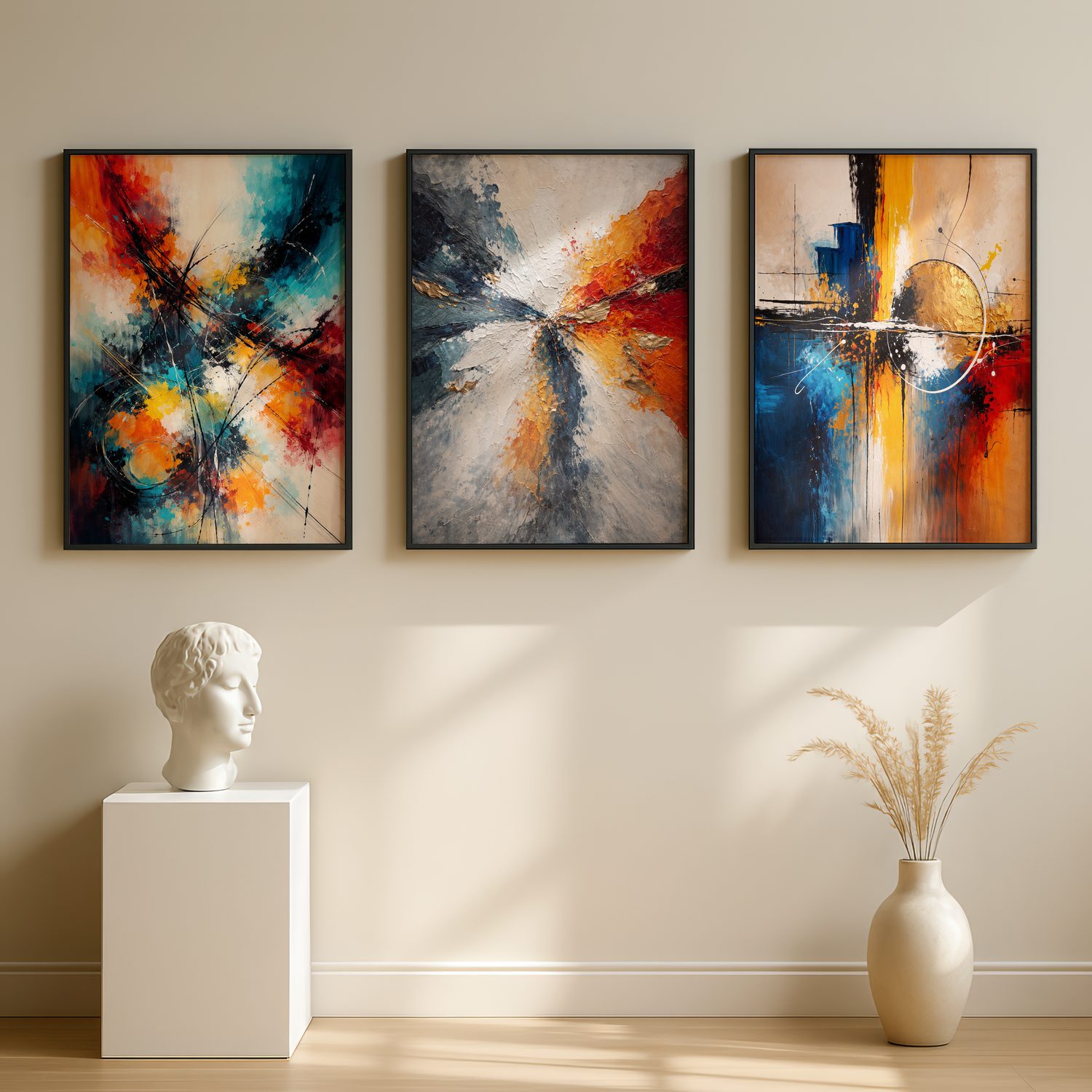
View the Bold Abstract Expressionist Set of 3 on Rustic Charm → from ₹4,999
A set of three is the most forgiving choice above a couch: the three panels naturally span a wide sofa, the even gaps do the "two-thirds" maths for you, and a vibrant abstract brings colour and movement to an otherwise flat wall. If you want a deeper look at hanging and spacing triptychs, see our guide to styling a canvas set of three.
A calm, modern statement set
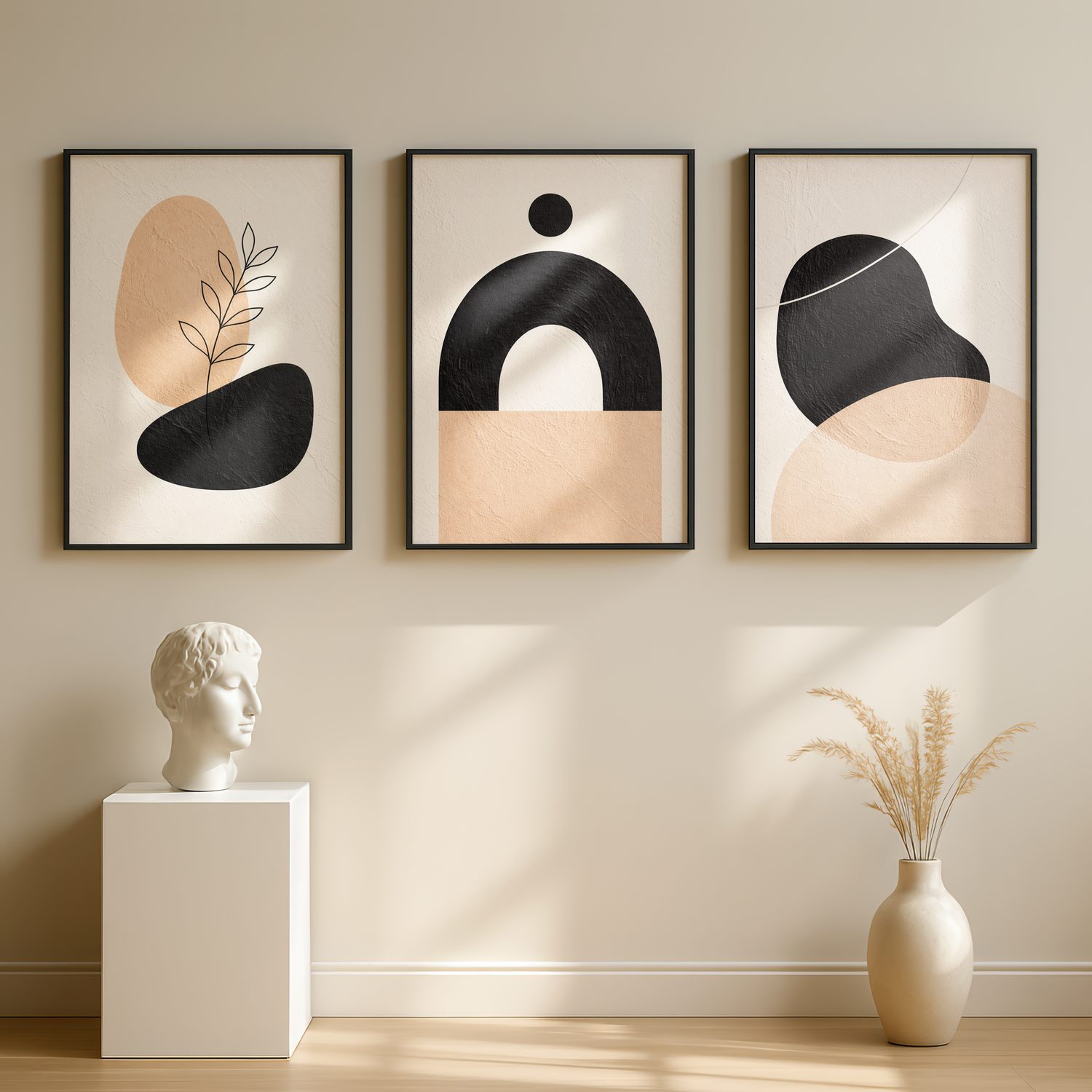
View the Abstract Minimalist Living Room Set on Rustic Charm → from ₹4,999
For a Scandinavian or minimalist room, soft neutral tones keep the wall calm while still filling it confidently. This works beautifully behind a grey, beige or white sofa, letting the couch and art share one quiet palette.
An earthy boho option
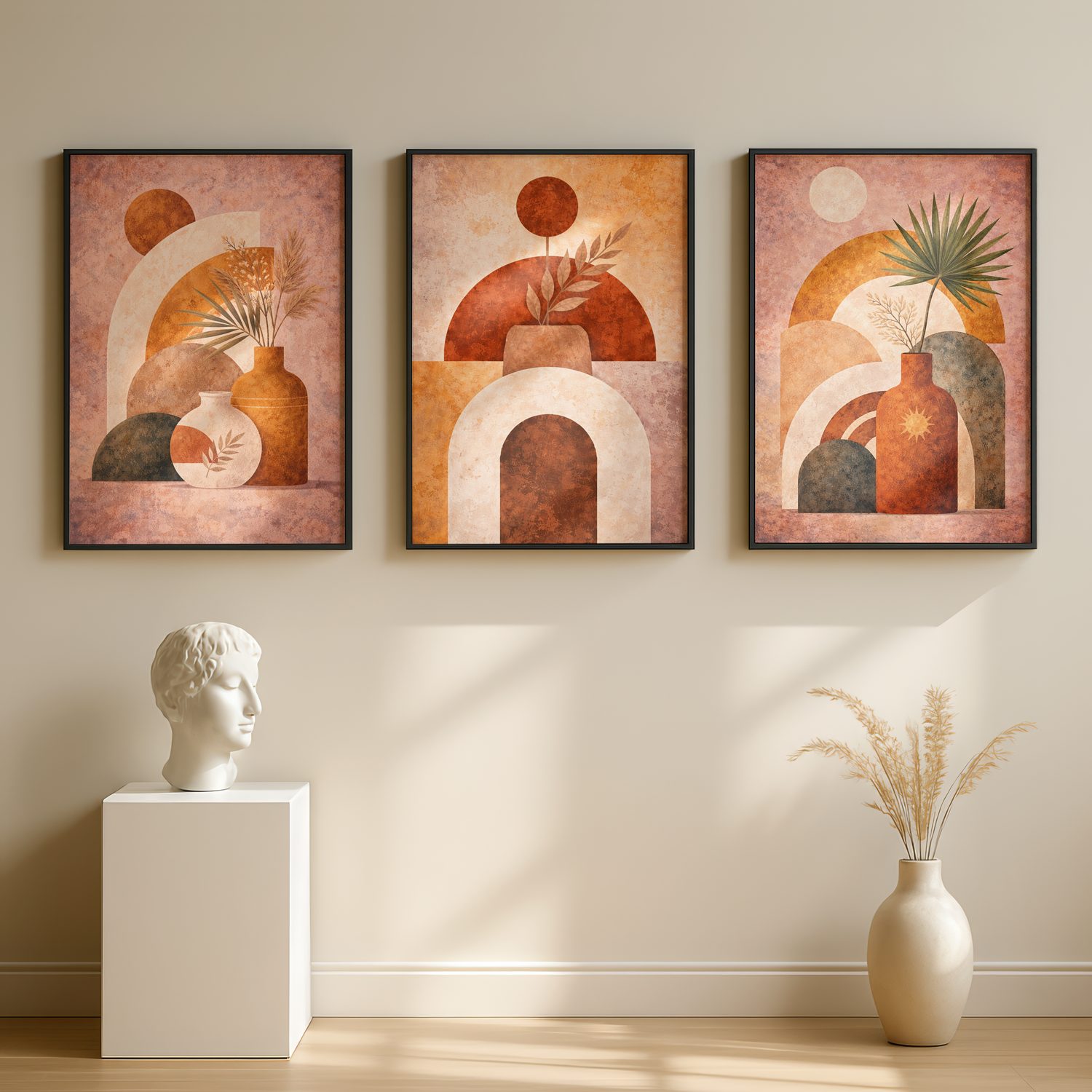
View the Boho Abstract Arches Set of 3 on Rustic Charm → from ₹4,999
Warm terracotta and arch motifs suit jute, cane and wood-heavy Indian living rooms. Pair with a couple of textured cushions in the same family and the sofa wall feels collected, not bought-in-one-go.
A softer, single-canvas pick
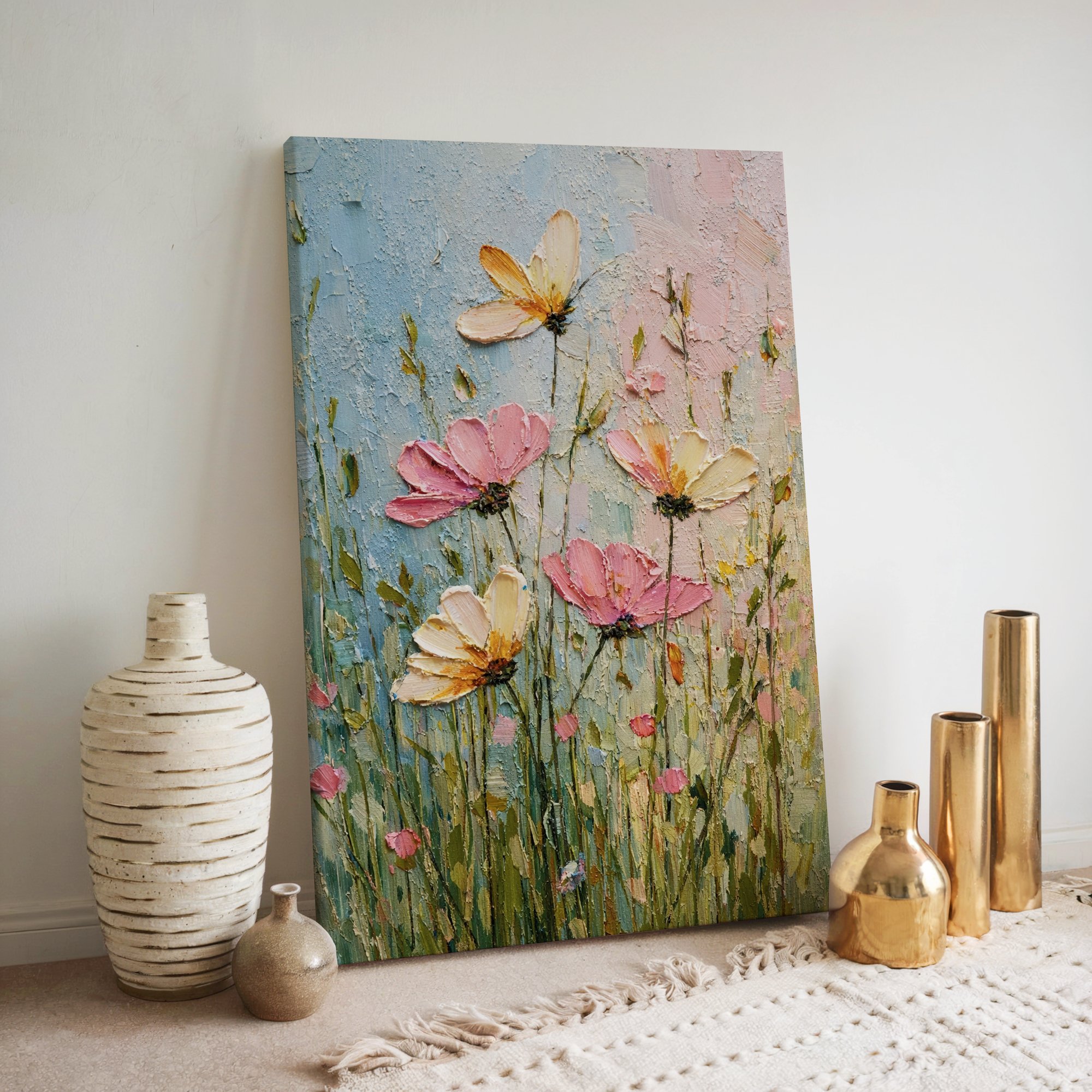
View the Rose Garden Impressionist Floral Canvas on Rustic Charm → from ₹1,899
If a full set feels like too much, a single large floral or impressionist canvas — hung dead-centre over the sofa — is the easiest, most budget-friendly way to fill the wall. Floral and botanical themes also soften a room that is heavy on hard furniture.
Single canvas, set of three, or gallery wall?
Choosing the arrangement is really about your wall width, your nerve, and your style.
A single large canvas is best for medium walls and anyone who wants a clean, gallery look with one hanging point. A set of three suits wide sofas (most three-seaters and L-shaped sofas), spreads weight and risk across panels, and is the most flexible — you can centre it, or shift it to balance a side table. A gallery wall of mixed frames is right for tall walls, double-height rooms, and maximalist or boho interiors, but it needs a paper-template dry run first. Whatever you choose, hang it with the right hardware for your wall type — our complete guide to hanging canvas art covers drywall, brick and rental-safe options without damaging the wall.
A few quick styling rules for the sofa wall: match the art's dominant colour to either a cushion or the largest object in the room so it feels intentional; keep the frame style consistent with the room (gallery-wrap or thin black for modern, warmer wood tones for boho and traditional); and resist the urge to centre art on the wall rather than on the sofa — it should align with the couch, not the room. For more on how the colours you choose shape the room's mood, see our note on wall art colour psychology.
Ready to bring this look home?
Browse our full Wall Art for Living Room collection — giclée canvas prints hand-stretched on 300 GSM acid-free cotton canvas, delivered across India. For the bigger picture on choosing living-room art, start with our living room wall art styling guide.
Frequently asked questions
Q: What size wall art should go behind a sofa? A: Aim for art that spans about two-thirds of the sofa's width. For a standard 210 cm three-seater, that is roughly 140–160 cm of total width — either one large canvas or a set of three with small even gaps between panels. Art that is too small is the most common mistake and leaves the wall looking unfinished.
Q: How high should I hang wall art above the couch? A: Leave a gap of 15–25 cm (about 6–10 inches) between the top of the sofa back and the bottom of the frame, with the art's centre near 145–150 cm from the floor. This keeps the art visually connected to the sofa so the two read as one unit, rather than floating separately up the wall.
Q: Should wall art be centred on the sofa or on the wall? A: Centre it on the sofa, not the wall. The couch is the anchor, so the art should sit symmetrically above it even if that places it slightly off-centre on a wide wall. The only exception is when a side table or floor lamp on one side calls for the arrangement to shift to keep the whole grouping balanced.
Q: Is a single canvas or a set of three better behind a sofa? A: A set of three is more forgiving on wide and L-shaped sofas because the panels naturally fill the width and spread the hanging risk. A single large canvas gives a cleaner, simpler look on medium walls and only needs one hanging point. Both work — choose by your wall width and how confident you are hanging one large piece.
Q: What kind of canvas painting suits a living-room sofa wall in India? A: Large abstracts, calm minimalist sets, earthy boho arches and soft floral or impressionist canvases all work well, because they fill width without overwhelming the seating area. Match the art's main colour to a cushion or the room's largest object so the wall feels intentional, and pick a frame finish that suits your décor — gallery-wrap or thin black for modern rooms, warmer wood tones for boho and traditional homes.