Vastu wall art is artwork chosen and placed to support the energy of a room according to Vastu Shastra — flowing water and lotus in the north and northeast, warm uplifting scenes in the south and west, and nothing violent or sorrowful anywhere you rest or pray. Get the theme and the direction right and a single canvas can quietly reset how a room feels.
That last line is where most guides stop and most homeowners get stuck. You read that a seven-horse painting brings success, or that a waterfall invites wealth, but no one tells you which wall it actually goes on, what happens if your living room faces the "wrong" way, or whether any of it matters if you are not especially religious. This guide answers all three. It maps the main Vastu themes to specific directions, explains what the popular symbols are supposed to do, flags the images you should never hang in certain rooms, and ends with an honest take for the skeptics — because plenty of beautiful, harmonious art is "Vastu-friendly" without a single deity or galloping horse on it.
Vastu Shastra is one of the oldest design systems in the world, drawn from Indian architectural texts that treat a home as a living arrangement of the five elements — earth, water, fire, air and space. Wall art enters that system as colour, subject and placement. You do not need to believe in it as destiny to use it as a thoughtful framework: at minimum, it nudges you toward calm imagery in bedrooms, energising scenes near entrances, and warm tones in the spaces where families gather. At most, for those who follow it closely, it aligns each direction with the element and intention it is said to govern.
What "Vastu wall art" actually means
In Vastu, every direction is tied to an element and a kind of energy, and art is one of the easiest, least disruptive ways to honour that without re-plumbing your house. The north and northeast are linked to water, prosperity and clarity, so gentle blues, flowing water, lotus ponds and fresh greenery sit well there. The east, governed by the rising sun, welcomes sunrise scenes and light, hopeful imagery. The south and southwest, associated with earth, stability and relationships, suit warm, grounded tones and paired or family imagery. The west and northwest carry air and movement, so they tolerate more dynamic, expressive pieces.
The practical takeaway is simple. Match the mood of the painting to the mood the direction is meant to hold — calm and watery in the northeast, warm and steady in the southwest, bright and rising in the east. You are not decorating against your home; you are decorating with its orientation. That is the entire idea, stripped of mystique.
Room-by-room and direction-by-direction guide
Use this as a quick-reference matrix. Find the wall, then the theme that suits it.
North & Northeast walls — This is the prosperity and spiritual zone. Hang flowing water, a lotus pond, lush greenery, or a soft blue-green abstract. A serene lotus canvas is close to a perfect northeast piece: the lotus is the classic symbol of purity and calm, and the cool palette echoes the water element. Keep it light and uncluttered — this corner rewards restraint.
East walls — The sunrise direction. Choose imagery that feels like morning: open skies, fresh blooms, anything that reads as growth and new beginnings. Floral art shines here, which is why a wildflower meadow canvas or a bright botanical works so naturally on an east-facing living-room wall.
South & Southwest walls — Stability, earth and relationships. Warm tones — terracotta, ochre, deep rose — and paired or "togetherness" imagery belong here. The southwest is the traditional spot for a couple's bedroom, where a soft, romantic floral such as a pink peony canvas supports harmony far better than anything stark or solitary.
West & Northwest walls — Movement and creativity. These walls handle bolder, more expressive art, which is why the seven-horse painting is traditionally placed on a south or west wall facing the room (more on that below).
Dining room — Food and abundance. Fruit, citrus and harvest imagery are auspicious here; a cheerful lemon citrus canvas reads as freshness and plenty, the exact intention Vastu assigns to the eating space. If you want the full treatment, our dining room wall art guide goes deeper on placement and pairing.
Bedroom — Rest and relationships, never tension. Keep imagery soft and the palette muted; lavender, single blooms and gentle abstracts are ideal. Avoid water scenes in the bedroom specifically — Vastu treats large water imagery as restless energy in a room meant for stillness.
Entrance & foyer — The mouth of energy for the whole home. Welcoming, positive, uncluttered art sets the tone; avoid anything heavy or melancholy at the threshold. Our entryway wall art guide covers first-impression styling in detail.
What the popular Vastu symbols are supposed to do
Most "Vastu painting" searches are really about a handful of recurring symbols. Here is what each one signifies and where tradition places it, so you can decide with open eyes rather than guesswork.
Seven horses (galloping). The most-searched Vastu painting by a wide margin. Seven running horses symbolise speed, power and forward momentum — success in career and business. Tradition places them on a south or west wall, with the horses running into the room (never out of a door or window), and always an odd, complete set of seven, all moving the same direction. Skip any horse painting that looks aggressive, frightened or has a horse facing away.
Lotus. Purity, prosperity and spiritual calm — one of the safest, most universally auspicious motifs. It suits the north, northeast and the pooja or meditation corner, and unlike deity imagery it carries no placement restrictions around bedrooms.
Peacock. Beauty, grace and positivity; a popular choice for living rooms and entrances. Vastu favours a peacock shown calm and full-feathered rather than mid-screech.
Flowers and gardens. Growth, harmony and fresh energy. Among the most flexible Vastu themes because they carry positive meaning in almost every room — which is why floral canvases are such reliable choices. Our floral wall art guide breaks down which blooms suit which space.
Flowing water and waterfalls. Wealth and the smooth flow of opportunity, ideal for the north — but kept out of bedrooms and never positioned above where you sit or sleep.
Lakshmi-Ganesha, Krishna, Buddha and other deities. Devotional art belongs in or near the pooja space and the northeast, hung at or above eye level, never inside a bedroom or facing a bathroom door, and never on the floor. Because deity placement carries the strictest rules, many families prefer to keep the living-room and bedroom walls to symbolic-but-secular themes — lotus, flowers, sunrise — and reserve devotional imagery for the prayer corner.
What you should never hang (and where)
Vastu is as much about avoiding the wrong image as choosing the right one. Keep these off your walls, or at least out of the rooms noted.
Avoid sad, lonely, violent or war imagery anywhere — crying faces, sinking ships, predatory animals and battle scenes are believed to seed the same energy they depict. Keep large water scenes and waterfalls out of bedrooms. Never hang a single horse, a lone bird, or any "broken set" where Vastu calls for a complete, odd-numbered group. Avoid aggressive abstract art with jagged, chaotic forms in rest and prayer spaces — save expressive, high-contrast pieces for living rooms and studies. And do not hang anything, devotional or otherwise, facing directly into a bathroom door. If you are choosing colours as carefully as subjects, our colour psychology guide explains how tones shift the feel of a room.
A modern, honest take — for the Vastu-skeptical
If you do not follow Vastu strictly, none of this is wasted. Read it as design psychology and most of the "rules" turn out to be sound decorating advice in older language. Calm, low-contrast art in the bedroom genuinely helps you wind down. Warm tones in the dining and living spaces genuinely make gatherings feel cosier. Bright, hopeful imagery near the entrance genuinely improves the first impression of a home. The directions are a memory aid; the underlying instinct — match the mood of the art to the purpose of the room — is just good interior design.
So you have two honest paths. Follow Vastu closely and use the matrix above to the letter. Or treat it as a loose, beautiful framework and choose pieces you love that happen to carry positive, harmonious imagery — lotus, flowers, fresh fruit, soft abstracts. Either way you end up with the same thing: art that makes the room feel better. If you are still narrowing down, our practical guide to choosing wall art walks through size, palette and placement without any of the doctrine.
Vastu-friendly canvas picks from Rustic Charm
We do not sell horse or deity paintings, and we would rather point you to genuinely auspicious, harmonious pieces than pretend otherwise. These are the canvases in our collection that align most naturally with Vastu principles — purity, growth, harmony and abundance — printed on 300 GSM acid-free cotton canvas.
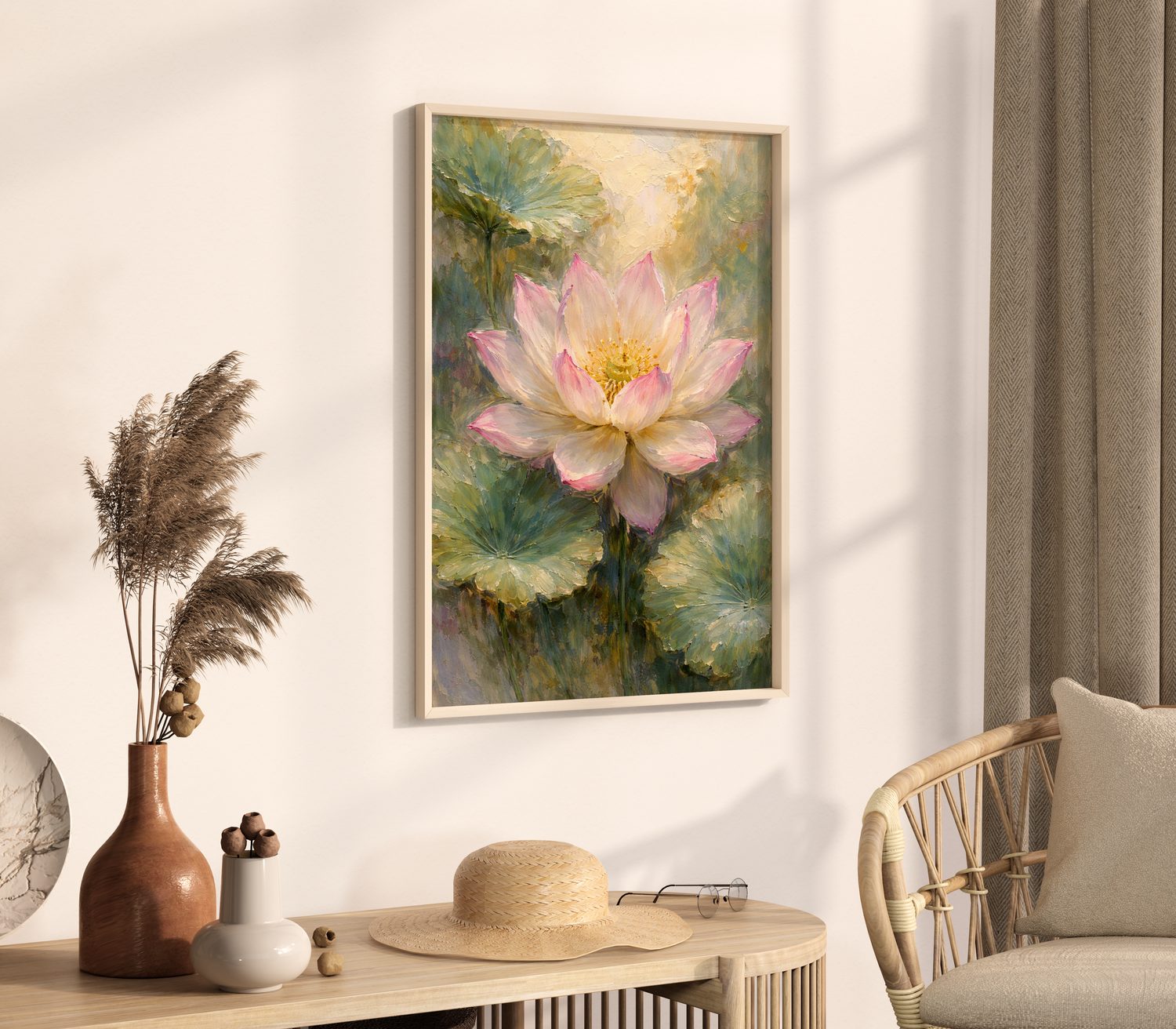
View the Lotus Flower Canvas on Rustic Charm → from ₹1,899
The lotus is the most universally auspicious motif in this guide — purity, calm and prosperity, with no placement restrictions. Its cool palette makes it a natural northeast or meditation-corner piece.
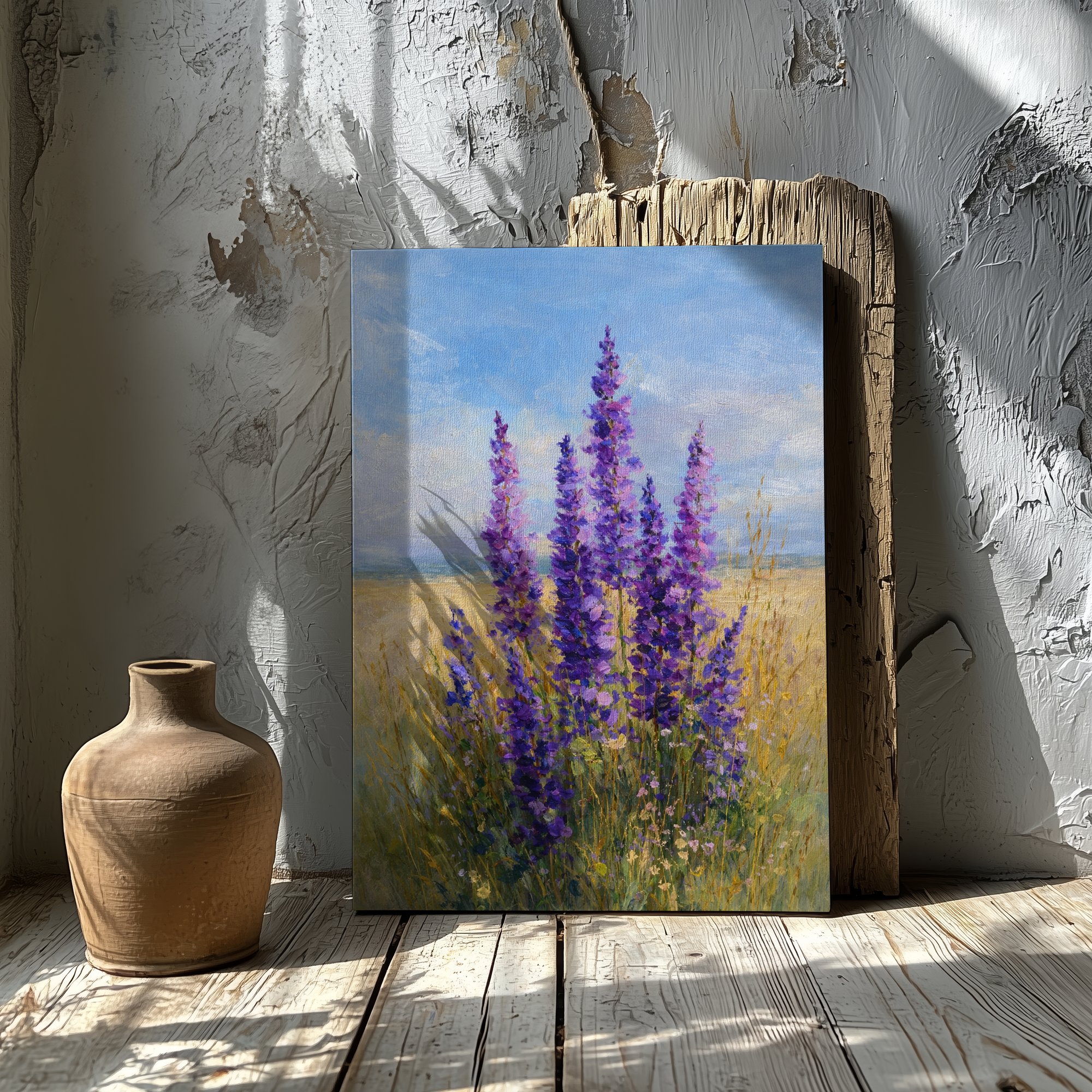
View the Pink Peony Canvas on Rustic Charm → from ₹1,899
Soft, warm and paired blooms suit the southwest — the relationship and stability zone — making this a gentle choice for a couple's bedroom or living-room wall.
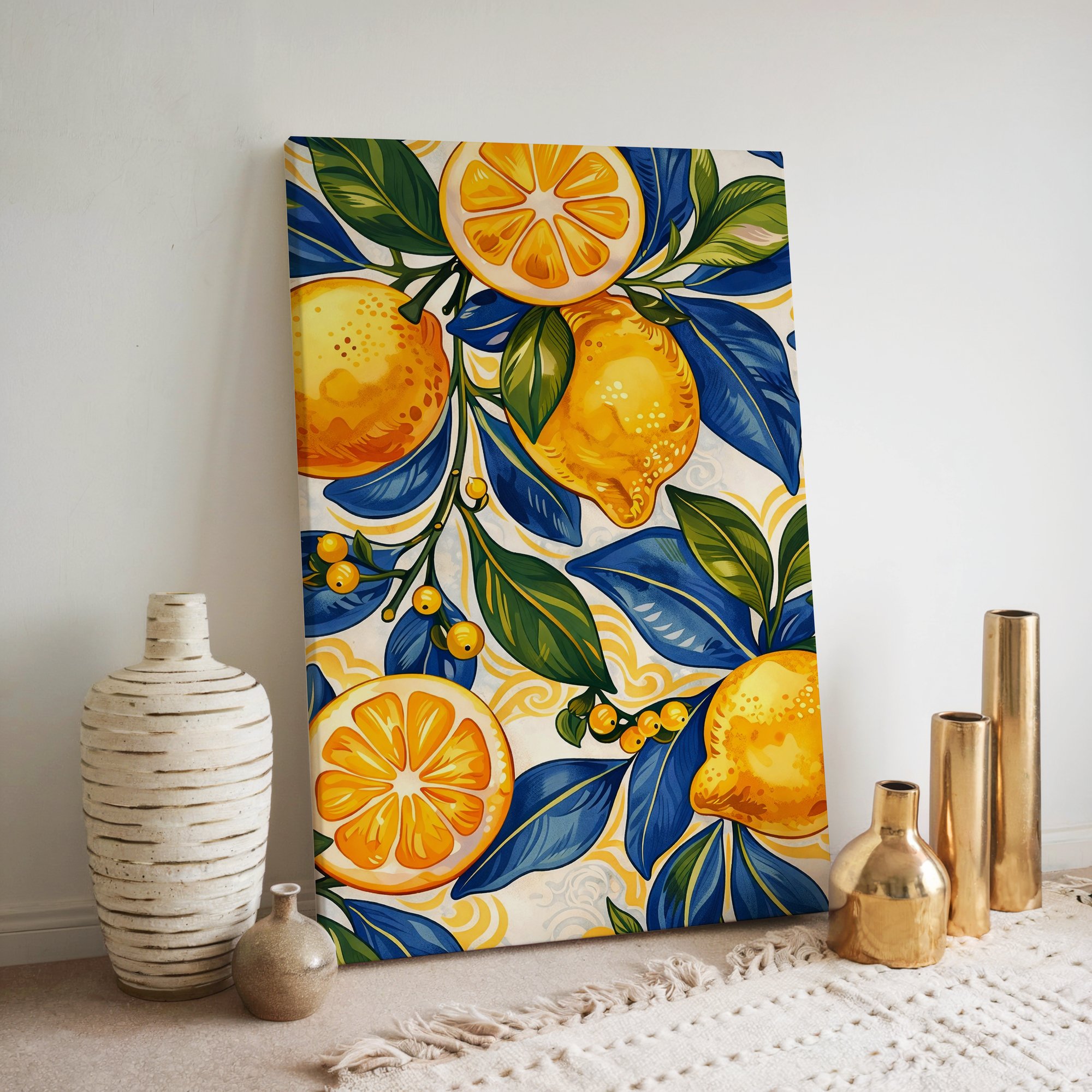
View the Lemon Citrus Canvas on Rustic Charm → from ₹1,899
Fruit and citrus signal abundance and freshness — exactly the energy Vastu assigns to the dining space. A cheerful, low-effort way to bless the table.
Ready to bring this look home?
Browse our full floral & nature wall art collection — giclée canvas prints hand-stretched on 300 GSM acid-free cotton, delivered across India. For room-by-room ideas, start with our living room wall art guide.
FAQ
Q: Which painting is best as per Vastu for the home? A: The most auspicious and lowest-risk choices are flowing water or a lotus for the north and northeast, fresh flowers or a sunrise for the east, and warm, paired imagery for the southwest. A seven-horse painting is the traditional pick for career success, placed on a south or west wall with the horses running into the room. Lotus and floral art are the safest because they carry positive meaning in almost any room.
Q: In which direction should I hang a seven-horse painting? A: Hang it on a south or west wall, with all seven horses galloping into the room rather than toward a door or window. Always use a complete set of seven horses moving in the same direction, and avoid any image where a horse looks frightened or aggressive. Never place it in a bedroom or facing a bathroom.
Q: Which paintings should be avoided according to Vastu? A: Avoid sad, lonely, violent or war imagery anywhere in the home — crying faces, sinking ships, predatory animals and battle scenes. Keep large water scenes and waterfalls out of the bedroom, never hang a lone or "broken-set" image where a complete group is called for, and keep jagged, chaotic abstract art out of bedrooms and prayer spaces.
Q: Can I follow Vastu for wall art if I am not religious? A: Yes. Most Vastu guidance doubles as sound design psychology — calm art in bedrooms, warm tones where families gather, bright imagery near the entrance. You can treat the directions as a loose framework and simply choose harmonious, positive pieces such as lotus, flowers or soft abstracts, and still get the intended calming, uplifting effect.
Q: Where should water paintings be placed as per Vastu? A: Flowing water, rivers and lotus ponds belong on the north or northeast wall, where they support prosperity and clarity. Keep water imagery out of the bedroom, and never position it directly above where you sit or sleep. Show water moving gently into the home, not draining away from it.
Q: Is a lotus painting good as per Vastu? A: Yes — the lotus is one of the most universally auspicious motifs, symbolising purity, calm and prosperity. It suits the north, northeast and the pooja or meditation corner, and unlike deity imagery it carries no restrictions around bedrooms, making it one of the most flexible and safe Vastu choices.